• The move to the new server is done. There are some software and database maintenance updates in process. This has us passing the hat around to help out. We appreciate any donations. Seriously, even a dollar helps. The payment page may be found here - https://www.audiokarma.org/support.html

Maximizing frequency response on a 7.5 IPS recording on a TEAC A-3440

VintageVince

Active Member
Long story short I now have a quadrophonic set-up as my main listening system - A pioneer QX-646/ Thorens TD-160 with AT14Sa cartridge and four speaker set-up at 8 ohm/90db sensitivity. So I have acquired a decent amount of quadrophonic records and would like to record with my 4 channel TEAC (new to RTR). I am using MAXELL 1800’ tapes primarily because the 10 inch reels are much more $. My research says that typically a 7.5IPS is limited to around 17khz top end frequency. The 15 IPS does much better. Recording on a 1800’ reel works for a full LP at 7.5IPS otherwise I have to jump up to 2400’ or a ten inch reel for 15 IPS. I have read that some users of the TEAC A-3440 are getting 22khz by adjusting input db level? Is there truth to this and how is it accomplished? I’m guessing an equalizer. If so… which one would you recommend for four channel recordings.
 
Register to hide this ad
I believe if you turn the input level down, you get more high end frequency but more noise in the trade off. So if the amount of hiss is tolerable to you then that's the route to go. At least that's how cassette is so I would think the same should apply to R2R.
 
Long story short I now have a quadrophonic set-up as my main listening system - A pioneer QX-646/ Thorens TD-160 with AT14Sa cartridge and four speaker set-up at 8 ohm/90db sensitivity. So I have acquired a decent amount of quadrophonic records and would like to record with my 4 channel TEAC (new to RTR). I am using MAXELL 1800’ tapes primarily because the 10 inch reels are much more $. My research says that typically a 7.5IPS is limited to around 17khz top end frequency. The 15 IPS does much better. Recording on a 1800’ reel works for a full LP at 7.5IPS otherwise I have to jump up to 2400’ or a ten inch reel for 15 IPS. I have read that some users of the TEAC A-3440 are getting 22khz by adjusting input db level? Is there truth to this and how is it accomplished? I’m guessing an equalizer. If so… which one would you recommend for four channel recordings.
I think the frequency response is higher than that. What does the manual say? Properly aligned, levels, eq and bias set for a particular tape would I believe give a higher frequency response. I've done them, Teacs from that era but it was quite a while ago and my memory is they have higher response at seven and a half ips. They weren't vintage at the time, just in for service, biasing and electronic adjustments. Look at the manual for that deck, what it says is what it will do properly biased and in good working order. I believe Teac used Maxell UD for factory adjustment of bias.
 
I have read that some users of the TEAC A-3440 are getting 22khz by adjusting input db level? Is there truth to this and how is it accomplished?
No, that is not true.

For 7.5 ips, 20KHz can be down 3 dB and still be in spec.

But spec is for NEW heads so since your deck is 45 years old the heads will have wear and highs will be reduced at 20K. So with old heads if the deck has good response up to 10Khz then consider yourself lucky. No need to run deck through an equalizer.
 
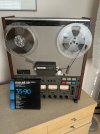
So check with a test tape is best method to verify frequency response? This machine is a thing of beauty and sounds great to my ears. Playing back “The Hissing of Summer Lawns” by Joni Mitchell. CD-4 recording with plenty of quiet spots to verify recording quality.image.jpg
 

Attachments

  • image.jpg
    image.jpg
    106.4 KB · Views: 16
  • image.jpg
    image.jpg
    141.4 KB · Views: 13
Last edited:
I believe if you turn the input level down, you get more high end frequency but more noise in the trade off. So if the amount of hiss is tolerable to you then that's the route to go. At least that's how cassette is so I would think the same should apply to R2R.
I set the input level so I get max swing in VU’s and it peaks around “0” on the VU meter. 5 for all 4 inputs.
 
No, that is not true.

For 7.5 ips, 20KHz can be down 3 dB and still be in spec.

But spec is for NEW heads so since your deck is 45 years old the heads will have wear and highs will be reduced at 20K. So with old heads if the deck has good response up to 10Khz then consider yourself lucky. No need to run deck through an equalizer.
I believe I am well beyond the “lucky“ level.
 
The curves are from measurements taken with an LMV186, your recorder may not allow you to go that far due to head wear and preamp circuit design. This is an X-1000R that was in average condition. Sam Palermo wrote in TH that this machine can go higher than 22k if set up right, I tried it and he's right.

How:
very precise alignment of the tape path
good quality calibration tapes for the best repro setting (MRL, EOS)
brand new tape for the rec setting
know-how, a lot of iterations and patience...

All this following the usual process: level, azimuth, equalization and biasing for record

Note that bias level has an influence on the “electrical” azimuth. Phase measurements depend on it.
 
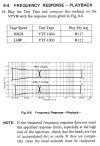
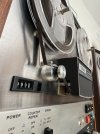
No doubt there is a HUGE learning curve with R2R. I keep saying to myself that patience is essential because things get expensive if done the wrong way. This unit was serviced prior to my acquisition, but I have the owners operating manual and service manual that I am reviewing. While acquiring some ”used” tapes, I was given a TEAC A-4300 tape player for free. This project will be addressed in a separate thread. Back to the TEAC A-3440—— the service manual references both TEAC test tapes and the use of an oscilloscope to perform some of the tests (frequency range for example) that I am referring to.
 
The YTT-1003 and YTT-1004 are NAB EQ calibration tapes with the Ampex level as the reference fluxivity (185 nWb/m at 400 Hz). It is unlikely that you will find one in good condition. It is better to buy new equivalent ones, but they come at a price... For measuring frequency response, a decent AC millivoltmeter will do the job.

If you want to get into this, take the time to study the subject before you start working on your deck.

Final word: if it works properly and the frequency response is correct, it may not be worth investing in reference tapes and spending time to gain a few dBs above 16k at -10VU. Don't forget that with a music program, the spectral density more or less averages a slope of -3dB per octave.
 
The TEAC A-3440 sounds great and I am happy as is for now. This is a hobby in problem solving to extend the longevity of vintage electronics to the next gen. It also helps to prevent the onset of dementia and other brain related ailments. I’m good for now, but I have an amazement with R2R so it won’t end here. My goal is to convert my quadrophonic and master recordings on vinyl (as well as my prized stereo vinyl recordings) so I can preserve them for the next generation.
 
First you have to make sure heads are aligned properly which requires a great test tape to calibrate the playback system. Now some folks tamper with the playback equalization to put a HF hump at 15 or 16 KHZ to reach out a bit fiurther. Then you have to set your bias in the record mode to optimize the lowest distortion for your type of tape. Then and only then do you calibrate the record equalization to match the freq response of the playback curve. Remember you do this 10 db below the reference level of the capability of the tape your are using. Remember 3% distortion at 700 or 100 HZ is 6 db above the reference level and the record level is 10 db below that. Then you need either an External Dolby B or DBX deci-linear noise reduction system so you never record much above -6 db to prevent saturating your tape in the high frequencies. If your machine has bass bumps in the low frequency response then you don't use the DBX deci-linear system as it will over emphasize those bumps modulating the rest of the freq spectrum. You use the home version of the DBX system. My chief design engineer at the time tried using a model DBX 155 4 channel unit with his 3440 unit and had the issue. So he used two home type DBX units. As my Revox and professional Ampex studio machines were flat and 2 track or 4 channel 1/2 inch I used the DBX 157 units very successfully.

Note you really don't need response above 19,000 HZ or so. What you need is great signal to noise and low distortion at that frequency. Some thing you will never achieve using a 4 channel machine at 7.5 ips with 1/4 inch tape. Now Dolby and DBX will help quite a bit in fact. Besides most Quad records and phono cartridges and the decoders used at the time were all compromised anyway. That is why Dolby digital DVD's and processors became so popular so quickly. Because they all worked and anyone could easily hear that.

I will say when Maxell introduced their back coated XL series R2R tapes it allowed R2R machines to far surpass their original design specifications. But some Machines like professional Crown and Consumer Revox just could not record what the tape was capable of in its latest form. My A-77's couldn't and my HS 2 trk B-77 couldn't. Yet my old tube and early Ampex studio Machines could do so easily and why I kept them so long. I would record something on my SS AG 351 -2 or SS AG 300-2 and play back on the Revox B-77 and you could easily hear the compromised dynamics and the altered HF response. So get your self some kind of noise reduction gear or you are going to be very unsatisfied. Remember after Calibration -6db is the maximum recording level at 7.5 ips because Vu meters, even so called peak ones, lie.

 
First you have to make sure heads are aligned properly which requires a great test tape to calibrate the playback system. Now some folks tamper with the playback equalization to put a HF hump at 15 or 16 KHZ to reach out a bit fiurther. Then you have to set your bias in the record mode to optimize the lowest distortion for your type of tape. Then and only then do you calibrate the record equalization to match the freq response of the playback curve. Remember you do this 10 db below the reference level of the capability of the tape your are using. Remember 3% distortion at 700 or 100 HZ is 6 db above the reference level and the record level is 10 db below that. Then you need either an External Dolby B or DBX deci-linear noise reduction system so you never record much above -6 db to prevent saturating your tape in the high frequencies. If your machine has bass bumps in the low frequency response then you don't use the DBX deci-linear system as it will over emphasize those bumps modulating the rest of the freq spectrum. You use the home version of the DBX system. My chief design engineer at the time tried using a model DBX 155 4 channel unit with his 3440 unit and had the issue. So he used two home type DBX units. As my Revox and professional Ampex studio machines were flat and 2 track or 4 channel 1/2 inch I used the DBX 157 units very successfully.

Note you really don't need response above 19,000 HZ or so. What you need is great signal to noise and low distortion at that frequency. Some thing you will never achieve using a 4 channel machine at 7.5 ips with 1/4 inch tape. Now Dolby and DBX will help quite a bit in fact. Besides most Quad records and phono cartridges and the decoders used at the time were all compromised anyway. That is why Dolby digital DVD's and processors became so popular so quickly. Because they all worked and anyone could easily hear that.

I will say when Maxell introduced their back coated XL series R2R tapes it allowed R2R machines to far surpass their original design specifications. But some Machines like professional Crown and Consumer Revox just could not record what the tape was capable of in its latest form. My A-77's couldn't and my HS 2 trk B-77 couldn't. Yet my old tube and early Ampex studio Machines could do so easily and why I kept them so long. I would record something on my SS AG 351 -2 or SS AG 300-2 and play back on the Revox B-77 and you could easily hear the compromised dynamics and the altered HF response. So get your self some kind of noise reduction gear or you are going to be very unsatisfied. Remember after Calibration -6db is the maximum recording level at 7.5 ips because Vu meters, even so called peak ones, lie.
Thank you…good info.
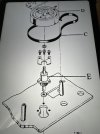
I am making major leaps in knowledge on the R2R world. Getting all the mistakes out of the way. Read the manuals once, twice and then a third time. Do not make assumptions like “since it’s a TEAC it must be threaded the same way”. lol. Yep I did it. Fixed my frequency response issue on deck #2. I have the TEAC A-3440 as my designated multi-channel recorder and now my second deck is fully operational and will do my stereo only recordings (A-4300). Still using my Pioneer QRX-646 quad receiver so when I listen to stereo recordings, I use the SQ mode which runs the stereo signal through the internal SQ decoder. It works. Not as nice sounding as a good CD-4 recording, but better to my ears than stereo. Next iteration of sound improvement on a budget is to do my stereo recordings on the 4300 by running my turntable through a Pluto 2 preamp which I already have. I have saved two vintage components from the trash heap so that makes me happy. The Pioneer QRX was slightly audible through one channel on a headset and had two busted input jacks (phono and tape). Once I cleaned it up and soldered two new input jacks that were original parts, I thought about adding a R2R to the set-up that could do quadrophonic recordings and added about two dozen quadrophonic vinyl records to my collection. In the process of acquiring recording tapes (primarily Maxell), I was given the TEAC A-4300. I could not test it out because it would not operate with a seized pinch wheel. It took about a week as I waited to get 100% synthetic oil to finish the clean and lube (I already had the synthetic grease). It took three teardowns of the capstan fly wheel and behind to get it right. The first time I had to redo the fork in flywheel assembly that was put in backwards, and the second happened after noticing a metal scraping noise when the capstan wheel turned. I found a small metal 1/4” washer off to the side and wondered if this small part of the cog could create an issue. Someone told me to look at the schematic in the service manual and sure enough the washer was there between the flywheel and the bushing. After finally getting it up and running mechanically 100%, I noticed the high end (and the low end as well) were far short of the specs. I had cleaned and lubed everything twice and was able to get to the tape monitor switch, but could only access the output level control in a couple spots. I thought to myself I was going to have to take the front of the unit off which would have opened a whole can of worms according to research. After that, if the problem still existed I was looking at having to essentially complete an electronic overhaul kit (which I will do eventually). Then I said to myself “maybe I missed something in the manual.” And sure enough I did. I had the machine threaded incorrectly. Remember…it’s a TEAC so they are probably all threaded the same way. Nope. Under the first pre-tensioner arm and then over the first guide before going across the heads. I went under that first guide and consequently missed the first guide altogether going across the heads. The TEAC A-3440 has you go under this guide. So…long story short I fixed my frequency response issue. Oh and btw an R2R also has a turntable. Found out about that today. I reread the manual and came across a section on “if your tape rubs against the inside/outside of reel then turn the adjustment screw clockwise/counter-clockwise”. Well maybe that’s why there is a slight twist in the tape before it entered the take-up wheel. Read the damn manuals…read the damn manuals. Even the YouTube videos are missing a lot. I also am aligning the high bias/eq/ and use of high VU meter with the tape recommendations on the TEAC A-4300 now. I am getting really close to a quality recording I would call a “keeper” on this deck. I already have several on the A-3440 that are quad recordings in the “keeper” category. Live and learn.
 
TEAC A-4300 project pics
 

Attachments

  • IMG_5647.jpeg
    IMG_5647.jpeg
    75.1 KB · Views: 17
  • IMG_5646.jpeg
    IMG_5646.jpeg
    131 KB · Views: 14
  • IMG_5656.jpeg
    IMG_5656.jpeg
    159.1 KB · Views: 12
  • IMG_5655.jpeg
    IMG_5655.jpeg
    144.1 KB · Views: 14
  • IMG_5660.jpeg
    IMG_5660.jpeg
    98.9 KB · Views: 14
  • IMG_5664.jpeg
    IMG_5664.jpeg
    88.1 KB · Views: 14
  • IMG_5793.jpeg
    IMG_5793.jpeg
    104.8 KB · Views: 17
  • image.jpg
    image.jpg
    69.3 KB · Views: 9
Would any of you fine Gentlemen happen to have a pdf if the service manual for the Teac A4300? Or know where I can get one. I have the 4300SX service manual but would feel better if I had the manual for my unit. Thank you in advance either way.
 
Back
Top Bottom