• The move to the new server is done. There are some software and database maintenance updates in process. This has us passing the hat around to help out. We appreciate any donations. Seriously, even a dollar helps. The payment page may be found here - https://www.audiokarma.org/support.html

MC-240 Tube Rolling Questions

MrPoetry

New Member
I’m looking for advice on rolling the seven signal tubes in my McIntosh MC240. Budget is around $750, total (minus $200 already spent; see below). Two main questions: 1. Which of the seven signal tubes are worth splurging on? 2. What combination of tubes are likely to work well together?

I’ll set the key for question #2: I know I like vintage tube sound. I’ve already ordered a single 1950s Mullard longplate ($200) for the MC240’s V1 socket. My reasoning in spending more than a quarter of the budget on one tube is the relative importance of the V1 to the amp’s sonics (so I’ve been told).

So, about $550 still in the kitty. I have gotten the impression (largely from AI) that there are two other signal tube positions that add more character to the sound than other valves, but I’d like to find this out from experienced humans such as your august selves. If there are two other more important valves, I could blow more money on those (e.g. pair of Bugle Boys), and get less expensive, good value, solid performers for the other sockets. But is this sound reasoning (pun accepted)?. And then the next question is, what tubes to cast in those supporting roles?

The output tubes are already GE 6L6GC, which I think are doing a fine job. (If you can think of a reason to immediately replace these, do tell. But if you can agree that they’re good enough for now, let’s leave them for a later upgrade.)

My setup adds considerations. In signal path order:
  • Amarra Luxe on a Mac, playing mostly classical, occasional jazz, less frequently rock (The Who’s Quadrophenia and Paul Simon’s Rhythm of the Saints already sound amazing; tube rolling is for enriching classical)
  • Denafrips Pontus II (12th)
  • Audio Note UK M3 (Mk II)
  • McIntosh MC240 (originally my father’s):
    • Recapped last week, testing at 47wpc, all other specs like stock
    • Signal path upgraded in 1980s by Analogique (piggybacked polypropylene cans for better defined highs)
  • Klipsch Heresy I + 2x Rythmik L12BO
The Heresys supported by the Rythmiks are incredibly live, big and fast (which I love), and, of course, the horns can lean into harshness, especially with violins. I already have new ALK crossovers on order from Crites, which should help. But to my mind the Heresys ruled out, for example, putting an NOS Telefunken in the MC240’s V1.

To sum up, those questions once again are:
  1. Which valves have the most impact on sound quality (i.e. how to allocate spending)?
  2. What signal tube combinations might work well as a set?

Let’s please agree that there might be better amps and speakers (for classical, anyway), but for now I’m only interested in enhancing the sonics of my heirloom McIntosh.

Looking forward to your thoughts!
 
Register to hide this ad
V1 sets the stage for the rest of the amplifier. Both triode sections need to be close in gain as it is used in both channels. The rest of the dual triodes need to be close as well. I would use 7027A instead of 6L6GC.

Full disclosure: I do not believe that one tube brand over another has a "sound". Tubes that do are not meeting their minimum design specifications, the type criteria or they are defective. The tubes that are held in the highest regard are those that exceed all specifications. My opinion.
 
I’m looking for advice on rolling the seven signal tubes in my McIntosh MC240. Budget is around $750, total (minus $200 already spent; see below). Two main questions: 1. Which of the seven signal tubes are worth splurging on? 2. What combination of tubes are likely to work well together?

I’ll set the key for question #2: I know I like vintage tube sound. I’ve already ordered a single 1950s Mullard longplate ($200) for the MC240’s V1 socket. My reasoning in spending more than a quarter of the budget on one tube is the relative importance of the V1 to the amp’s sonics (so I’ve been told).

So, about $550 still in the kitty. I have gotten the impression (largely from AI) that there are two other signal tube positions that add more character to the sound than other valves, but I’d like to find this out from experienced humans such as your august selves. If there are two other more important valves, I could blow more money on those (e.g. pair of Bugle Boys), and get less expensive, good value, solid performers for the other sockets. But is this sound reasoning (pun accepted)?. And then the next question is, what tubes to cast in those supporting roles?

The output tubes are already GE 6L6GC, which I think are doing a fine job. (If you can think of a reason to immediately replace these, do tell. But if you can agree that they’re good enough for now, let’s leave them for a later upgrade.)

My setup adds considerations. In signal path order:
  • Amarra Luxe on a Mac, playing mostly classical, occasional jazz, less frequently rock (The Who’s Quadrophenia and Paul Simon’s Rhythm of the Saints already sound amazing; tube rolling is for enriching classical)
  • Denafrips Pontus II (12th)
  • Audio Note UK M3 (Mk II)
  • McIntosh MC240 (originally my father’s):
    • Recapped last week, testing at 47wpc, all other specs like stock
    • Signal path upgraded in 1980s by Analogique (piggybacked polypropylene cans for better defined highs)
  • Klipsch Heresy I + 2x Rythmik L12BO
The Heresys supported by the Rythmiks are incredibly live, big and fast (which I love), and, of course, the horns can lean into harshness, especially with violins. I already have new ALK crossovers on order from Crites, which should help. But to my mind the Heresys ruled out, for example, putting an NOS Telefunken in the MC240’s V1.

To sum up, those questions once again are:
  1. Which valves have the most impact on sound quality (i.e. how to allocate spending)?
  2. What signal tube combinations might work well as a set?

Let’s please agree that there might be better amps and speakers (for classical, anyway), but for now I’m only interested in enhancing the sonics of my heirloom McIntosh.

Looking forward to your thoughts!
Do the Crites Crossovers first before you do anything. Also do the diaphragms for the horn tweeters as well, while you're at it. These two are essential to get right. Getting those horn tweeters right will pay dividends for your overall sound quality. Then listen and reconsider. If your Heresy speakers don't have risers, they are highly recommended.
 
I have several 240s. Would agree with a few of the other comments that first input 12AX7 seems to make the biggest difference. On the other signal tubes, can't really say I hear a huge change when going from brand to brand. You also may want to consider adding a .1uf film cap across the main PS filter cap. And make sure you replace those 100uf 3v caps in the feedback circuit.
 
At Amplifier clinics Davie O'Brien conducted for Mcintosh where I was an observer and also took part Mcintosh amps and pre-amps with non factory chosen tubes never NEVER met specs. Especially in the MC 30, 60's, and 240's. 275's sqeaked by using 6550 tubes instead of Gold lion KT 88's. The 12 BH7a's driver tubes were a large determining factor with 240's 275's MC 75's etc. Not using telefunken miniture tubes also had a compromising effect. This was back in the 60's 70's and 80's into the early 90's. Mcintosh was having a very difficult time finding good tubes for their amps so they could return them to guaranteed performance.. It was another reason Mac moved on into SS design and manufacturing. If you will look closely the MC 3500 had better specs than the early SS amps. It measured better than one channel of a 2300 for sure. The signal to noise wasn't as good as it could have been, but the sound was it produced easily out classed the 2105, 2100, and 2300. I even heard and old one with fresh tubes compared to the Mark II and I still prefer the original 3500. If I were wealthy I would have a pair. But thats just a dream as finding good tubes is even more of an issue today as it was 40 years ago. I always stuck with the tubes Davie gave me at each clinic, and he marked the ones that still allowed my amps and pre amp to meet specs as spares. 240's could drift out of specs in 6 months it seemed to me. I would take my pair to the Radio Station where I worked and test the units every 120 days or so while I was testing the stations Mcintosh amplifiers and preamps. 275 could easily last over a year if you had good 12 BH7A's. Same went for my C22.

On a whim I replaced my 275's with 2100's because tube quality was declining rapidly. Probably the worst mistake I ever made sonically! I enjoyed my 7200's 7100's, and enjoy my 207's and Mc 830's to this day! The 7300 was a great amp, too. Thats probably the amp I should have bought at one time, but skipped!
 
At Amplifier clinics Davie O'Brien conducted for Mcintosh where I was an observer and also took part Mcintosh amps and pre-amps with non factory chosen tubes never NEVER met specs. Especially in the MC 30, 60's, and 240's. 275's sqeaked by using 6550 tubes instead of Gold lion KT 88's. The 12 BH7a's driver tubes were a large determining factor with 240's 275's MC 75's etc. Not using telefunken miniture tubes also had a compromising effect. This was back in the 60's 70's and 80's into the early 90's. Mcintosh was having a very difficult time finding good tubes for their amps so they could return them to guaranteed performance.. It was another reason Mac moved on into SS design and manufacturing. If you will look closely the MC 3500 had better specs than the early SS amps. It measured better than one channel of a 2300 for sure. The signal to noise wasn't as good as it could have been, but the sound was it produced easily out classed the 2105, 2100, and 2300. I even heard and old one with fresh tubes compared to the Mark II and I still prefer the original 3500. If I were wealthy I would have a pair. But thats just a dream as finding good tubes is even more of an issue today as it was 40 years ago. I always stuck with the tubes Davie gave me at each clinic, and he marked the ones that still allowed my amps and pre amp to meet specs as spares. 240's could drift out of specs in 6 months it seemed to me. I would take my pair to the Radio Station where I worked and test the units every 120 days or so while I was testing the stations Mcintosh amplifiers and preamps. 275 could easily last over a year if you had good 12 BH7A's. Same went for my C22.

On a whim I replaced my 275's with 2100's because tube quality was declining rapidly. Probably the worst mistake I ever made sonically! I enjoyed my 7200's 7100's, and enjoy my 207's and Mc 830's to this day! The 7300 was a great amp, too. Thats probably the amp I should have bought at one time, but skipped!
So which bh7's would you recommend for my mc240? I have a nice stash of n..o.s from various manufacturers .
 
V1 sets the stage for the rest of the amplifier. Both triode sections need to be close in gain as it is used in both channels.
Glad to hear confirmation that V1 is key. Regarding the Mullard: I purchased it from Andy Bouwman (Vintage Tube Services; still waiting for delivery), and must trust his testing of the tube. (I have no testing equipment.)

On the phone Andy mentioned the next most important valves for SQ would be the next ones in the signal path after V1, but couldn't recall the MC240 schematic off the top of his head. (Then he got distracted in trying to convince me to add a 300b to my amp rotation for listening to classical, which is not on the table for me now. Perhaps someday. Anyway, conversation about tubes for MC240 got left behind.)

Given Andy's comment about importance of early-in-signal-path, aren't the 12AU7 phase inverters in V2 & V5 next in the path?

The 12 BH7a's driver tubes were a large determining factor with 240's 275's MC 75's etc. Not using telefunken miniture tubes also had a compromising effect.
Like @radioactive I'm interested in recommendations for the 12BH7 drive amplifiers in V3 & V6. Also, what kind of "determining factor" are the 12BH7's, and what kind of "compromising effect" not using Telefunken?

Mcintosh amps and pre-amps with non factory chosen tubes never NEVER met specs.
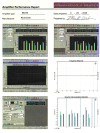
When I wrote "Recapped last week, testing at 47wpc, all other specs like stock", I meant as far as I can tell, which I won't claim I'm competent to do. Here is the test sheet, post-recap, provided by the technician, Mark Weiss (who made no claim about resulting performance, only that the four new P.S. caps were built and installed to original specs).

Performance Tests Report.png
 
Glad to hear confirmation that V1 is key. Regarding the Mullard: I purchased it from Andy Bouwman (Vintage Tube Services; still waiting for delivery), and must trust his testing of the tube. (I have no testing equipment.)

On the phone Andy mentioned the next most important valves for SQ would be the next ones in the signal path after V1, but couldn't recall the MC240 schematic off the top of his head. (Then he got distracted in trying to convince me to add a 300b to my amp rotation for listening to classical, which is not on the table for me now. Perhaps someday. Anyway, conversation about tubes for MC240 got left behind.)

Given Andy's comment about importance of early-in-signal-path, aren't the 12AU7 phase inverters in V2 & V5 next in the path?


Like @radioactive I'm interested in recommendations for the 12BH7 drive amplifiers in V3 & V6. Also, what kind of "determining factor" are the 12BH7's, and what kind of "compromising effect" not using Telefunken?


When I wrote "Recapped last week, testing at 47wpc, all other specs like stock", I meant as far as I can tell, which I won't claim I'm competent to do. Here is the test sheet, post-recap, provided by the technician, Mark Weiss (who made no claim about resulting performance, only that the four new P.S. caps were built and installed to original specs).

View attachment 3795292
Again, equal gain between sections of all of the dual triodes is the most important factor. For the 12BH7As I use NOS RCA. Lastly, spend your money on good output tubes like 7027As.
 
equal gain between sections of all of the dual triodes is the most important factor.
I'm not electronics-savvy; just a layman listener. I looked up "dual triodes"; not sure how much I took in. By "equal gain between sections" do you mean that each pair of tubes -- 12AU7's in V2/V5, 12BH7's in V3/V6, and 12AX7's in V4/V7 -- needs both tubes in the pair to have gain/Amplification Factor/Mu as close as possible? If you mean something else, could you explain to a non-techie?
 
I'm not electronics-savvy; just a layman listener. I looked up "dual triodes"; not sure how much I took in. By "equal gain between sections" do you mean that each pair of tubes -- 12AU7's in V2/V5, 12BH7's in V3/V6, and 12AX7's in V4/V7 -- needs both tubes in the pair to have gain/Amplification Factor/Mu as close as possible? If you mean something else, could you explain to a non-techie?
12BH7A, 12AU7A and 12AX7A are dual triodes. V1, a 12AX7A, is used for both channels in the amplifier. It's gain should be equal in both sections or their will be difference in gain from left to right. All of the other dual triodes are used as phase splitter and drivers. They need to be equal in each section too as unequal gain in them will unbalance the drive to the output tubes.
 
I'm not electronics-savvy; just a layman listener. I looked up "dual triodes"; not sure how much I took in. By "equal gain between sections" do you mean that each pair of tubes -- 12AU7's in V2/V5, 12BH7's in V3/V6, and 12AX7's in V4/V7 -- needs both tubes in the pair to have gain/Amplification Factor/Mu as close as possible? If you mean something else, could you explain to a non-techie?
I'll try to explain this, not having an MC240 schematic, but looking at my MC30 schematic. If the tubes are different, the theory is the same. A dual triode is two tubes in one bottle, each separate from the other. 12AX7, 12AU7, and 12BH7 are dual triodes. Look at them and you can see that. The phase splitter takes a single audio sine wave and splits it into two, each 180 degrees apart. When one wave goes positive, the other is going negative. These are sent to the next dual triode (12BH7) down the line and amplified. If the 2 haves of the 12BH7 and the driver tubes don't amplify the same, you end up with one wave stronger than the other. These 2 waves will become one again through the push pull output transformer. If the 2 waves are not equal (amplified the same) due to unmatched halves in one of the tubes, it will appear as distortion in the output. One half of the output sine wave will be stronger than the other. This is why you want the two halves of a dual triode as equal as can be.
 
Again, equal gain between sections of all of the dual triodes is the most important factor. For the 12BH7As I use NOS RCA. Lastly, spend your money on good output tubes like 7027As.
I might have some RCA 12bh7's but I'll have to look .I also have many variants of the 12au7 and 12ax7.I guess some tube rolling is in the works.
As for 7027 tubes instead of 6l6gc I'll stick with my Swetlana winged c 6l6gc because if they were good enough for my Fairchild 260 amps they're good enough for the 240.I just wish I'd bought more backups of them as the price for those have gone up.
 
Thank you, @prww. I think I've got it. On the MC240 schematic (attached, 3rd page) I now see the triodes (with Claude's help), and see how V1's dual triodes amplify both left & right channels (pins 1,2,3 and 6,7,8, respectively). The left channel continues to V2 (12AU7), each triode sending half of the split wave on to the dual triodes of V3 (12BH7) and V4 (12AX7), while the right channel likewise goes to V5, V6, and V7. (Can't read anything else on the schematic, though.) That's the signal tubes' path to the output tubes. And now I understand why the dual triodes within each tube need to be as equal as possible.

Now, an etiquette question. I would have assumed that equal gain in the dual triodes was a fundamental quality control issue that is ensured by a reputable tube dealer as a matter of routine. Can I assume that when I buy a tube from, say, Andy Bouwman, or from someone on this forum?
 
It is my feeling that Andy understands tube amplifiers enough that you can tell him what you’re attempting to accomplish, what amplifier, and he will be able to select the tubes that will work well for that amplifier/goal.

I have only met Andy once and it was years ago, hopefully he is still that guy.
 
Thank you, @prww. I think I've got it. On the MC240 schematic (attached, 3rd page) I now see the triodes (with Claude's help), and see how V1's dual triodes amplify both left & right channels (pins 1,2,3 and 6,7,8, respectively). The left channel continues to V2 (12AU7), each triode sending half of the split wave on to the dual triodes of V3 (12BH7) and V4 (12AX7), while the right channel likewise goes to V5, V6, and V7. (Can't read anything else on the schematic, though.) That's the signal tubes' path to the output tubes. And now I understand why the dual triodes within each tube need to be as equal as possible.

Now, an etiquette question. I would have assumed that equal gain in the dual triodes was a fundamental quality control issue that is ensured by a reputable tube dealer as a matter of routine. Can I assume that when I buy a tube from, say, Andy Bouwman, or from someone on this forum?
I'm sure that you have heard the old adage about assuming so I won't go there. I test my tubes on two different testers and many AK members test on their own testers as well. Making sure that triode sections match in gain is a fundamental test that dealers and users should perform.
 
Thank you, @prww. I think I've got it. On the MC240 schematic (attached, 3rd page) I now see the triodes (with Claude's help), and see how V1's dual triodes amplify both left & right channels (pins 1,2,3 and 6,7,8, respectively). The left channel continues to V2 (12AU7), each triode sending half of the split wave on to the dual triodes of V3 (12BH7) and V4 (12AX7), while the right channel likewise goes to V5, V6, and V7. (Can't read anything else on the schematic, though.) That's the signal tubes' path to the output tubes. And now I understand why the dual triodes within each tube need to be as equal as possible.

Now, an etiquette question. I would have assumed that equal gain in the dual triodes was a fundamental quality control issue that is ensured by a reputable tube dealer as a matter of routine. Can I assume that when I buy a tube from, say, Andy Bouwman, or from someone on this forum?
While common, not all dual triodes are used in PP. An example is 1/2 used as a signal amplifier, then the next half used as a phase splitter. In this case, balancing between the halves would not be important. Both halves can be good, but not equal. Having my own tester, I can separate the ones that are equal from the ones that are not, and use them according to circuit needs. Paul.
 
New listening information:

TL;DR
  • Listened to a Mullard I61 (1963) in the MC240’s V1
  • Adored the lush mids and gorgeous tone
  • Did not like:
    - effects of recessed presence: impact & excitement that I'm used to (with a JJ ARS in V1) were gone
    - the famous Mullard liquidity was slightly too syrupy, and bass was heavy handed
  • Hypothesis:
    - Denafrips Pontus R2R + AN UK M3 + MC240 already combine to add Mullard-ish sonics, creating these overdone-warmth effects
    - Any glare from Klipsch Heresys can & should be addressed by direct treatment (e.g. new ALK crossovers, etc.) rather than MC240’s tubes
  • NEW QUESTION: Can Mullard beauty be included in a signal tube lineup by combining it with, say, Telefunken, in order to restore presence and musical excitement?

The Full Story

I received the Mullard I ordered, but it was the wrong Mullard: I ordered 1950s; received 1963 (model I61). Andy B. encouraged me to listen to it, to see if I wanted to keep it. I’m going to return it, but I have been strategically listening to specific musical passages with the 1963 Mullard in V1, to hear how it’s affecting the sound. Here is a summary of my listening notes:
  • I LOVE the Mullard-added rich tonality, especially vocals, and, for example, the viola in a Beethoven Quartet. I’m hearing the famous lush midrange, and I love it.
  • Violins sound tamer, but at volume (e.g. in a Brahms symphony) still sound harsh. This harshness sounds more distinctly like the Heresys; i.e. the better harmonics of the Mullard are, in contrast to everything else sounding simply gorgeous, differentiating the Heresys’ negative contribution. In other words, the Mullard is having a mitigating effect, but not curing a downstream problem in the speakers -- which feels like an unfair and perhaps unwise job to saddle the tubes with.
  • I’m hearing too much of the Mullard’s good things, and missing presence that I had before. Specifically, the liquidity does sound a little too syrupy; the bass feels beautiful but overdressed, less impactful, and a little smothering; snap, slam, bowing the strings and striking the piano keys are all diminished to the point that I can sometimes hear them at a distance, but can no longer feel them.
In short, there is more exquisite beauty, but less sexiness. The excitement is pretty much gone.

Question: Is it possible to separate my tube selection criteria from the Heresys’ glare, considering that the new ALK Crossovers I ordered will arrive eventually? The ALKs might go a long way to solving that particular problem: they cross over more precisely (not, as the original stock xovers do, by generously sharing the 6kHz-8kHz range), and they’ll let me attenuate both squawker and tweeter gain.

Moreover, I’m wondering if the trio Denafrips R2R (described by one reviewer as “dark”) + AN UK M3 + MC240 is too prone to the Mullard’s charms. On the other hand the sounds that I’m loving are clearly being added by the Mullard; but I think I might be discovering that those charms are already more at play than I was aware of in this organic, analogue-sounding trio of components.

Now, the V1 I had in the MC240 before the Mullard is a JJ ARS (chosen and put in for me in 1994 by a knowledgeable tube tech who was adhering to my severely limited budget at the time). It has a lot of excitement, but far less complexity and beauty than the Mullard.

In my tube-inexperienced simple mind, I’m thinking: Oo oo! couldn’t I combine Telefunken and Mullard to get the best of both their worlds? -- But please bear in mind that (a) as far as I know I’ve never heard a Telefunken tube in action, nor any other high quality NOS signal tubes; and (b) this thought is my wishful thinking. In the best of all possible worlds, what I’ve heard in this 1963 Mullard + what I’ve read about NOS Telefunken is what I imagine I want to hear.

With an MC1 in V1, can other tubes bring back the presence-based excitement? Or with a Telefunken (or other?) tube in V1, can matched Mullards (or are there equivalents?) contribute the qualities I’m loving in ways I’ll be able to hear, without over-damping the other tube’s presence?
 
Wow! Don't mean to be harsh, but what you are looking for may not be possible. Music goes through many stages from source to ears. It goes through a lot so it can become your source. To have all of it working together as you wish for all music is a tough assignment. Paul.
 
Back
Top Bottom