


Sgrobstein
New Member
I have a McIntosh C20 that has been completely restored (All caps and resistors replaced).
There is an inconsistent noise coming from the unit. Noise is louder in the phono section. Noise appears about 1x per second but is inconsistent when it shows up. There is a consistent sounding noise that is very low with a louder portion showing up every second or so.
Oscilloscope probe was on C1A for pictures. I have attempted to isolate the issue with the following steps:
- Replaced rectifier tube (Same Issue)
- Replaced final output tube (Same Issue)
- Removed all tubes aside from the 6X4 (Same Issue)
- Replaced 1st capacitor stage (C1A) with different capacitor (Same Issue)
- Connected R111 directly to C2A, Disconnected C2A from 250V source and C2B (Same Issue)
- Disconnected filament transformer wires (Same Issue)
- Cleaned light dimming swith (Same Issue)
- Removed all lamps (Same Issue)
- Disconnected C1A from C1B leaving C1A the only part connect (Same Issue)
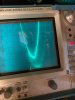
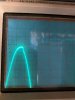
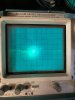
Pictures of the bottom/top of the 60Hz cycle is attached (notice the inconsistent peaks)
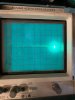
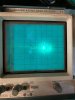
Pictures of the oscilloscope running at a very low pulse cycle showing the inconsistent signal.
Any help would be much appreciated.
There is an inconsistent noise coming from the unit. Noise is louder in the phono section. Noise appears about 1x per second but is inconsistent when it shows up. There is a consistent sounding noise that is very low with a louder portion showing up every second or so.
Oscilloscope probe was on C1A for pictures. I have attempted to isolate the issue with the following steps:
- Replaced rectifier tube (Same Issue)
- Replaced final output tube (Same Issue)
- Removed all tubes aside from the 6X4 (Same Issue)
- Replaced 1st capacitor stage (C1A) with different capacitor (Same Issue)
- Connected R111 directly to C2A, Disconnected C2A from 250V source and C2B (Same Issue)
- Disconnected filament transformer wires (Same Issue)
- Cleaned light dimming swith (Same Issue)
- Removed all lamps (Same Issue)
- Disconnected C1A from C1B leaving C1A the only part connect (Same Issue)
Pictures of the bottom/top of the 60Hz cycle is attached (notice the inconsistent peaks)
Pictures of the oscilloscope running at a very low pulse cycle showing the inconsistent signal.
Any help would be much appreciated.
Attachments
-
 60hz 1.jpeg104.2 KB · Views: 6
 -
 60hz 2.JPG89.4 KB · Views: 5
 -
 Osc 1.jpeg100.6 KB · Views: 5
 -
 Osc 2.jpeg102.7 KB · Views: 5
 -
 Osc 3.jpeg101.5 KB · Views: 5
 -
 Osc 4.jpeg103.6 KB · Views: 5
 -
 Osc 5.jpeg102.9 KB · Views: 5
 -
 Osc 6.jpeg102.9 KB · Views: 5
 -
 Osc 7.jpeg104.8 KB · Views: 5
 -
 Osc 8.jpeg104.6 KB · Views: 5
Last edited:


