• The move to the new server is done. There are some software and database maintenance updates in process. This has us passing the hat around to help out. We appreciate any donations. Seriously, even a dollar helps. The payment page may be found here - https://www.audiokarma.org/support.html

McIntosh MC30 Vs. MC60

I think the fixed bias is McIntosh realizing who their main customers were at the time. Mostly professionals who wanted to listen to music without fiddling about adjusting bias and so forth. The number of people who enjoyed tweaking their systems was a very small minority back than I'll wager. Now days the hobby is still a niche market but the percentage of those who enjoy swapping things in & out of a system is much higher proportionally I believe. However, I've been wrong before and will be again. :)
Not sure wanting to monitor the health of the amp via bias observation is technically "fiddling " but then, i too have been wrong before. Nor is removal of selenium
I imagine i will figure out the answer eventually.
 
The store I bought my first Mac from was Hawthorne Stereo in Portland Oregon. All the salesmen with one exception wore black suits and were older men. The one exception was a younger man who wore slacks, shirt & tie and a sweater. His job was to take care of customers like me. Those who were casually dressed, as times were starting to change. Standing in line at a Mac clinic was interesting. The first time I was there I was the only person in jeans. All the rest of the customers wore suits and most if not all didn't know what bias was. If the health of the amp would have been high on their list I imagine McIntosh would have had bias adjustments and blue meters. :)

I guess my point was the customer base didn't want to have to worry about maintenance. They just wanted to hear music. Also a lot of customers bought Mac because it was expected. Like doctors used to buy Buicks sort of thing.
 
What im getting at is that given that its fixed, whats it fixed AT? Doesnt the use of these bias resisters of varying value depending on a voltage measured at specific location indicate that its therby "set" so a specific value, and if so whats the value,AND can this value be measured with the device ive LINKED to?

Use a variac to set 440V on the plate plate of the 6L6 and then check for approximately -42V on the grid of the 6L6. The value of the bias resistor sets the -42V voltage. The voltage on the plates and voltage on the grids are a ratio. The value on the plate will vary with the mains voltage (line in), which will cause the voltage on the grids to change/follow. But, as long as the ratio between the voltages was set, the bias will be correct.
 
Use a variac to set 440V on the plate plate of the 6L6 and then check for approximately -42V on the grid of the 6L6. The value of the bias resistor sets the -42V voltage. The voltage on the plates and voltage on the grids are a ratio. The value on the plate will vary with the mains voltage (line in), which will cause the voltage on the grids to change/follow. But, as long as the ratio between the voltages was set, the bias will be correct.
Thank you for that. I do have a variac, and will comply.
 
Use a variac to set 440V on the plate plate of the 6L6 and then check for approximately -42V on the grid of the 6L6. The value of the bias resistor sets the -42V voltage. The voltage on the plates and voltage on the grids are a ratio. The value on the plate will vary with the mains voltage (line in), which will cause the voltage on the grids to change/follow. But, as long as the ratio between the voltages was set, the bias will be correct.
Not sure you saw the link to the probe set i mentioned earlier on a few post back, but given you seem to have a handle on this a bit, would you have a gander at the response from the seller in regaurds to my question as to if the probes can measure the mc30 and let me know what you think? I somehow thi
Use a variac to set 440V on the plate plate of the 6L6 and then check for approximately -42V on the grid of the 6L6. The value of the bias resistor sets the -42V voltage. The voltage on the plates and voltage on the grids are a ratio. The value on the plate will vary with the mains voltage (line in), which will cause the voltage on the grids to change/follow. But, as long as the ratio between the voltages was set, the bias will be correct.
For whats its worth, tubes read 42mv respectively. 6l6gc outputs, 5u4gb rectifier.
Just wanted an easy way to check, and if i understand your post then this means the ratio you mentioned must be ok at least. Just with wall current, which is usually 122 here.
Main thing i guess is it does tell me the 2 tubes track well with one another in current draw and are closely matched?
I wanted something to compare these numbers to for future reference of tube or amp health and matching.
Does this sound logical? Maybe im jist fiddling...20190125_213952.jpg
 
I'll try and measure one of mine tomorrow to see what it say when the mains are at 122v.


Not sure you saw the link to the probe set i mentioned earlier on a few post back, but given you seem to have a handle on this a bit, would you have a gander at the response from the seller in regaurds to my question as to if the probes can measure the mc30 and let me know what you think? I somehow thi

For whats its worth, tubes read 42mv respectively. 6l6gc outputs, 5u4gb rectifier.
Just wanted an easy way to check, and if i understand your post then this means the ratio you mentioned must be ok at least. Just with wall current, which is usually 122 here.
Main thing i guess is it does tell me the 2 tubes track well with one another in current draw and are closely matched?
I wanted something to compare these numbers to for future reference of tube or amp health and matching.
Does this sound logical? Maybe im jist fiddling...View attachment 1398656
 
I'll try and measure one of mine tomorrow to see what it say when the mains are at 122v.
At 117v variac read 38.5 and 39.2
Thank you for your efforts and assistance ajauwen. When i google bias of the mc30/60 i get lots on "its fixed bias" and wasnt able to find a real answer on what this meant the tubes are ran at. Since its bias is dictated by a couple factors like you mention, it just seems strange that folks would rather open it up and measure 2 points inside vs pulling current off pin 8 from the top. Which while does not tell everything that the 2 measurments do from underneath it does, tell me the following which measurments underneath does NOT;
1. It tells me how close the 2 output tubes are matched via current in real time application. As oppose to say, a maximatcher.
2. Overall accuracy of the other measurments you mention from underneath of the 440 and -42 (as it effects bias with the resistor)
3. If i stick say a set of Tung sol kt66 which have .9 current draw such as the 6l6gc, i can make sure im not pulling too much on it, or if the tubes are not ballanced i will know. I do have a hickock tv7, which tells me nothing of current match. Ive read lalala all over that USUALLY GM tracks with this, but with the 1000 tubes i have, its not the case. Ive lent more to gain matching being the more important value. Ive read Mac dont care TOO much ect. Ive read it does matter ect. Way easy to match them this way and be done.

All that ive said heee is based on my rudimentary understanding, and may in fact be wrong. I just find it curious few folks seem interested to know what these run at or care of the simplicity of this method for amp health.
While i dont go changing tubes all day and messing about, since these are new to me am simply learning the why and why not. Thank you for your assistance in my learning process.
 
Just measured a 30 that I rebuilt about 2 years ago.

Mains Plate Grid
126v 440v -41.4v
120v 399v -37v
117v 380v -35.4v

Starting point is always the 440v/-42v. The ratio between those two will always be the same regardless of mains voltage. The -42v is set by adjusting the value of the bias resistor (R30). If the diode used is a 1N4007, the R30 value should be around 9.1K to give the -42v.


At 117v variac read 38.5 and 39.2
Thank you for your efforts and assistance ajauwen. When i google bias of the mc30/60 i get lots on "its fixed bias" and wasnt able to find a real answer on what this meant the tubes are ran at. Since its bias is dictated by a couple factors like you mention, it just seems strange that folks would rather open it up and measure 2 points inside vs pulling current off pin 8 from the top. Which while does not tell everything that the 2 measurments do from underneath it does, tell me the following which measurments underneath does NOT;
1. It tells me how close the 2 output tubes are matched via current in real time application. As oppose to say, a maximatcher.
2. Overall accuracy of the other measurments you mention from underneath of the 440 and -42 (as it effects bias with the resistor)
3. If i stick say a set of Tung sol kt66 which have .9 current draw such as the 6l6gc, i can make sure im not pulling too much on it, or if the tubes are not ballanced i will know. I do have a hickock tv7, which tells me nothing of current match. Ive read lalala all over that USUALLY GM tracks with this, but with the 1000 tubes i have, its not the case. Ive lent more to gain matching being the more important value. Ive read Mac dont care TOO much ect. Ive read it does matter ect. Way easy to match them this way and be done.

All that ive said heee is based on my rudimentary understanding, and may in fact be wrong. I just find it curious few folks seem interested to know what these run at or care of the simplicity of this method for amp health.
While i dont go changing tubes all day and messing about, since these are new to me am simply learning the why and why not. Thank you for your assistance in my learning process.
 
Last edited:
Just measured a 30 that I rebuilt about 2 years ago.

Mains Plate Grid
126v 440v -41.4v
120v 399v -37v
117v 280v -35.4v

Starting point is always the 440v/-42v. The ratio between those two will always be the same regardless of mains voltage. The -42v is set adjusting the value of the bias resistor (R30). If the diode used is a 1N4007, the R30 value should be around 9.1K to give the -42v.
fantastic, thank you so much for your time.
 
I'm afraid to ask... do you no longer own these items?
I sold the JBL speakers almost immediately as they were just too big for my apartment. The proceeds funded a pair of Polk Monitor 5 speakers, which I still own. The MX110 / MC240 / Monitor 5s was a pretty sweet lil apartment setup for sure! I kept the MX110 and MC240 until about '96 and sold both.
 

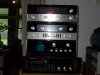
I have a pair of Focal Kanta 2's (specs in pic) and I'm trying to find some Mac gear to go with it. I was going to go with the MC275 and C2300 but after reading these comments I'm thinking about checking out the MC60 and MC30. However, these speakers are rated at 91db and a minimum of 40wpc. I'm wondering if the MC30 won't open them up enough, so at minimum go with MC60. These speakers are a bit warm sounding I think, so it might bring that warmth to the MC60 pairing. Any thoughts on amp pairing with these speakers?

Note, they are currently being powered by a pair of 60wpc homemade tube amps and tube preamp by John Miller. I really enjoy the sound but have lusted after McIntosh equipment for years. I'm hoping it will be a significant upgrade to sound but impossible to tell/research because of the homemade nature of my setup (no reviews, etc).
 
Those 30`s are fed from my original C 22, while the only 60 that I own, does HT center channel duty.
So to keep the front speaker`s all Mac tube driven.
The front tri-amp`d Mac XRT-30`s high/mid line arrays are fed with 4 mono`d MC 275VI`sDSCN0013.JPG DSCN0098.JPG
 
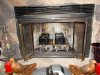
I hope it never rains down that chimney.

Oh yeah nj, I guess I failed to mention, that fireplace has no chimney, just vents into the attic, because when I decided that when the metal roof was installed 6 years ago, to forgo that roof penetration, as I quit using the fireplace for heat in the mid nineties.

But when I still had a chimney my Dynaco Mk. III mono blocks were in there with the flue gate open, with no problems of water getting to the amps..
Also my screened chimney flue cap had a whole chimney elevated cover over it.

Because I put a large cookie sheet 8" above the amps tube cages, and with my 40+ years of refusing to use tube rectifiers in any of my music reproducing tube amplifiers, the operational heat load is substantially reduced, as monitored with a hanging old school thermometer above the amps cookie sheet in the fire place..

Been working great for me since 2000..
 
index.php

...monitored with a hanging old school thermometer above the amps cookie sheet in the fire place..

I'm totally saving that pic. I just know it's gonna come in handy someday.
 
I'm totally saving that pic. I just know it's gonna come in handy someday.

As you see fit, Sir. LOL !!

Not much need for fire places here in NE. FL.
So, in my mind, why not let all that undesirable waste heat by placing, and running tube amps, in a otherwise unused fire box leave the room, allowing the my fairly nearby HVAC thermostat, which is always in the cooling mode to not cycle anymore then necessary !!
 
The store I bought my first Mac from was Hawthorne Stereo in Portland Oregon. All the salesmen with one exception wore black suits and were older men. The one exception was a younger man who wore slacks, shirt & tie and a sweater. His job was to take care of customers like me. Those who were casually dressed, as times were starting to change. Standing in line at a Mac clinic was interesting. The first time I was there I was the only person in jeans. All the rest of the customers wore suits and most if not all didn't know what bias was. If the health of the amp would have been high on their list I imagine McIntosh would have had bias adjustments and blue meters. :)

I guess my point was the customer base didn't want to have to worry about maintenance. They just wanted to hear music. Also a lot of customers bought Mac because it was expected. Like doctors used to buy Buicks sort of thing.


I got my first McIntosh, an MC2105, in 1979 as a bass player in high school who was a big fan of the Grateful Dead (pictured below). DOB used to his clinics at The Stereo Shops of Massachusetts and I'd drag my abused amp amongst all the audiophiles, with my long hair, ripped jeans, and flannel shirt. Dave laughed, put my amp on the bench and point out to the assembled well dressed and coiffed that this was a perfect example of the excellence and robustness of the McIntosh amps.

But to get back on point, I don't have a lot of experience with the MC60s, but I've had a pair of MC30s for a long time and like them better, but I think it's because I prefer 6L6 type tubes in general. With Philips 7581as, my favorite 6L6, they sound great. Wider frequency response, slightly more punch, and clearer than even the McIntosh branded tubes I had for a while. Because of my long career in music, my ears can't really handle more than 30 watts, so with Avalon NP2s, they are perfect, although the still rocking MC2105 sounds really good, too.


IMG_4235.JPG
 
Back
Top Bottom