

You are using an out of date browser. It may not display this or other websites correctly.
You should upgrade or use an alternative browser.
You should upgrade or use an alternative browser.
Mcintosh MC901
- Thread starter motorstereo
- Start date


Matte Grey
Active Member


jimimac
UTOPIAN UNIVERSE?
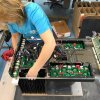
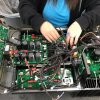
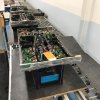
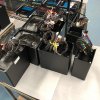
Thank you. Each Monobloc takes one very Large Power Xfmr and three of our hand rolled Beauties.(Autoformers) output Transformers. All encapsulated in A special Compound that has many benefits to the longevity and Sound of each unit..

L-82
Super Member
Look at the size of that thing! Just to copper wires are a worth a few centsGrabbed this from McIntosh Facebook page.View attachment 1718133

I heard a pair of these at Audio Classics in Vestal, and they have the wow factor, they were strapped to a set of top-of-the-line Macintosh speakers, yes they’re expensive, but when you look at some other companies selling mono blocks for hundreds of thousands of dollars and yes they are selling them, Macintosh stuff is pretty reasonably priced, yes it’s not for everyone, but again in the big scheme of high-end audio they’re pretty reasonably priced.

mozcho
Well-Known Member
If I can't afford this, I only have a MC2205, can I achieve similar kind of results, at this price level (less than $2000), by adding a tube pre? So I wish for tube's sweetness, plus the power of solid state, which pre amp is proven matching well with 2205?
Last edited:

twiiii
Lunatic Member
A least now they are making a MC 451. 150 watt tube section, 300 watt SS section with crossover like the 901. I guess I could use the 901 with my XRT 28's, and the MC 451 with my front three channels of my HT system. I would still need one of my 207's to power the three sections of super tweeters. and the 4 surround speakers. The question is where to put the three amps. And who is going to buy sets of KT 88's every two years, Davie O'brien replaced my MC 60 and 275 out put tubes every two years to keep them with in spec. No I'll stick with my two 207's and my two MC 830.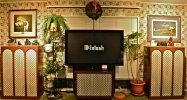

steve59
Active Member
WOW, It's products like this that would get into my head and spark my lust for a hifi stereo of my own. Things that seem out of reach while raising a family become less so when that job is done. I doubt my sensibilities would ever let me spend $35k on amps, but a few years ago I thought I'd never reach deep enough into my pocket to buy anything with the Mcintosh name on it.

Yes, several times.Has anybody ever Biamped with tubes on the upper drivers and used solid state for the bass drivers? Which is what the 901s are all about
It is a fairly common setup among biamp/triamp listeners.
I have, with identical amps top/bottom (4), with different amps top/bottom solid-state, with solid-state tri-amped, solid-state bottom and tube top. I have used passive with full-range into all amps driving into passive crossovers, network before amps using analog active crossover (both 3-way and 2-way), and using DSP for crossover and shaping both 2-way and 3-way.
I think that there are advantages to be had by a properly set up multi-amplifier bi/tri-amp setup, I am not a believer in tubes as I can’t see value in adding distortion when a proper modern SS unit will be cleaner, so “warmth” added isn’t something I look for, that was fun but I never felt it sounded as good as SS top and bottom.
Most recently I moved toward 2-way, which simplified the tri-amp into bi-amp, and in my mind made more sense, but comparing what I was able to accomplish sans passive crossover to what my speaker manufacturer was able to accomplish in the crossover (in high-end speakers anyway) I was not able to near nor measure any significant difference, so I further simplified and went back to using 2-way speakers with the internal crossover that a multi-million-dollar R&D budget created, ... and find it to be something I could not improve upon.
Yes, the journey was fun, a lot was learned, and I feel that if you have the time, money, and curiosity to do so it is well worth experimenting with crossovers and multi-amp setups. There is just so much that can be tailored to your individual taste, and it looks soooo cool! The downside is that it isn’t simple, doing it properly takes a good quality crossover (DSP) and good quality calibrated mic with software to measure and do the exact thing that the original crossover was doing (band-pass, high-pass, low-pass, those are easy but many higher-quality speaker crossovers also do a fair amount of shaping). Then, every time something changes (different speakers, different amp, etc.) you are starting over, which is what made me lose interest since I tend to upgrade / change things occasionally and was tired of the long process of tuning everything every time. Also, if you like to do A/B comparisons or swap gear occasionally it is complicated (although my big DSP saves many many configurations, just need to name them appropriately for recall later).
In short: Do it, it is worth the time and you will learn a lot about your personal preferences.
I think that there are advantages to be had by a properly set up multi-amplifier bi/tri-amp setup, I am not a believer in tubes as I can’t see value in adding distortion when a proper modern SS unit will be cleaner, so “warmth” added isn’t something I look for, that was fun but I never felt it sounded as good as SS top and bottom.
Most recently I moved toward 2-way, which simplified the tri-amp into bi-amp, and in my mind made more sense, but comparing what I was able to accomplish sans passive crossover to what my speaker manufacturer was able to accomplish in the crossover (in high-end speakers anyway) I was not able to near nor measure any significant difference, so I further simplified and went back to using 2-way speakers with the internal crossover that a multi-million-dollar R&D budget created, ... and find it to be something I could not improve upon.
Yes, the journey was fun, a lot was learned, and I feel that if you have the time, money, and curiosity to do so it is well worth experimenting with crossovers and multi-amp setups. There is just so much that can be tailored to your individual taste, and it looks soooo cool! The downside is that it isn’t simple, doing it properly takes a good quality crossover (DSP) and good quality calibrated mic with software to measure and do the exact thing that the original crossover was doing (band-pass, high-pass, low-pass, those are easy but many higher-quality speaker crossovers also do a fair amount of shaping). Then, every time something changes (different speakers, different amp, etc.) you are starting over, which is what made me lose interest since I tend to upgrade / change things occasionally and was tired of the long process of tuning everything every time. Also, if you like to do A/B comparisons or swap gear occasionally it is complicated (although my big DSP saves many many configurations, just need to name them appropriately for recall later).
In short: Do it, it is worth the time and you will learn a lot about your personal preferences.
Awesome reply thank you. Very helpful.
I'll be going the tube solid state Biamp route. the solid state can be really nice, although I think some of the preciseness in the dynamics can be softened. As well as improved fullness in the lower volume settings which I hope will be worthwhile. Aside from a tube preamp, cj gatt, I am new to amplifier tubes And biamping. So we'll see what happens. I'll be keeping the solid state amps, because I hate giving up gear. I wish I didn't have to keep all the boxes. Thankfully I have an oversized garage. UnFortunately I can't really get out too much, so I have to imagine what things will sound like as I haven't heard any other systems for quite a while. But I think I'm a good judge of how things should sound.
I'll be going the tube solid state Biamp route. the solid state can be really nice, although I think some of the preciseness in the dynamics can be softened. As well as improved fullness in the lower volume settings which I hope will be worthwhile. Aside from a tube preamp, cj gatt, I am new to amplifier tubes And biamping. So we'll see what happens. I'll be keeping the solid state amps, because I hate giving up gear. I wish I didn't have to keep all the boxes. Thankfully I have an oversized garage. UnFortunately I can't really get out too much, so I have to imagine what things will sound like as I haven't heard any other systems for quite a while. But I think I'm a good judge of how things should sound.
Last edited:

Awesome reply thank you. Very helpful.
I'll be going the tube solid state Biamp route. the solid state can be really nice, although I think some of the preciseness in the dynamics can be softened. As well as improved fullness in the lower volume settings which I hope will be worthwhile. Aside from a tube preamp, cj gatt, I am new to amplifier tubes And biamping. So we'll see what happens. I'll be keeping the solid state amps, because I hate giving up gear. I wish I didn't have to keep all the boxes. Thankfully I have an oversized garage. UnFortunately I can't really get out too much, so I have to imagine what things will sound like as I haven't heard any other systems for quite a while. But I think I'm a good judge of how things should sound.
What speakers to you plan to biamp? Are they designed to be biamped?
If using a passive biamp scheme in which you connect the amplifiers directly to the preamp, with no crossover in-between, and connect the amps' speaker outputs to high-frequency and low-frequency connectors on the back of the speaker, there can be an issue using a tube amp for the highs.
In this case, the tube amp is running the highs but sees an open circuit for the low frequencies (where there is a lot of power) and this will cause unwanted currents in the tube amp's output transformers. Probably won't damage anything but will eat up a bunch of power, shorten tube life and lower sound quality.
The solution is to keep the low frequencies from getting into the tweeter (tube) at its input as much as possible by using a high-pass filter between the preamp and the power amp. The cutoff frequency of that filter is not critical, just want to keep a bunch of the bass out of this amp, and if you set that cutoff a somewhat below the the speakers crossover frequency, you won't affect the speaker crossover characteristics.
I learned about this from the McIntosh rep (Ron_C) when I was biamping this way with an MC275 on top.
The MC901, subject of this thread, has a handy way to do just that as recommended by the McIntosh rep's post #119 in this thread.