• The move to the new server is done. There are some software and database maintenance updates in process. This has us passing the hat around to help out. We appreciate any donations. Seriously, even a dollar helps. The payment page may be found here - https://www.audiokarma.org/support.html

Mercury Perfect Presence Sound LPs

jhinkel

Super Member
Hey everyone!
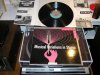
I just picked up one of these LPs, specifically the one entitled "A demonstration of 35mm magnetic film". Just curious... anyone else heard of / have this series of records or own a machine used to play the 35mm film? I don't know much about this technology and was wondering if anyone had any info? What era is it from? 50s, 60s?

I took a listen to this on my tt, and It absolutely blew me away :yes:. The fidelity and live sound on the record surpasses anything I have ever heard!!!! I would highly recommend trying to look for one of these if you don't already have one.
 
Register to hide this ad
This series dated from 1958-1961. The later recordings were on 35 MM film. And very well done with high QC. Fine Recording did all mastering mono and stereo and some of the original recordings were engineered by Bob Fine. And they are the popular equivalent to Living Presence and equally fine sonically.
 
I have to agree with the excellent sound quality on this series of pressings. Some of the best I've run across and I pick them up any time I see them if they are priced right.

bg6634.jpg
 
I got the one you mentioned, "A Demonstration of 35mm Magnetic Film," many years ago at a sale at the public library.

Today at a thrift store I picked up another in the series, "Music In Depth," which sounds even better to my ears (probably because it's in much better shape).

God, these things sound wonderful.
 
An early proponent of the 35mm magnetic film was Belock labs and Everest records.

http://en.wikipedia.org/wiki/Everest_Records

I picked up the record below - Everest SDBR-2001 "Musical Variations in Stereo". From 1958 this is an extremely early stereo recording.
Picked it up for a quarter at a yard sale last year. This is why you got to keep hitting the yard sales - for all the dreck there is occasionally a true gem. I also got a rare early Dave Brubeck "promo" copy for the same $$.


attachment.php
 

Attachments

  • P9070991.jpg
    P9070991.jpg
    104.4 KB · Views: 113
A note, the system Mercury used was built and designed for Harry Belock at Everest Records. Interesting that a Bert Whyte project to record the Pablo Casals festival in 1960 forced the Everest board to sell out. Everest's board sold out to Harry Belock's accountant and closed the label. Fine Recording Studios purchased that gear and the Everest former studios. Bob Fine used the studio as Fine Recording Bayside for several years until it proved too costly to continue. Madacy Entertainment now owns the Everest Master library. Many of these master film recordings haven't aged too well and now suffer from vinegar syndrome. Another note: Look only for Silver labels or Purple Mountain labels for original pressings. Later pressings were made from 15 IPS dub tapes and lesser quality.
 
Last edited:
If you have the time, Kent, what's vinegar syndrome? Does the "baking" of old tapes have anything to do with this?

Thanks,

Ken

Deterioration of cellulose triacetate film stock:

http://en.wikipedia.org/wiki/Cellulose_acetate_film

One of my many hobbies is collecting film, and vinegar smell (or lack thereof) is always mentioned in for-sale listings.

I believe that baking old tapes is to remedy sticky shed syndrome on polyester magnetic tape, which is something else...
 
When I took film editing in college, we had to cut a fight scene from "Gunsmoke". We bought copies of the footage and the audio track on 16mm mag film. The image film has survived, but I looked at the mag soundtrack the other day and it's pretty much gone. BTW, the episode of "Gunsmoke" that contained the fight scene featured the TV debut of Jack Klugman. At the beginning of one of the takes, you can hear the director exhort "Don't be afraid of it, Jack!".

It's funny how the original sources of some albums have long gone, but the LP remains. There's another sad note about vinegar syndrome and audio masters. Sony, which owns Columbia's (and others) catalogs, set out to preserve master tapes from the 50's forward by transcribing them using their superbit digital process. They did some calculations and realized it would be prohibitively expensive to copy the entire catalog. Furthermore, it's a race against time that they know they'll lose. With the amount of resources they feel they can put towards the effort, they know some masters will be lost before they can get to them. I'd hate to have the job of triaging the masters.
 
Vinegar smell = acetic acid (like used in photo "stop" bath).
Used in the manufacturer of various plastics including acetate.
 
Back
Top Bottom