• The move to the new server is done. There are some software and database maintenance updates in process. This has us passing the hat around to help out. We appreciate any donations. Seriously, even a dollar helps. The payment page may be found here - https://www.audiokarma.org/support.html

Missing Fried Products info from the IMF Electronics site.

Register to hide this ad
Thank you Sir for posting all those files. I'm currently very interested in Fried speakers and will be looking at some A-3's next week. I've read that the A series were built similar to the Q. I've found that the A is 30"x18x18 which is bigger than the Q. The current owner says that the crossover had been professionally rebuilt and that the drivers had been upgraded
" During the time I’ve owned them, the crossovers have been professionally rebuilt with quality parts. Also, the drivers and tweeters have been replaced with original equipment purchased from Fried."
I have found content here that says that the condition of the internal stuffing is very important. Can the condition be determined by the bottom "tunnel"? The A/3's would temporarily replace a set of EPI 200's that are similar in size and perform very well to my ears. Any thoughts on these?
1738847-fried-a3a-speakers-with-linn-index-speaker-stands.jpg
 
I got to hear the H2 system in 1976. The bottom end was super. I wonder if LS3/5's could be swapped for the smaller satellite speakers.
 
Thank you Sir for posting all those files. I'm currently very interested in Fried speakers and will be looking at some A-3's next week. I've read that the A series were built similar to the Q. I've found that the A is 30"x18x18 which is bigger than the Q. The current owner says that the crossover had been professionally rebuilt and that the drivers had been upgraded
" During the time I’ve owned them, the crossovers have been professionally rebuilt with quality parts. Also, the drivers and tweeters have been replaced with original equipment purchased from Fried."
I have found content here that says that the condition of the internal stuffing is very important. Can the condition be determined by the bottom "tunnel"? The A/3's would temporarily replace a set of EPI 200's that are similar in size and perform very well to my ears. Any thoughts on these?
1738847-fried-a3a-speakers-with-linn-index-speaker-stands.jpg
The woofers in your picture appear to me to be the original Phase Tech 8" woofers used in the A3 model.

Back around 2007 the former owner of Fried Products after I.M. Fried passed away was offering some driver upgrades.
The drivers were the Silver Flute 6.5" offered for sale to replace the model C3L drivers.
The Silver Flute 8'' offered for sale were for the model A and Q.
The crossovers for all these models were changed to accommodate the new drivers.

All of the Silver Flute drivers have 6 holes for attaching to the baffle.
The C3L , A and Q model drivers had 4 holes for attaching to the baffle.
New holes would have to be drilled to accommodate these replacement drivers.
This would be a challenge for those who like to use machine screws going into t-nuts like myself.
IRRC the spec sheet called for using would screws which I was never fond of when compared to using
t-nuts for securing a driver.

I have never heard any of the Silver Flute drivers in any of the Fried models.
I have been in contact with a few people over the years that do like their performance.
I do have the uprated crossover plans for the Silver Flute 6.5" in the C3L T-line enclosures for use with the Hiquphon tweeters if any anyone wants it.
The file is too large to put in a post.

I would enjoy seeing the crossover schematic for the 8" Silver Flute drivers used in the Fried upgrades that were sold.
 
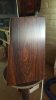
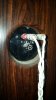
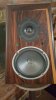
Jim: I'm a little late to this thread. I stumbled on it during a search for information on Fried C3/O3s. I bought a pair of C3s made from Cocobolo back in the mid '80's. I didn't have the funds or room at the time to have the O3s built so I've been carting the speakers & foam around for the past +30yrs. Now I've discovered that I'd given away the assembly instructions for the O3s when I discussed the having them built. I tried the links above & the site times out. Are they still available elsewhere? BTW, Here are some shots of my C3s. They're a little dusty but sound really good.
Fried C3 01.jpg Fried C3 02.jpg Fried C3 03.jpg Fried C3 04.jpg Fried C3 05.jpg
 
Bud Fried's speakers were distinguished by their use of Series Crossovers. Dunno why IMF the company is mentioned. Bud Fried had very little to do with their lineup.
 
Thanks Jim!
For some reason I can't open/download the Model C pdf . In any case perhaps a moderator could take all of this info and put it in the Digital Documents section for future reference.
 
Bud Fried's speakers were distinguished by their use of Series Crossovers. Dunno why IMF the company is mentioned. Bud Fried had very little to do with their lineup.
I used to work for Audio Specialists in South Bend, IN. We were a Fried dealer and Mr. Fried came by to visit a couple of times for a product seminar & introduction of new speakers.
As I remember him telling it, the IMF in the company stood for Irving M. Fried. That might be the connection.
 
I used to work for Audio Specialists in South Bend, IN. We were a Fried dealer and Mr. Fried came by to visit a couple of times for a product seminar & introduction of new speakers.
As I remember him telling it, the IMF in the company stood for Irving M. Fried. That might be the connection.
Bud parted ways with IMF a long time ago. Bud was a lateral thinker who wasn't afraid to take a different path.
 
Jim: I'm a little late to this thread. I stumbled on it during a search for information on Fried C3/O3s. I bought a pair of C3s made from Cocobolo back in the mid '80's. I didn't have the funds or room at the time to have the O3s built so I've been carting the speakers & foam around for the past +30yrs. Now I've discovered that I'd given away the assembly instructions for the O3s when I discussed the having them built. I tried the links above & the site times out. Are they still available elsewhere? BTW, Here are some shots of my C3s. They're a little dusty but sound really good.
View attachment 1276907 View attachment 1276908 View attachment 1276909 View attachment 1276910 View attachment 1276911

Thanks Jim!
For some reason I can't open/download the Model C pdf . In any case perhaps a moderator could take all of this info and put it in the Digital Documents section for future reference.

I recently found out that the website that have the missing Fried pdf files is now a pay per view site.
 
Jim: I'm a little late to this thread. I stumbled on it during a search for information on Fried C3/O3s. I bought a pair of C3s made from Cocobolo back in the mid '80's. I didn't have the funds or room at the time to have the O3s built so I've been carting the speakers & foam around for the past +30yrs. Now I've discovered that I'd given away the assembly instructions for the O3s when I discussed the having them built. I tried the links above & the site times out. Are they still available elsewhere? BTW, Here are some shots of my C3s. They're a little dusty but sound really good.
View attachment 1276907 View attachment 1276908 View attachment 1276909 View attachment 1276910 View attachment 1276911

Sorry I didn't completely answer your question with my previous post.

I don't have the O1-O3 transmission line enclosure plans on my computer.

The O3 10" Carboneau woofers would perform even better in Fried's O4 enclosures.
The T-line length is a little longer since the enclosure is about .5 cu. ft larger then the O1-O3 enclosures.
You can find the plans with this link.index.php
 
John Wright designed the A&D (Audio and Design) tonearms, one of which became the Keith Monks arm after A&D went under. He then went on to design the transmission line speakers that were sold as IMF. They were based on the original Bailey TL, but the early ones used some unusual drivers (The Styrene Pressure Speaker, for example, which had a styrene lump as the cone, with a center suspension).
Bud Fried was a successful dealer in the very early days of hifi at his Center City Lectronics, and he imported several british products - the Quad electrostatic, Decca, Goldring, and maybe Lowther cartridges, and some other stuff, and he had a monthly 'Letter from London (or Britain, I can't remember)" column in High Fidelity.
So he was a pretty big deal, and when he ran into Wright and offered to import them into the US, Wright was wowed and agreed, and not yet having a name for the company, he agreed to IMF, which he regretted later. But the british market for enormous speakers isn't enormous (and Tannoy already had a good part of it), and the economy hadn't fully recovered from the war and its aftermath, whereas the US market was vastly larger, american homes larger, and the american economy booming. So the lure was very strong.
IMF was, for decades, a significant presence in the high end in the US, but not a market leader, even though their advertising literature was, if possible, even better and more attractive than AR's, which set the bar for intelligent persuasion. Many people, if they are paying for big speakers, want big bass, regardless of whether it is realistic, and a speaker designed to damp out the fundamental resonance wasn't going to knock people over with it's low end.
IMFs were not designed with much input from Bud Fried, even though he implied they were. But that may have been a two edged sword, since Bud's urgings were probably sound - he wanted cheaper, smaller, more efficient speakers (and maybe a little more bass), but Wright stuck to his guns. Fried then started to sell his own designs in the US, and acrimony ensued. Eventually the two separated, and Fried started selling his own speakers, which had a very clear relationship to the IMFs, but most were cheaper and smaller and more efficient, with a little more bass (many were damped line tunnels, a much simpler variant of the TL). Many had series crossovers, one of Bud's enthusiasms.
IMF then went bust - I read that a swimming pool chemical company owned them and didn't know what to do with them, but this sounds too good to be true. Wright went on to TDL, which continued to make TLs, which, surprisingly, were smaller, cheaper and more efficient with a little more bass (a couple even being accused of be column resonators). They did relatively well in England, but disappeared in the 90s, I think. John Wright died around then, which may have been related.
Fried did quite well in the US for a fairly long time, but eventually it, too went under. And Bud Fried died, again, perhaps related.
Both designers and all three companies were widely respected, and deservedly so. But the modern market does not really reward perfectionists or lovers of classical music, who design speakers to faithfully reproduce orchestras. Alas...
 
On a side note I have been running my Model C speakers with a mini-watt tube amp and they just sound fantastic!
 
Last edited:
Hi Jim, Weird that the 3-way G series models 2 and the 2A and the G/2A revised I and II, and the G/3 are not among all this. We G owners never get a mention except in the March 8, 1984 "FRIED Newsletter" I have here. I can't wait to see if they are mentioned in the No. 15 1979-05-15 doc there. In the March 8, 1984 "FRIED Newsletter" Bud addresses the G/2A, the "marvelous little Beta", the Q/2, the "superb new A/3" and "now -- the STUDIO IV!" Uploaded a copy of it here.CCF_000097.jpgCCF_000096.jpg
 
Sorry I didn't completely answer your question with my previous post.

I don't have the O1-O3 transmission line enclosure plans on my computer.

The O3 10" Carboneau woofers would perform even better in Fried's O4 enclosures.
The T-line length is a little longer since the enclosure is about .5 cu. ft larger then the O1-O3 enclosures.
You can find the plans with this link.index.php
Uh, Jim, why does clicking on the link you posted above, transport me immediately to HiFiHaven.org ? I'd like to see some of those Fried docs.
 
Back
Top Bottom