• The move to the new server is done. There are some software and database maintenance updates in process. This has us passing the hat around to help out. We appreciate any donations. Seriously, even a dollar helps. The payment page may be found here - https://www.audiokarma.org/support.html

MX-1000 Big 4

rottalpha

Yamaholic
Subscriber
This subject has been discussed numerous times and there is so far no viable alternative to replace the big four cans.

Today I had on my bench the guts of one om my MX-1000's and decided to look once more in to a viable solution.

First:

The MX-1000 uses 2 pairs of main caps; 2 x 47000uf @63v and 2 x 40000uf @50v All four have the same size, respectively 63.5mm diameter and are 69mm tall.
I measured from the top of the cans to the under side of the top cover plate on another MX-1000 and found about 13.5mm clearance, so it is safe to say that an 80mm can would fit.

Now, while I found a few alternatives for the 50V pair, the 63V pair was elusive.

BUT, a search of the major manufacturers shows that Cornell Dubilier makes just the right cap:

382LX473M063B082V / 47000 50mm x 80mm. These use the 5 pin connectors (will need to trim 3 pins)

Since their next lower size is 33000uf, I was considering using 4 x 47000 and with some minor pin trimming these will work. There is one problem however, no one has them in stock.

While debating weather is worth to go to all this trouble to call the mfg and find out how to faster get a hold of some of their caps, I went on to test the original Nichicons.

They tested as follows:

44750uf (-4.8%)
44140uf (-6%)

38710uf (-3%)
38500uf (-3.68%)

WOOW!!! These amps were built from 1987-1992, which means the average MX is 25 years old. Guess what, I would be a fool to mess with these, so for me the problem is solved.

In conclusion: If you want a headache go ahead and order the Cornell Dubilier caps; if you are like me, you just let the 4 big mamas be 'cause most likely they will be good for another 20 years. Yes, of course, some amps are more abused than the others, but the average MX-1000, does not really need a big 4 replacement.
 
Register to hide this ad
I came to the same conclusion when I checked the caps on one of my M60s and the A1020. They all checked within 4% or so of spec albeit on the lower side.
I'm guessing these are typical of the big caps that you see for sale now in that they have a long life spec compared to smaller ones (say 5,000+ hours rather than 1,000).
 
I am really glad to see a pattern but this is not necessarily the norm for all 70' & 80' Yamahas. The caps on the MX and the M's were really over-sized, besides being a top-shelve product to begin with. However, I did recently checked the main 4 in my B-2 and they were way out of spec.
http://audiokarma.org/forums/index.php?threads/yamaha-b-2-heart-surgery.682566/

While I am very inclined to believe that most of the MX and possibly the M's do not really need a big 4 replacement, I would be cautious to generalize to other models. As much as a pain in the arse as it is, I would still test the big 4.

When I did recap another of my MX-1000 last year, the big 4 tested within 10% (on the low side), so I was not too concerned either. I was just surprised to see how little the ones in this unit drifted (if any) from the spec.
 
While I am very inclined to believe that most of the MX and possibly the M's do not really need a big 4 replacement....
But there is always that nagging question of "but what if" that you never know until you try. :rolleyes:

Don't know if you read my older post on my M40 refurb, but I did replace the two large caps even though they both tested within spec. They were only 22000uf each so were fairly easy to find and replace. I replaced them with Mundorf Mlytic AG caps. The improvement in sound quality was dramatic. My M40 sounded better than my M85 or M1000U. It taught me that there is more to cap quality than measured specs. There are other qualitative factors that only the two measuring devices on each side of your head can detect. :rflmao:

I believe the best option to replacing the large caps in the MX1000 is to combine two or three lesser value caps wired in parallel. They are smaller so will fit but you have to get creative as to where to mount them using cap clamps.
 
But there is always that nagging question of "but what if" that you never know until you try. :rolleyes:

.... I replaced them with Mundorf Mlytic AG caps. The improvement in sound quality was dramatic. My M40 sounded better than my M85 or M1000U. It taught me that there is more to cap quality than measured specs. There are other qualitative factors that only the two measuring devices on each side of your head can detect. :rflmao:

I believe the best option to replacing the large caps in the MX1000 is to combine two or three lesser value caps wired in parallel. They are smaller so will fit but you have to get creative as to where to mount them using cap clamps.


Really? you attribute the sound improvement of your M40 solely to the Murdofs big cans! :idea:

If your original big cans were truly on spec, most of the other improvements you made to the amp would have made a greater difference in terms of sound improvement, rather then the replacement of the PSU caps, note; If your original big cans were truly on spec. But it replacing them solves your " What If" problem, I am really happy for you.

Personally, I will take Murdof caps any day if they are in the signal path of my preamp, put those in my speakers cross-over, whatever...hell, give me some to put them on my desk just to look at them; really nice German cap porn, LOL.......BUT I could not care less for them in my power supply!!! Frankly a waist of $$$.

I will take any caps that handles high ripple current / low ESR, rated at 3000-5000 hours. ..true, pairing caps in parallel will result in lower ESR but we are talking about other complications then.

As far as replacing the big cans in the M-80,85 and MX-1000 (not sure about the other models) the topic has been discussed more than a dozen times, just on this forum and brighter minds have opined, while a concrete solutions is still not there. Speculating about placing multiple capacitors:blah:....also discussed; making mods to accommodate different sizes :blah:...also discussed; group buy :blah: ...also discussed.
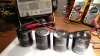
What I commented about were exact dimensions of the caps, actual measurements and named a replacement cap which will fit in the same space as the original, without any fancy mods. The big 4 are not easy to remove (as you will find out if you will ever attempt to replace yours) and since I had some already out of the nest, I figure I take some actual dimension measurements to save others the guessing pain....and took a capacitance and ESR test just for kicks.

Don't underestimate the big cans in your M-85 and MX-1000. They are fat and short and as good as they get. Well over-sized for the purpose they serve. The bigger the surface area of the cap the more heat it can dissipate. Mine still have really low ESR, less than 1/2 of an ohm, exceptional for this size cap, especially considering their age. The lower the ESR the higher the ripple curent they can handle.

Do what you think is best for your amps, especially if you have $$ for the Murdofs. Your choice in caps for the PSU is what works best for you.
Personally, I try to tune out any psycho waves and not let them affect my decision process.
 
But my definition of broke is when there is a potential for improvement that hasn't been realized.

one more thing since you mentioned potential for improvement..., the big cans in the MX-1000 are possibly the only area that would be really hard to improve.
You want improvements in this model? start by replacing almost failed semiconductors, including all output and power trannies. Replace your drivers and pre's as well. Look-up Onsemi, they have some killer replacements. make sure you replaced all you relays, replace your speaker posts, re-float all solder joints. I remember that that you already recapped. I remember that you also replaced the RCA jacks. I mentioned to you that you had the ground wire of the original RCA's connected wrong, I would fix that, I would replace all small litycs with film. Depending on your serial number, you may also have some tantalum caps in there too. Depending on your serial number, your protection circuit can also be improved. Yamaha has made changes to this model, not documented in any service bulletin.

Oh, one more thing: did you note that every time you turn your amp on, your lights deem a little (if you have the lights on in the same run with the amp). The in-rush current for these amps is serious and it hits that power switch full-on.
Look in to a installing a triac switch protector. This will extend the life of your power switch as that triac will absorb most of the in-rush curent. This is something Avionic made me aware of recently. Thanks Dave ! look in to my B-2 post for the link to the discussion (I believe) in the DIY section of this forum.
 
Last edited:
Really? you attribute the sound improvement of your M40 solely to the Murdofs big cans! :idea:

All I can say for sure is that I replaced all the small lytic caps in my M40, M85 and M1000u with equivalent quality caps. But in the M40 I also replaced the two large caps with the Mundorfs and the M40 now sounds better than my M85 or M1000u. Do I know for sure it is due to the Mundorf caps? No, because I did not do A/B listening tests in between replacing the small and large caps and because something else could also be a factor. Also ears are inherently biased and physically flawed measuring devices. But to my ears the M40 now sounds better than the other two amps.

BTW, I personally would not replace the big cans in my M85 or M1000u or urge you to do that as long as they are sounding as good as they do. Even if the sound did improve significantly it would look highly modified and would hurt resale value if I ever tried to sell them.
 
Over the holidays I found some time to warm up the soldering iron.
One of the boxes I cracked open was an MX-1000. Since for the last one I did not record all measurements of the big 4 cans, I figured I will do it this time around and share.
I have to say that for 25-30 years old components, these cans tested quite well.

Now, I do not pretend to be an expert, so please keep me honest if you believe I am wrong in my assumptions, based on these results.
For test equipment I used an El cheapo LCR for capacitance testing and ESR as well as a Sencore 77, for more comprehensive testing that included a 10-15 minutes of forming the caps at 40V, then performing capacitance, leakage, dielectric absorption and ESR tests, with the voltage parameters (when testing with the Sencore meter) set to each of the capacitors factory specs, of respectively 63v and 50v. Between the two meters, readings for capacitance and ESR were same or within very little difference of each other.
The numbers below are from the Sencore meter readings only:

C1 Rating: 47,000µF +/- 20%

Actual Capacitance: 49,700µF

Leakage: <500µA @10 mins.

Dielectric Absorption: 6% @10 minutes

ESR: .02Ω


C2 Rating: 47,000µF +/- 20%

Capacitance: 49,600µF

Leakage: <450µA @10 mins.

Dielectric Absorption: 5% @10 mins.

ESR: .05Ω


C3 Rating: 40,000µF +/- 20%

Capacitance: 40,200µF

Leakage: <200µA @10 mins.

Dielectric Absorption: 3% @10 mins.

ESR: .03Ω


C4 Rating: 40,000µF +/- 20%

Capacitance: 40,100µF

Leakage: <200µA @10 mins.

Dielectric Absorption: 5% @10 mins.

ESR: .03Ω


I was initially concerned to see greater than rating capacitance since the other MX big cans I tested, all tested a little below the rated capacitance (see the initial post as an example), but the upwards drift is minimal if I can call it a drift at all, since it is well within the 20% tolerance. After testing the rest of the components in this amp and assessing the MX overall condition, I concluded that this particular amp has very little mileage and that, this could be one of the reasons why the capacitance reading. But of-course, this is only a speculation based on my observations I made while working on the amp and measuring other small capacitors, which all tested on spec...including the notorious 100uf @6.3v on the main board.

If any experts happen to read the measurements, I would be curious to hear your opinions regarding the readings.

Also, if anyone decides to go through the hustle to remove the cans, I am forewarning you that it is a real PITA, not only to remove them, but to put them back, particularly if you decide to individually separate them from the assembly. FYI, reinstalling them at the same distance from the board is key.

Some nudies:

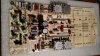
Here are the Big Mamas!IMG_20161230_053350183.jpg

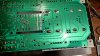
The glue cleaned up pretty well
IMG_20161230_111653969.jpg

No sub-assembly pads were hurt during the process, albeit, I did manage to bubble up the the surrounding of one of the can's leads while putting it back and realigning it.
IMG_20161230_152406228_HDR.jpg

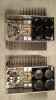
Along one of its siblings
IMG_20161231_104121898.jpg

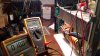
Idling nicely at 10mV
IMG_20161231_134038164.jpg

The break-in was done over the new year's eve party where it proudly rocked the house, with no disappointment :D
 
Great job!!! :beerchug:
I figure I would save some time for others MX-1000 owners.
I have tested the big cans of 4 different MX1Ks so far and every time they checked within spec, regardless if the amp was "Chernobyl" or not.
 
Thanks for putting this together, it's good to know. How do the smaller caps fare? Looks like a bunch of ES caps on the board.
 
Thanks for putting this together, it's good to know. How do the smaller caps fare? Looks like a bunch of ES caps on the board.
Yes, there are 4 ES caps on the board. They replace the original bi-polars caps.
In this amp, ALL caps were on spec, but this is the first time I see that. Typically, the three Blackgates,100µF @6.3v on the main board are out of spec, sometime testing in the pF range. I always replace those with higher voltage ones...in this case Nichicon FG @25v. They fit perfectly. The four bi-polars and the other four caps on the main board (the eight caps that are originally glued) those are rarely out of spec, but I replaced 'em, more as of a precautionary measure. Same for the meter power section caps, I believe those are 330µF.
I replaced all sub-assembly boards caps too. Sometimes those are way out of spec as well (not in this case).
The sub-boards do not have any bi-polars. The original lime green that look just like the ES series, are not BP. You can prolly replace with BP and it may work. I think that all replacements I use here are rated at 50v, just because they fit and that is what I had on hand. All caps on the sub-boards are Nichies FG for this amp.
When you get to the relay board and depending on your amp revision, you will find a cap with a value greater than the one listed in the schematic. Replace with same value, not with what the schematic shows. I allays forget to make a note which C# that is...
 
Back
Top Bottom