


Tomcomm
Member
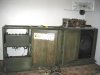
The self contained Sony model CS 300 was first described in the venerable AUDIO magazine in it’s December 1960 issue. It was a two head, single motor minimal design. It met all its performance specs and sold for $399, a mid range price for a better than mid range performer. Since I intended to install the tape machine in a slide out drawer in my original Hi Fi cabinet:
http://www.audiokarma.org/forums/showthread.php?t=268152
All I wanted was a small tape deck that I could drop in.
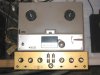
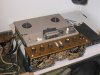
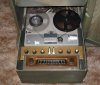
Fortunately Sony offered the CS 300’s tape transport with no electronics as a model 262-D for $89! Seemed like an ideal setup so in 1963 I bought the Sony 262-D and a discontinued Webster SS700A tube tape amplifier for another $29. I ended up cutting the Webster’s power supply off and mounting it inside the 262-D and then bolting the two units together to make a complete tape deck that fit nicely in the cabinet’s slide out drawer
Once CDs came out I knew I had to make my tape system approach their sound quality. In 1984 I redesigned the Webster to solid state using National’s low noise dual amp, LM 381 and changed to an Akai R/PB head. Then in 1986 I bought a new NX-40 DBX noise reduction unit for $59. When carefully setup, the DBX got rid of virtually all tape noise and could process the dynamics of a full symphony orchestra without overload or artifacts. From then on, all my tape recordings would be Sony/DBX. And so it is today…..Tom
http://www.audiokarma.org/forums/showthread.php?t=268152
All I wanted was a small tape deck that I could drop in.
Fortunately Sony offered the CS 300’s tape transport with no electronics as a model 262-D for $89! Seemed like an ideal setup so in 1963 I bought the Sony 262-D and a discontinued Webster SS700A tube tape amplifier for another $29. I ended up cutting the Webster’s power supply off and mounting it inside the 262-D and then bolting the two units together to make a complete tape deck that fit nicely in the cabinet’s slide out drawer
Once CDs came out I knew I had to make my tape system approach their sound quality. In 1984 I redesigned the Webster to solid state using National’s low noise dual amp, LM 381 and changed to an Akai R/PB head. Then in 1986 I bought a new NX-40 DBX noise reduction unit for $59. When carefully setup, the DBX got rid of virtually all tape noise and could process the dynamics of a full symphony orchestra without overload or artifacts. From then on, all my tape recordings would be Sony/DBX. And so it is today…..Tom
Attachments
Last edited:

