• The move to the new server is done. There are some software and database maintenance updates in process. This has us passing the hat around to help out. We appreciate any donations. Seriously, even a dollar helps. The payment page may be found here - https://www.audiokarma.org/support.html

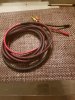
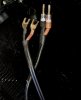
My DIY spiffy looking speaker cable guide..

Hi everyone!
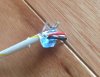
So I got this nice quality flexible copper wire (and quite a lot of it...around 300ft ) it says 22awg and it has 4 stranded copper leads with 4 colors PP sleeves, it also has a nice foil insulation around and another non copper bare wire. I wonder if I should make my own ‘braided’ speaker wire and if you have any experience with this type?
Is this ok for speakers anyway?
How much wires should I combine? How much would be ‘too much’?
Should I leave the foil?
Thanks
 

Attachments
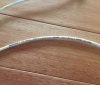
  • 58E8C4FD-88EC-4F60-871E-A2AC687D2CF1.jpeg
    58E8C4FD-88EC-4F60-871E-A2AC687D2CF1.jpeg
    79.4 KB · Views: 280
  • C770F0EA-5C16-42AB-B1E6-4737B2B8A60C.jpeg
    C770F0EA-5C16-42AB-B1E6-4737B2B8A60C.jpeg
    82.2 KB · Views: 281
Last edited:
I was going to make a new thread but i figured i ask here,hopefully the OP doesn't mind.Great cables,BTW :thumbsup:
I would like to make a couple of Female XLR to 1/4" TRS cables for a power amp to mixer connection .
My question is,do i have to absolutely use "Low noise cable"?
I provided a picture of the cable from a DIY xlr to 1/4" trs cable from youtube .
The reason I ask is because i have 2 spools of lamp cord (250 ft each spool) in my garage that my buddy gave me when i helped him clean out a house he bought.
Can I use lamp cord cable instead of the low noise cable?
This is not an emergency ,i can easily order a couple of these online for under $10 bucks ,it's just that putting something together and putting it to use is Cool :)
OiU3bGg.jpg

hoD9zTN.gif
 
I was going to make a new thread but i figured i ask here,hopefully the OP doesn't mind.Great cables,BTW :thumbsup:
I would like to make a couple of Female XLR to 1/4" TRS cables for a power amp to mixer connection .
My question is,do i have to absolutely use "Low noise cable"?
I provided a picture of the cable from a DIY xlr to 1/4" trs cable from youtube .
The reason I ask is because i have 2 spools of lamp cord (250 ft each spool) in my garage that my buddy gave me when i helped him clean out a house he bought.
Can I use lamp cord cable instead of the low noise cable?
This is not an emergency ,i can easily order a couple of these online for under $10 bucks ,it's just that putting something together and putting it to use is Cool :)
OiU3bGg.jpg

hoD9zTN.gif

I would not use lamp cord. I would use wire specifically designed for the application.

-Dave
 
Those wires are beautiful. I have seen something similar to the techflex used to protect fiber optic cabling. They claim it's kevlar, but I'm not so sure about that. Why would you use such large wire on such a short run, and why "oxygen free"? What's the advantage?
 
it says 22awg and it has 4 stranded copper leads with 4 colors PP sleeves, it also has a nice foil insulation around and another non copper bare wire
Umm. .I would not unless you plan to carry the shielding ALL THE WAY THROUGH. I had a knock down drag out right with Siemens over shielded copper pairs. In short, you need to use connectors that use the shield, the mating ends need to carry the shield and then the devices need to be correctly grounded. Not to mention foil shields have a certain bend radius or the foil tears. The last thing you want is for one end to float and for the shield to become a PIA antenna for all the noise in the room. Shielded wire can be tricky to implement correctly so I would stick and have stuck with unshielded wire myself.
 
From a cable manufacturer "Braided shielding has excellent mechanical strength and is best for low to medium frequencies, while foil shielding is great for high frequency applications. Braided can be more expensive and difficult to produce, and foil is inexpensive and easier to produce. The most traditional form of shielding, braided shielding only provides 70-90 percent coverage, while foil shielding provides 100 percent"

"
Foil shielding offers 100% coverage and can stand up to high-frequency RFI applications. Because foil shield is lightweight and inexpensive, it’s also quick, cheap and easy to produce.

Disadvantages of Foil Shielding

Despite foil shielding’s coverage and protection against RFI, it’s not very durable and its elements are fragile. These attributes give foil shielding a poor flex life and virtually no mechanical strength, which makes it difficult to work with. We do not recommend foil shielding for high-flex applications."
 
Question: What size gauge wire do I need for maybe only 4-5' of speaker cable? Plan on on making my own. Would be with a Sayno receiver and Klipsch Heresy speakers.
 
Question: What size gauge wire do I need for maybe only 4-5' of speaker cable? Plan on on making my own. Would be with a Sayno receiver and Klipsch Heresy speakers.

16 gauge is perfectly fine for that short of a run. You could even go to 18 gauge. Refer to this chart for what gauge wire you should use based on speaker load and length of run.
 
Oh what the hey. My latest roll your own speaker cables that join my Adcom amp and Klipsch RF 82 II's.
Knu Koncepts 12 gage wire and gold plated connectors from Amazon.

fullsizeoutput_80e.jpeg
 
i use 12ga outdoor heavy duty extension cable for my speaker wiring. It is heavy, well made, and the coating is flexible rubber instead of the stiffer, plastic coating. I bought it from northern tool for fairly cheap.
The only problem is the "Orange" colored ext. cord. There is a color code for commercially sold power cables. Orange means that the insulation release's toxic fume's when it burns and it is for outdoor use only. Black means that the insulation material won't burn or yield fumes till over 800 degree's F. The extension cord probably would never get hot enough to melt but if it is inspected a fire marshal can't tell the difference, it is a legal thing, inspector's are not paid to think. Only there bosses can do that.And I certainly hope you are using banana plugs or some kind of speaker cable . As a former sound technician I have seen speakers destroyed because someone some where plugged it into the wall thinking it was a a regular power cord.​
 
The only problem is the "Orange" colored ext. cord. There is a color code for commercially sold power cables. Orange means that the insulation release's toxic fume's when it burns and it is for outdoor use only. Black means that the insulation material won't burn or yield fumes till over 800 degree's F. The extension cord probably would never get hot enough to melt but if it is inspected a fire marshal can't tell the difference, it is a legal thing, inspector's are not paid to think. Only there bosses can do that.And I certainly hope you are using banana plugs or some kind of speaker cable . As a former sound technician I have seen speakers destroyed because someone some where plugged it into the wall thinking it was a a regular power cord.​
I thought orange meant it was easier to see and less likely a tripping hazard. Where does your info on what the color means come from?
 
My speaker wires do not have shielding and I think it may be silly but… A guy in the Solid State forum struggled with a loud hum and it turned out to be a WiFi Router (I think) near his stereo. He moved it and the problem went away.

Maybe shielding isn’t such a bad thing.

Also, I’ve read that shielding should be attached only at one end or it invites a ground voltage (or something like that where power goes down the shield) rather than just shielding the interior wire from spurious noise.

I think,
Peter
 
I just read through this thread for the first time in quite few years. I'm not even sure what happened to the cables I made back in '07 I think it was. I made another set with Canare 4S11 in '08, and I'm thinking that might be because of a set of Yamaha NS-1000M speakers I bought at about that time. I'm guessing the previous speaker cables I made were too short. It's been a long time and I really don't remember. I had to go search to find emails from Blue Jeans Cable to find what I ordered then.

I'm still using those speaker cables. However, I didn't put any Techflex on it. They look rather bland. Functionally they're fine.

I've made a ton o' cables for my 3D printer with Deutsch connectors recently, and followed the basic same process found here for making them. I used some fairly expensive Techflex based on the need for abrasion resistance and heat tolerance. They really make a cable covering for just about every requirement. I'm a big fan of their products.

Thinking of picking up some Techflex to improve the cables I made in '08. I don't think I soldered them to the banana connectors I used at that time. I have a good soldering iron now.

I'm thinking it might be time for a cable rebuild.
 
I just realized how old this thread is. I know the OP is long gone but I'm about to make a new set and figured I'd post links to things and stuff since the original links are dead...

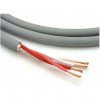
Star Quad, Pants, Shrink tubing and Techflex I got from Performance Audio. Like that it's sold by the foot... And the 4S11 is cheap at $1.44 a foot...

Star Quad... https://www.performanceaudio.com/canare-4s11-star-quad-speaker-cable-gray.html

4s11-gray-2_2.jpg

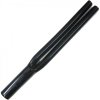
Pants if you go that way... https://www.performanceaudio.com/performance-audio-cable-pants-13mm-2-conductor-black-single.html

pants-2x13.jpg

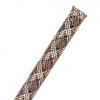
Techflex... Love this snake pattern... https://www.performanceaudio.com/te...e-braided-sleeving-3-8-snake-by-the-foot.html

ptn0.38sk.jpg

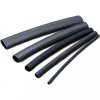
Shrink Tubing... Yeah P.E. has it too. This isn't precut into tiny bits... https://www.performanceaudio.com/pe...-3-8-heat-shrink-tubing-sold-by-the-foot.html

35728_sq_1_9.jpg

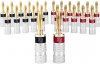
I bought two options for banana plugs. I like locking but I wanted something right angle... I like these better than most as the locking screw in the back isn't plastic... https://www.amazon.com/gp/product/B07MCPLZ1P/ref=ppx_yo_dt_b_asin_title_o01_s00?ie=UTF8&psc=1

51R-2z1HX0L._SL1000_.jpg

And these for non locking straight. I like these as the cover screws from the front, not the back so you don't have to worry about forgetting to put the cover on your cable before you solder/attach it... https://www.amazon.com/gp/product/B0072KOHQ4/ref=ppx_yo_dt_b_asin_title_o01_s00?ie=UTF8&psc=1

61oBneRq6ZL._AC_SL1000_.jpg

My speakers don't arrive until May 8th so I won't be assembling everything until then, but at least I have all the things and stuff on hand now... I guess this makes the cables I made 10 years old now. They've held up well...
 
Commercial Speaker cables are scams, but if you are bored then it makes a nice arts and crafts project on a rainy day. A lot of sellers will try to convince you otherwise with white papers that suggest advantages, but the ROI is minute and better spent elsewhere.

Problem is that vintage gear will only support wire or pin plugs and is hard on the unit if too heavy duty wire are used. Swapping the original spring clips or screw downs to banana plugs will work, but then the unit is modified from original.

I am on the fence on wether to make a set myself. I have gone as far as to accumulate all the bits in my cart, but have yet to pull the trigger.

They do look spiffy though, but after the inital infactuation stage with vintage gear wore off...I just let the idea pass. Maybe next winter.
 
SmileyFaceEQ, I completely agree as I am a "wood class" listener myself and have high respect for the engineers of the hifi arts (Yamaha, Sony, Pioneer, Kenwood, etc.) but I have to admit that I'd rather have someone spend his "allowance" for a well made nice looking cable, that serves an actual purpose (conducting the speaker signal to the speakers) instead of people spending it on complete voodoo BS like sound bowls, magic crystals (to tape to the cables or windows), audio enhancing stickers and sprays and other ridiculous junk. Those are straight up frauds. Personally I just use two twisted 0.75mm² twisted wires for most of my speakers. :rflmao:
 
Back
Top Bottom