• The move to the new server is done. There are some software and database maintenance updates in process. This has us passing the hat around to help out. We appreciate any donations. Seriously, even a dollar helps. The payment page may be found here - https://www.audiokarma.org/support.html

My Pioneer SX-1250 Story

Airjmax

Active Member
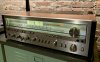
I was browsing my local Letgo items, and saw a listing titled "Antique Stereo Collector's Item - $100" with a dark, out-of-focus photo. I could make out that it was a vintage 70's receiver, but not what make/model. I immediately messaged the seller, who informed me that it was a Pioneer SX-1250! I told him I could be there in 20 minutes (it was roughly 30 minutes away). When I got there, it was all I could do to hide my excitement. The unit was in his garage and covered with sawdust. The seller told me he bought it new, and it still worked, but he didn't want to move it around anymore. He also had a massive pair of Cerwin Vega speakers, but they weren't for sale. On my way to pick it up, I was worried that he actually meant to have an extra "0" in the price, but I handed him a C-note and carried it out to my car before he changed his mind. At 3:00 am tomorrow, I'm packing up the 1250 in the car and taking a road trip with @ZoJo to Cincinnati so @mattsd can bring her back to factory specifications! I won't be able to sleep a wink...
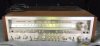
IMG_2790.jpg
 
Register to hide this ad
That's outrageous. You're about 40 miles away and I never even saw the listing. Matt will get you all dialed in nicely.
 
That's outrageous. You're about 40 miles away and I never even saw the listing. Matt will get you all dialed in nicely.
I think I just happened to see the listing shortly after he posted it. That was almost two years ago. I was on @mattsd waiting list for 14 months. He is a well-known and highly regarded technician, and therefore extremely busy, so I was willing to wait.
 
Very nice score! Even if it had another zero at the end it still would have been a better than market price.

How far will MattSD go? I'm wondering if he can take some nice photos like he did on his other 1250 service post from a few years back.

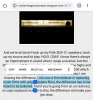
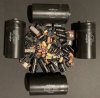
I've been meaning to ask him, on his blog he mentions he replaced mylar caps as well. These were not on his or other BOM lists that I noticed. I've been wondering if I should consider this...

http://mattsvintageaudiorepair.blogspot.com/2017/10/pioneer-sx-1250-gold-tier-restoration.html

Screenshot_20191104-071429_Chrome.jpg
 
Very nice score! Even if it had another zero at the end it still would have been a better than market price.

How far will MattSD go? I'm wondering if he can take some nice photos like he did on his other 1250 service post from a few years back.

I've been meaning to ask him, on his blog he mentions he replaced mylar caps as well. These were not on his or other BOM lists that I noticed. I've been wondering if I should consider this...

http://mattsvintageaudiorepair.blogspot.com/2017/10/pioneer-sx-1250-gold-tier-restoration.html

View attachment 1663140
Matt has different tiers of restoration. He'll explain the difference if you contact him.
 
Sometimes it's all about the hunt, the kill is icing on the cake.
Exactly.
2 years ago I went to a yard sale . Close to me. Nothing. Asked if he had any old audio . “ , Yeah , but it’s too heavy to carry. Hold on”. Disappears. 10 min later he’s hauling out a.....SX 1010. Doesn’t work . 50.00? “ok”.
I had it restored .
 
My SX-1250 odyssey has reached a crescendo today. I returned home from Ohio today with my restored beauty. Shout out to @mattsd for the knowledge and patience to bring her back to her former glory! This is my endgame for receivers, as I don’t think they get much better. I have often looked for opinions here about equipment, but I know now what high fidelity sounds like. This baby matches the hype I’ve read so much about, especially when the guts are as they should be. This was no weekend recap, but a full-on restoration to factory specifications. The clarity and detail are stupendous, and the raw power of this unit is barely describable.
FB8A111B-ADA8-418C-B71B-639DF1F5BB9B.jpeg 4488CF31-15FC-44F7-92F1-693879E08859.jpeg
 
I know the feeling. I grin a little whenever the left switch gets lifted. Keep it clean, and provide plenty of topside venilation. You'll have a keeper.
 
Matt's replacement of the mylar caps is within the rules of thumb I formulated a few years ago.

They are like stacked film replacement capacitors.
Mylars can be wound like rolls of toilet paper, with just ONE connection to the outside world - so there is parasitic inductance inherent in the construction, between the furthest point of the wound foil and the connection.

Stacked film caps I described as the interleaved pages of a book, where the electrical connection was the spine of the book.

as you can see, the entire end cap is an electrode connection to each foil, the rolled ones have one foil set sticking out of each side.
thus the straight line distance between ANY point on the foil and the outside world is very short.

THAT is why they sound so good, LOW parasitic inductance (at a slightly higher manufacturing cost).
The end plates are deposited metal after winding and flattening.
See the wikipedia article linked below, look for "example manufacturing process"
skim this: https://en.wikipedia.org/wiki/Film_capacitor

Figure-1-300.png


Figure 1 shows the two most common ways of constructing film capacitors: stacking many plates together in a box or rolling one very long pair of plates into a cylinder. Note that the stacked construction requires offsetting every plate from the centerline in alternating fashion so that the plates protrude just slightly past the dielectric film to be able to connect all of the odd plates to one external terminal and the even plates to the other. This connection is most commonly made by what is called the schoopage, or end-spray metallization. As the latter phrase implies, a low-melting point metal is vaporized and sprayed directly on the exposed plate edges (and the plastic film as well) to join all the plates together and provide a flat surface for the end termination. The end termination can be made in a variety of ways depending on cost, current level, to what extent stray inductance must be minimized, etc., but the two most common are via a simple pressure contact or by ultrasonically welding a metal wire or strip directly to the schoopage. The two plates in the roll construction do not have to be offset from the lengthwise centerline to connect them to their external termination – a wire or strip can be welded directly to each plate – but doing so affords the same benefits of drastically reduced stray inductance and greatly increased current rating (and is the method shown in Figure 1).
 
Last edited:
Back
Top Bottom