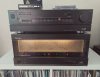
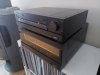
Thank you very much! Yes, it's an impressive combo.
Do you know if the article is printed/published in English? Very interesting reading.
I have auto translator in tablet. Heres translating for You. Full article
Power amplifier in the price range of less than 500,000 yen
Posted by audio sharing on September 15, 1987No comments
Takuya Inoue
Stereo Sound No. 84 (September 1987 issue)
Special Feature: From "Personal Test of 26 Power Amplifiers in the Price Range of Less Than 500,000 Yen"
When auditioning power amplifiers, the first point is the selection of equipment to be used. In conventional power amp auditions, analog discs are often used as program sources, and a control amp with some kind of reference character is often selected and used. However, with the increasing use of CDs as program sources, the rated output of CD players is as high as 2V, making it possible to connect directly to a power amplifier for use. It seems that the meaning of using , has become a rather delicate question.
This time, I decided to use a CD as the program source, but no matter how the CD age comes, analog discs will still be the overwhelming number of program sources. It goes without saying that a trial listening is necessary.
However, as the times change, analog discs seem to be increasingly affected by factors that impede their original sound quality at an unexpectedly rapid pace. One of them is power supply contamination. Contamination through power sources such as TVs, fluorescent lights, personal computers, Famicom, intercoms using 100V power lines, and similar remote control ON/OFF switches degrades the sound quality of weak audio signals. recognized by the department. In addition to this, what recently appeared as a decisive damage to the playback of analog discs is the rapid increase of inverter-type home appliances that are attracting attention in the home appliance industry. This type is highly efficient and does not generate swell caused by 50Hz or 60Hz power supplies that cause discomfort to people. Since it does not flicker, it is beginning to spread to fluorescent fixtures. This system was once known as a high-efficiency power supply, but was notorious for its sound quality. It appears as a kind of roughness.
On the other hand, in urban areas, the problem of sound quality deterioration due to radio waves such as TV, FM, and various commercial radios, and in rural areas, around broadcasting stations, near power lines, aviation-related radars, and commercial computer terminal equipment, etc. Not only that, it has also developed into a social problem as electronic smog and as part of the problem of runaway automatic cars.
By the way, when I simply checked the noise in the band using the FM tuner in the stereo sound listening room, the noise increased qualitatively and quantitatively more than expected compared to when the CD appeared a few years ago. I was able to confirm that.
I won't go into the details of the sound quality deterioration of analog discs based on these causes, but recently, record players have been making records that seem to meticulously pick up sounds engraved in mechanical sound grooves by cartridges. There are few opportunities to listen to deep sounds that are full of unique realism. In urban areas, it seems that the only time you can hear such sounds is on Sunday nights, after people have gone to sleep, as there are fewer broadcasts.
Considering all these problems, I decided that it would be difficult to ensure the sound quality of analog discs under the present circumstances.
Controlling (changing) the volume during listening is an essential condition for checking the response from low to high levels, even in the case of a power amplifier. Some power amps come with a volume adjustment mechanism that is qualitatively within the practical level, but there are also types that are dedicated to direct input, and you must select some external attenuator to adjust the volume. .
Here, as a result of checking several types of attenuators collected by the editorial department, we decided to use the Cello Etude for auditioning a power amp that costs less than 500,000 yen, although the slightly large housing is a concern. This attenuator is characterized by a crisp and sharp sound, and it has a strong tendency to give a moderate edge to the sound and make it clear. For a power amp in this price range, which is qualitatively and quantitatively handicapped compared to high-end models, I think it is more suitable than an attenuator that suppresses the intonation of the sound as a whole and produces a clean sound. .
However, as a reference attenuator, it is necessary to suppress its unique character a little, and we are using it to the necessary and sufficient level, including the installation method.
As CD players for listening, two Sony CDP555ESDs with a kind of reference character are prepared and used in parallel. The main reason for this is to keep the sound quality of the program source within a certain range as much as possible and to maintain reproducible audition conditions. In general, there are more causes than expected for the sound quality of a CD player to change, but the most important of these is the change in sound that occurs each time a disc is inserted and ejected.
Put the disc in the CD player and listen to the sound. Next, eject once, play again and listen to the sound. There is often a considerable difference in sound quality between the two. From a gentle sound with a soft soft focus to a sharp sound with sharp focus, there is a difference in the degree of softness and sharpness. It seems better to think that it will always occur in the current CD player. I found this phenomenon based on a certain reason in the early days of the CD, and reported it in this magazine. It seems that there is a tendency to show a rather sharp change along with the change. One of the reasons for this is considered to be the reading accuracy due to the difference in off-center amount, which varies with each setting--due to the mechanical error between the turntable and the CD--and fluctuations in the servo system. If eccentricity is a problem, it goes without saying that the accuracy of the CD player must be improved. Recently, however, it is reported that the error in the center hole of CD discs and the amount of eccentricity are increasing. I think it's a problem with CDs and CD players that deserves to be seen more as a problem.
In the case of using CD as a program source, inevitably, in order to try to clear this problem to some extent, one CDP555ESD is always set with a cantate domino of the audition disc, and another CDP555ESD is used. , I put in other discs alternately and decided to listen.
Speaker selection is the most important key point in various auditions. In this audition, we used various speaker systems, based on the editorial department's plan to audition each reporter independently. For obi products, I decided to use DS5000 as well.
I thought about using the DS3000 for both price ranges that I was in charge of, but because the editorial department had arranged two models, the 5000 and the 3000, I ended up using different speakers. The speaker systems of the two models are both 4-way configuration systems from the same manufacturer, and are based on a common design policy of a mid-bass configuration that aims to improve the reproduction capability of the mid-low range. much in common.
The advantage of using a 4-way configuration system for the listening speaker system is that in a 3-way configuration, the bandwidth of the woofer, which is in charge of the fundamentals of music, is divided into two, and in a 4-way configuration, the mid-bass unit and the mid-bass unit, so if you focus on deep bass. There are few restrictions peculiar to the 3-way system, such as the fact that the mid-low range is weakened and it is difficult to reproduce the deep bass if the mid-low range is emphasized. However, due to the large number of units, the disadvantage is that if the unit arrangement is averaged, the sound image localization tends to increase. In that respect, the two-model system this time has fewer problems in sound image localization than the average three-way configuration. Power amplifiers in the price range of less than 500,000 yen were auditioned through the DS3000, and about 2/3 of them were auditioned again with the speakers changed to DS5000. I tried to make a connection between power amplifiers in the price range of less than.
Setting up the listening components is based on my own method for covering new product reports for Stereo Sound magazine. The two CD players and the attenuator are placed on independent Yamaha GTR1B audio racks (meaning that the racks do not contact each other), with cushioning materials such as felt interposed to prevent the peculiar sound of the stand itself. Each audio rack is kept completely empty.
The listening amplifier is set in the shape of a large Apiton plywood laminated block with cushioning material interposed in a position near the audio rack, almost on the extension line of the center of the speaker.
The speaker is placed on a stand SP2000 made for Yamaha NS2000. By the way, heavy bookshelf type speakers require a stand that is more solid than expected in order to bring out stable sound quality. is.
As for the power supply, the power amplifier for audition is fed directly from the wall outlet on the left side of the listening room, and the CD player is fed separately from the outlet of another system on the opposite wall to avoid mutual interference. As a result of comparing and listening to various connection cables between devices, I basically use two types of PCOCC cables made by Audio Technica, which have a large amount of information, and add a little damping to the RCA pin plug. The fine balance compensation between the two CDP555ESDs has been brought close to a range that does not pose a problem on a practical level, as well as the installation method. As for the speaker cord, as a result of the same audition, I used Torrence's parallel 2-wire type thick cord (C100), which is commonly used in the stereo sound audition room.
First, let me explain the actual setting of the CD player and speakers for audition.
For the reference amplifier used for setting, I chose the Accuphase P500 as Dell, which does not have a strong character among the two types of power amplifiers in the price range of less than 1 million yen and has acquired a certain kind of citizenship. I used this Accuphase P500 and made basic settings, but depending on the quality and character of various power amplifiers for listening, I changed the setting conditions for the parts that can be controlled by hand with the CD player and attenuator. However, the settings of the listening power amplifier and speakers are fixed to certain conditions, and no control is performed on this part.
The basic settings are aimed at checking the performance and sound quality of the power amp by hearing, so it's not necessarily the direction to enjoy listening to music. there is Therefore, compared to the time of the new product report, each power amp showed the correspondence that showed the contents directly, so the sound was quite severe.
The usual point in listening to power amplifiers is the problem of warm-up. Prior to listening, each power amp was turned on for about 3 hours, and a dummy load was applied for 30 minutes to warm it up. There are many examples of I have added some reports about some models that have many changes, but I would like to write about the details in the latter half of the price range of 500,000 yen or more and less than 1 million yen.
Among power amps in the price range of less than 500,000 yen, there is a price difference of about three times between the lowest priced product and the highest priced product that we tested this time. In particular, models under 200,000 yen have a considerable handicap, and even if the range is expanded to the 250,000 yen class, which is about twice the price difference from the upper limit, this has a presence and a clear character. It can't be helped that the preferred power amp was the exception.
In this audition, in addition to the audition memo, the editorial department requested two types of ratings: sound quality and attractiveness. Starting with the basic conditions of the electrical system such as volume, the tendency and width of change in the warm-up sound, the sound quality from the mechanical aspect such as resonance in the housing structure, resonance of the power transformer, etc., music playback Even the so-called volume above is extremely versatile, and as a result, the dynamic range of scoring tends to be quite compressed, and in this price range, it is only a range of 10 points above and below. As for attractiveness, I judge it based on my ego and self-righteous tendencies.
There is basically little demand for power amps in the price range of less than 500,000 yen, so when compared to the power section of an integrated amp, the cost per unit of power inevitably becomes quite expensive. No, but since it is in the low-cost genre as a power amp, there seems to be little hope for a product with a well-balanced and powerful sound and design that is suitable for the meaning of the word power amp. Therefore, if there is one charm point, there is no other choice but to be satisfied with it, and it is important what kind of charm point you have, especially up to the 250,000 yen class. In the price range above that, there are more models with the sound quality and design that are typical of power amps, and there are models with sufficient power for practical use. There is a strong impression that it lacks freshness, as the seeds with a good reputation still show favorable results.
As a general trend, the editorial department's washing standards exclude products that exist as so-called catalog models, but are not easily available and have been released in the past. There are many products, and there are few domestic products, and there is a strong impression that foreign products are somewhat individualistic products, but domestic products are mass-input.
Two models that stand out are Pioneer M90 and Technics SE-A100. Both of them are orthodox designed and perfected models, faithful to the basics that the power amplifier is a voltage/power converter.
In terms of sound quality, the quality of both is sufficiently high, and the M90, which allows you to listen to stable and enjoyable music with plenty of room, and the SE-A100, which tries to make you listen to good sounds accurately while maintaining a high level of purity, are quite impressive. It has a contrasting sound and charm. Both are masterpieces in which the essence of being faithful to the basics, not cutting corners, not cutting corners, is often reflected in the sound.
The Accuphase P102 and QUAD606 have a supple and detailed sound refined in a Japanese style, and a sharp sense of common sense that is typical of British products. It's a good model. If you want to enjoy a small, high-performance speaker with quick response, it will be the best choice.
Tube type, Luxman MQ360, Airtight ATM1, like the atmosphere of the Luxman and Airtie brands, contrasts with the supple and warm MQ360, the clear, crisp and solid ATM1, and the content and It is a good rival machine with a similar appearance. Both of them are attractive because they have a deep sound that is a little different from solid state amplifiers.
Both the Denon POA300ZR and Nakamichi PA70 are models developed with straightforward characters and materials suitable for the price, and have considerable potential as qualities. However, the DEN-ON has a slightly different sense of bandwidth than the same machine so far, it has changed to a narrow-range type that emphasizes stability, and there is also a tendency to lack aging in terms of maintenance, so the sound is a slightly different image. Nakamichi has a beautifully polished, smooth and pure sound, but it is a model that makes you feel frustrated because it has a promising sound, such as showing the softness of the power supply with KODO Miyake's taiko. .
The DENON POA2200 has a light-weight sound when it was first released, but it's a pity that the responsiveness of the fresh feeling has been slightly suppressed and the sound has changed to a gentler sound, probably due to lack of aging.
Hafler's XL280 is interesting in its skillful sound creation that cannot be obtained with domestic products, and QUAD405-2 is suitable for analog discs, and the charm of 606 shines in CD program sources. Marantz MA7 is a little lacking in driving. It's fine for Class A movement, but for Quarter Class A movement, it turns into a kind of indescribable and mysterious sound. Since this is a prestigious brand of amp, I hope that this is a problem only with the test model.
The Accuphase P300V is an improvement that is suitable for refinement, but it is a little lacking in aging and the color is a little unsatisfactory. Similarly, counter point SA12 was a little worrisome for waking up, but the sound was sufficiently stable. The Luvox B242 also has a sound that can be quite attractive if you master it.