• The move to the new server is done. There are some software and database maintenance updates in process. This has us passing the hat around to help out. We appreciate any donations. Seriously, even a dollar helps. The payment page may be found here - https://www.audiokarma.org/support.html

Mysterious Record Damage

grey_beard

Active Member
Has anyone else ever seen this type of damage? Where it appears it is in two bands on the record. The first near the beginning of the record and the second near the end of the side. It shows up as a band of small pocks on the surface of the record and sounds like the worst surface noise ever.


Here's some of the embarrassing background:
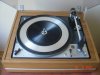
A few years ago I had an issue with this type of damage showing up in varying degrees to a number of my more frequently played albums. At the time I had the bad habit of leaving records on the platter between playing, particularly in my bedroom system where, due to space limitations, my record player was placed directly on top of my amp. The record player was a dual 1229 in an open-bottom plinth. I also had the bad habit of leaving the amp on which I believe may have contributed as the heat from the amp would rise into the plinth and perhaps heat up the large metal platter causing a reaction between the OEM rubber platter mat and the record. Purely a guess here.

Around this same time I also was using a DIY ultrasonic record cleaner, but seeing as the damage is isolated to records that were in heavy rotation not records that went through the cleaner, I doubt that was it.

As soon as I noticed this damage I stopped leaving records on the table and began turning off the amp when not in use. I haven't noticed any new damage for the past couple of years, but it remains some what of a mystery. Needless to say, I no longer leave my amps on and remove records from the player as soon as they finish.
 
Register to hide this ad
I could be wrong but that looks a whole lot like a cheap plastic inner sleeve sticking to/bonding with the record surface. I have some Japanese vinyl that was ruined by the very same thing. The highs in those area are very distorted.
 
Isn't there a cream for that? After properly cleaning the record are these marks still audible?

Never heard of such a cream and from what I know, this is basically irreversible. Some plastics (poor quality outer or inner sleeves) tend to absorb chlorine from vinyl which dulls the surface. And you can't really bring it back as it would require a very tedious and complicated chemical reaction which is possible only in lab environment.
 
I don't know what "era" of albums you are having issues with, but "back in the day" (during the oil crisis) there was a lot of "recycled vinyl" being used--especially by the suppliers to the "record clubs". They took old unsold inventory and melted it back down and pressed new stuff, and the labels were not always fully removed in the process. I have several albums here that you can actually see remnants of paper pressed into the vinyl.
 
What kind of protective sleeves do you use? It can be "PVC poisoning".
That is a great question, but some of these are in paper sleeves in a box set with no plastic to be found anywhere.

Isn't there a cream for that? After properly cleaning the record are these marks still audible?
I've tried just about everything to remove the damage thinking that it may be some sort of residue (which it may well be) to no avail. This includes isopropyl alcohol on one album that was especially ruined.

I could be wrong but that looks a whole lot like a cheap plastic inner sleeve sticking to/bonding with the record surface. I have some Japanese vinyl that was ruined by the very same thing. The highs in those area are very distorted.
I have wondered about this, but some of the albums that were damaged were in paper sleeves with no liner at all.

I don't know what "era" of albums you are having issues with, but "back in the day" (during the oil crisis) there was a lot of "recycled vinyl" being used--especially by the suppliers to the "record clubs". They took old unsold inventory and melted it back down and pressed new stuff, and the labels were not always fully removed in the process. I have several albums here that you can actually see remnants of paper pressed into the vinyl.
These are mostly new albums that I played repeatedly when I first got them only to find the damage some time after putting them away. I also noticed that the damage seemed to be on the side that was more likely to be down on the platter.

I really wonder if it is a combination of heat and contact with the factory rubber platter mat.
 
That is a great question, but some of these are in paper sleeves in a box set with no plastic to be found anywhere.


I've tried just about everything to remove the damage thinking that it may be some sort of residue (which it may well be) to no avail. This includes isopropyl alcohol on one album that was especially ruined.


I have wondered about this, but some of the albums that were damaged were in paper sleeves with no liner at all.


These are mostly new albums that I played repeatedly when I first got them only to find the damage some time after putting them away. I also noticed that the damage seemed to be on the side that was more likely to be down on the platter.

I really wonder if it is a combination of heat and contact with the factory rubber platter mat.

Record weight/clamp or no?
 
Looks like splatter of something.

Any schmutz get onto the rubber mat before putting the record on and leaving it there?

Popped open a cold one maybe?
 
Looks odd. Is it residue or is there a dent you can feel on those marks? TBH if I saw a record like that in the used bin, I'd probably pass on it.
 
Record weight/clamp or no?
No record clamp or weight.

Looks like splatter of something.

Any schmutz get onto the rubber mat before putting the record on and leaving it there?

Popped open a cold one maybe?
No schmutz whatsoever.

Looks odd. Is it residue or is there a dent you can feel on those marks? TBH if I saw a record like that in the used bin, I'd probably pass on it.
A fine question. I believe it's residue on top of the record, but I'll take a closer look with a magnifier to be certain.
 
After examination with magnification, I believe it to be damage to the record, not a residue. It looks more like pitting of some sort, though some are short lines across the top of several grooves, not circular.

And I will add, that it has effected one record in a box set and not the others in the particular case of the image above.
 
Here's a wild question...do you use harsh chemicals or solvents at work or around the house? I wonder if something got on your hands and then got on the record. Likewise, some of the homebrew cleaning methods all over the internet are not exactly what I would call safe for records. Did you use anything of that sort on these LPs?

Other than that, no idea.
 
I don't know what "era" of albums you are having issues with, but "back in the day" (during the oil crisis) there was a lot of "recycled vinyl" being used--especially by the suppliers to the "record clubs". They took old unsold inventory and melted it back down and pressed new stuff, and the labels were not always fully removed in the process. I have several albums here that you can actually see remnants of paper pressed into the vinyl.

It was by no means exclusive to the record clubs. I worked on record stores and we had many returns because of this.

However, it didn't ever look like the pic in this thread.
 
Here's a wild question...do you use harsh chemicals or solvents at work or around the house? I wonder if something got on your hands and then got on the record. Likewise, some of the homebrew cleaning methods all over the internet are not exactly what I would call safe for records. Did you use anything of that sort on these LPs?

Other than that, no idea.

No. No chemicals. The weird thing is that the damage seems to run in two rings, one near the beginning of the side and the other near the end. The patch in between will be free from damage.
 
It was by no means exclusive to the record clubs. I worked on record stores and we had many returns because of this.

I'm glad I'm not the only one that knows/believes this--I have been told it's an old wife's tale by many--until I pull one out of the closet and show them.
 
Does this happen only to the records you clean with your ultra sonic cleaner? An ultra sonic cleaner works by cavitation, which can cause damage if you leave it in to long or use the wrong frequency. Cavitation can pit metal it will erode it away. A higher frequency makes a small bubble which is less destructive and you need to either rotating the record while its cleaning or have a sweep frequency circuit to make sure their is no standing waves.
 
Last edited:
When I have needed to set a turntable on top of an amp or receiver, I have always put blocks of wood on each end so that the turntable was always sitting 1 1/2 to 2 inches above the amp, meaning there was a lot of air space for heat dispersal. All you need are a couple of chunks of 2x2 or 2x4. If you top the blocks with a square of hardboard as big as the turntable, actually none of the hot air from the amp will rise directly into the plinth.
 
Back
Top Bottom