• The move to the new server is done. There are some software and database maintenance updates in process. This has us passing the hat around to help out. We appreciate any donations. Seriously, even a dollar helps. The payment page may be found here - https://www.audiokarma.org/support.html

NAD 2140 AMP - DISTORTION

SilverNAD

New Member
Hi There AK's,

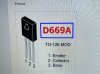
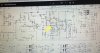
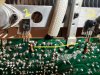
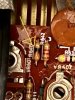
I have a NAD 2140 in my hospital with the following symptom: crackling distortion on both channels at all levels (low to high). Visual inspection revealed a blown resistor as shown in the diagrams as the only obvious visual fault. This resistor seems to belong with one of the two chassis mounted transistors (see photo) so I checked them both in diode mode and got the following values. (Note- the third transistor leg is Base on these, apparently- see pic)

1: E= 997 C= 1322

2: E= 958 C=1315

I only tested these because they were in vicinity and to possibly see if there is a short that might have caused resistor to pop. Could anyone shed some light on whether the distortion issue could be related to this transistor and if so what might have caused it, upstream?

Many thanks for any suggestions.

SilverNAD
323043578_658490976022503_4487561091171374280_n.jpg 323531053_1161426631179401_1621166817370572436_n.jpg 321943835_477371414565522_6580270532948157449_n.jpg 322149663_855339512217593_7088843557235183977_n.jpg 321932151_513093187469833_7125364119925890791_n.jpg 322153089_1201827090765156_4536284971058368583_n.jpg
 
Register to hide this ad
I should add it was running through a NAD 1020 pre-amp which tests fine on another 2140. Also, same distortion evident at headphone output of amp, but not headphone output of pre-amp:)
 
There seems to be a lot of "crusty" solder joints on the board....including on these 2 transistors. And the one transistor is not fastened to the heatsink.
Also looks like some previous liquid spill event.

So yea, could be these devices, broke/cracked solder joints, dried liquid spillage contributing to noise.
And probable power supply issues which would be common cause for noise in both channels.
 
yeah, pull the transistors, it will read funny. Shorts tend to show up accurately most of the time but opens will not.

That resistor being roasted would have me very suspicious. It shouldn't be carrying all that much current, so I'd be wondering if Q632 shorted. If it did, then it becomes a question of why, and what else is dead around it. That should be the bias control transistor, its bolted to the heat sink so the bias voltage tracks with temperature of the output devices. If its cooked, I'd worry about the two pairs of transistors downstream of it. Can't quite read the numbers, one looks like Q616 and the one below it are the drivers, and Q624 and Q626 are the outputs. Would be worth checking those for shorts just to make sure nothing failed and roasted components backwards.
 
Hi Then - thank you for replies. So I pulled the two transistors Q631 & Q632 (one bolt was out in photo so I could identify - sorry) and I'm a bit confused about the readings. If I use the pin output diagram shown in orig post: pin one emitter, pin 2 collector and pin three being the base I get zero reading on either collector or emitter using negative multimeter lead on base. If I swap and use positive lead to the base I get: Q632: Emitter 592 Collector 588. Q631: Emitter 594 Collector 591. Do these sound functional? You are also right - the work done previously on the board is not award winning. It has had a partial cap at some point and not sure what else. Thank you again.
 
make sure there isn't a short from emitter to collector but about 0.6 volts from base to collector or emitter seems reasonable. Its not open, and its not 0 so not open or shorted.

still think it would be worth confirming the other transistors are good just to make sure it doesn't power up and immediately just let the smoke out again.
 
Hey- checked for shorts in those two, all good. I’m not confident pulling the other six transistors to check. I’m only triage in my NAD hospital- time to call a Doctor! Thank you for help.
 
Back
Top Bottom