• The move to the new server is done. There are some software and database maintenance updates in process. This has us passing the hat around to help out. We appreciate any donations. Seriously, even a dollar helps. The payment page may be found here - https://www.audiokarma.org/support.html

NAD 2200PE won’t turn on

Sergimm

Active Member
I just got a new (to me) NAD 2200PE that won’t turn on. No power, overload, or protection lights turn on. All the fuses (I counted 7) seem to be fine. No visible damage either in the components: no bulging caps or burnt resistors, etc. the amp looks pristine, inside out.

I’ve read that this model usually has problems with speaker relays, but I presume that at the very least it should turn on, even with bad relays.

Could it still be the relays? Is it possible that it’s in protection mode but the indicator light for it is not turned on? What’s the logical next step to try here?

I’m still quite a noob in all this so perhaps I’m missing something obvious..
 
Register to hide this ad
Maybe X-former internal fuse?
Yes. There are seven fuses you can see. An eighth fuse (along with a thermal switch) is hidden in the power transformer primary.

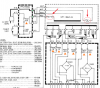
NAD-2200pe_PSa.png

With mains unplugged at the wall, Ohm across A-1 and A-2. It will read open if that internal fuse is blown.

If on the other hand you have continuity, then Ohm across A-1 and A-5. An open reading there could suggest the thermal overload switch has failed open.

If all is well at that point, then plug the unit into mains AC, turn power switch "on" and -- if it can be done safely -- measure AC voltage across A-1 and A-5. If no reading there (and you're certain fuse 501 is good) suspect an issue with the power switch.
 
Last edited:
Yes. There are seven fuses you can see. An eighth fuse (along with a thermal switch) is hidden in the power transformer primary.

View attachment 2156128

With mains unplugged at the wall, Ohm across A-1 and A-2. It will read open if that internal fuse is blown.

If on the other hand you have continuity, then Ohm across A-1 and A-5. An open reading there could suggest the thermal overload switch has failed open.

If all is well at that point, then plug the unit into mains AC, turn power switch "on" and -- if it can be done safely -- measure AC voltage across A-1 and A-5. If no reading there (and you're certain fuse 501 is good) suspect an issue with the power switch.

Thank you so much for your elaborate reply, Stuart.

Turns out there's no continuity between A-1 and A-2, so I guess it's very likely the internal fuse is blown...which I guess is the worst outcome we could hope for, given the stuff I'm reading about it.

There's one small but: before I read your replies I was trying stuff and one of the times I tried to turn on the amp, the red protection light turned on for a split second and I heard some noise inside the amp. That lasted less than half a second and then went back to all lights off and no reaction whatsoever. Would it have done that if the internal fuse was blown? On the other hand, I don't see how it could be anything else given that there's no continuity between A-1 and A2...

Cheers,
 
Sooooo...should I open that transformer and look for a thermal fuse there? Or is there still a possibility that it’s something else, given there’s no continuity between A1 and A2?
 
Judging by the schematics, I don’t see how the power switch has anything to do with an open circuit between A1 and A2. Either the fuse blew, or the primary failed open.
 
How are the connections from the transformer completed to the PCBs? Are these solder connections or wire-wrapped posts?
Either way I'd reflow these connections (and if wire wrapped make this a soldered connection).
 
Is the amplifier wired for former 220V operation? Because this, combined with 4 ohms speakers, the transformer heats up more than usual.
You'd need a xformer of higher VA and for 230V, but I see that the stock one has multiple secondary voltages.
 
Is the amplifier wired for former 220V operation? Because this, combined with 4 ohms speakers, the transformer heats up more than usual.
You'd need a xformer of higher VA and for 230V, but I see that the stock one has multiple secondary voltages.
Interesting to mention the 220 operation. I happened upon a French audio website where the amp owner reported the same issues; no power. He was going to open the transformer but discovered the input voltage selector was brittle/ breaking down. So he shunted the selector switch and all was fine.
 
Interesting to mention the 220 operation. I happened upon a French audio website where the amp owner reported the same issues; no power. He was going to open the transformer but discovered the input voltage selector was brittle/ breaking down. So he shunted the selector switch and all was fine.

Holy cow that was it! The input voltage selector is extremely flimsy and it's not making a good contact. I pressed it and it just worked!

Now I need to figure out the best long-term solution for it. The obvious one is solder the right cables, but I'm not completely confident to do that yet. The easiest one is to make the lid press firmly on the contacts, but it could be trickym since it's a weird plastic part, and I don't think an O-ring would fit properly under the lid. Probably best would be to solder the actual contacts in the mechanism.

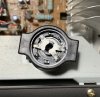
Here's a picture of the input voltage...flimsy!! Smells funny too...probably because of the grease?

IMG_1695.JPG

P.S. @jhjove if you ever find yourself in Barcelona let me know and I'll invite you to a beer!
 
Holy cow that was it! The input voltage selector is extremely flimsy and it's not making a good contact. I pressed it and it just worked!

Now I need to figure out the best long-term solution for it. The obvious one is solder the right cables, but I'm not completely confident to do that yet. The easiest one is to make the lid press firmly on the contacts, but it could be trickym since it's a weird plastic part, and I don't think an O-ring would fit properly under the lid. Probably best would be to solder the actual contacts in the mechanism.

Here's a picture of the input voltage...flimsy!! Smells funny too...probably because of the grease?

View attachment 2160455

P.S. @jhjove if you ever find yourself in Barcelona let me know and I'll invite you to a beer!

Well I really like NAD designs (form-factor and resulting sound) but their manufacturing (contracted) is not the best. I have 4 NAD units, very nice, but I've seen in this small sampling very odd stuff for higher end designs.
I'm glad my search results helped you and appreciate the offer of beer, my favorite compensation. :)

Select the 240V contacts and solder them.
Exactly what the fellow in France did for his amplifier; shunt / short / make permanent the selected voltage source.
I guess just chalk up another low-grade part from NAD.
 
Back
Top Bottom