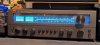
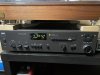
I think that I may have mentioned this before somewhere, but my experience of NAD is that they had some very clever people working for them.
Let me explain. I have had a few NAD amps over the years and currently use a modified C320 integrated amp as a preamp - except it now isn't really a NAD amp.
The C series amplifiers (and preamps) use a pair of buffer amp modules in the preamp section. These are class A with a JFET front end buffer transistor which provides a very high input impedance. Being class A these modules exhibit a high DC offset on their outputs which requires a large blocking capacitor (100uF) in the output signal line. This blocking cap also acts as a high pass filter which rolls the bass response off.
These amplifiers were usually paired (price range) with 2 way bookshelf sized loudspeakers which have a tendency to have a limited bass response and a sharp treble (bright exciting sounding speakers sell better in the hifi store). NAD knew this and developed the NAD sound in these preamps and amplifiers. This tends to temper the treble response while at the same time cutting back on the low bass that the speakers will struggle with. This created a more balanced overall response which is non-fatiguing and slightly warm and smooth in character. Some people refer to them as having a laid back sound. Paired correctly they sounded great and sold very well.
I am using the C320 purely as a preamp in a large fully active system, so my speakers can handle the full audio range.. The power amps in the NAD (which are very good by the way) are disconnected internally because they are not used in this setup. The 'preamp' has the BEE version mods carried out, but the main change is that the buffer modules have been removed and replaced with low noise OPAmps Burr Brown 2134s with a JFET front end. These exhibit almost zero DC offset at their outputs so the electrolytic blocking 100uF caps are not needed and have been replaced with good quality 1uF film caps. The result of these changes was massive. To say 'It was like taking a blanket off of the speakers' was certainly true in this case. O.K., the changes altered the sound, but the fact it is so good is also testament to how good the amplifier design was in the first place.