• The move to the new server is done. There are some software and database maintenance updates in process. This has us passing the hat around to help out. We appreciate any donations. Seriously, even a dollar helps. The payment page may be found here - https://www.audiokarma.org/support.html

Nakamichi CR-3A problem

Leicabimmer

New Member
Hello all. I recently came upon Nakamichi CR-3A that I’m hoping to sort out. When the deck powers up the only light that shows is the meter, stuck at -40db. Play/ff/rr are all unresponsive and no green illumination in the deck well and there is no tape counter illuminated.The head assembly does not move at all. The belt was a gummy mess and a new one is on order. Any thoughts on where I should begin?
 
Register to hide this ad
Hello!

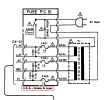
I would say start with the Power Supply P.C.B. Take your time and study the Service manual to see what Voltages (DC or AC) you should be getting and where to best measure at (safely). The Power supply in CR-3 it is found mounted upside down on the back plate. A good point to start at would be at CN-20 and CN-13.

Be careful, not short anything when probing.

Cheers!
 
Last edited:
Hello!

I would say start with the Power Supply P.C.B. Take your time and study the Service manual to see what Voltages (DC or AC) you should be getting and where to best measure at (safely). The Power supply in CR-3 it is found mounted upside down on the back plate. A good point to start at would be at CN-20 and CN-13.

Be careful, not short anything when probing.

Cheers!
Thanks for the suggestion, you were spot on. I ended up replacing most of the components on the P.C.B. All of the caps,both bridge rectifiers and 2 resistors. The fuses held and the panel came on. After replacing the belts(my version does not have a tire)and finding no RW,sporadic play and slow FF without a tape in the bay, another poster suggested the reel motor capstan motor or both might need replacing so I decided on both. Do you know what the voltages should read at motors.I came up with 5.1VDC(capstan motor)and approximately 1.85(reel motor) Between the parts being ordered and a hospital visit it’s taken longer to reply than was anticipated. Thanks again for the help.
 
Very good, just noticed that you got some good help over at TH from Tapetech and others.

From my own old notes, I see that I have 11.7 VDC on the Capstan motor and 2.5 VDC on the Reel motor during Play on my CR-3 (also gear). That was after replacement of the reel motor and readjusting play back torque (40 g-cm). Back tension was measured at 8 g-cm.

Not sure if you still have some power supply issues or both motors are bad...

The reel motor could anyway need a good cleaning to avoid any future problems. I ended up replacing mine, but the old one works fine after proper cleaning. There are some very good How To threads over at TH on how to get the motor out etc.

As for the capstan motor, this might be a long shot, but this one can also be disassembled (cleaned) and in it you will also find an electrolytic cap (10uF 25V).


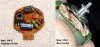
CR-3 inside motors.jpg
 
The problem is that these motors can be cleaned but the brushes are the parts that wear through and fall off jaming in the commutator so the fix is not long lived. A new motor is always preferable.
 
I'm having a similar problem on my CR-3A since Dec 10 and have since replaced all electrolytic caps on my PS board as well as the 6 orange 10uF 25v caps on the main board and the 2 blown fuses at F402 and F403. The deck worked for 3 weeks and blew the same fuses again. This time, I replaced both bridge rectifiers on the PS board and the 2 transistors at D401/D402 and Q401/Q402 respectively and replaced the fuses once more. Again, the deck worked for 3 weeks and had the same problem for a third time, and while I haven't checked them just yet, I'm sure it'll be the same fuses.

I ended up replacing most of the components on the P.C.B. All of the caps,both bridge rectifiers and 2 resistors.

@Leicabimmer I'd love to know exactly which components you replaced and why. When you say "all of the caps", does that include C403, C404, and C414, or just the electrolytics? When you say "2 resistors", which resistors and why?

I sent you a PM on TapeHeads Dec 13th 2024 and one here Jan 15th, 2025, but haven't had a reply yet. Please let me know what you did and if the deck is still working fine, I haven't seen any mention related to this problem after this thread.

I want nothing more than to narrow this problem down and have a properly working deck that doesn't blow fuses every 3 weeks.
 
Last edited:
Your problem is cam motor dead spot. Not caps etc. Should be restored. Do not overhaul this deck by try and error method. This way you will damage it completely.

P.S. However if you have blown fuses, but not a problem, described by OP, and can not resolve it, probably find a tech who know what he is doing.

 
Last edited:
My problem is not the cam motor dead spot; I've already replaced the cam motor and mechanically, everything works fine. I was referring to post #1 with no lights except the -40dB segments being illuminated. Replacing the fuses makes it work perfectly for about 3 weeks, then they blow again.
 
My problem is not the cam motor dead spot; I've already replaced the cam motor and mechanically, everything works fine. I was referring to post #1 with no lights except the -40dB segments being illuminated. Replacing the fuses makes it work perfectly for about 3 weeks, then they blow again.

I believe you use slow-blow fuses?
 
I believe you use slow-blow fuses?
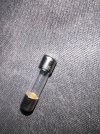
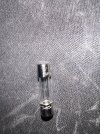
Not sure if you mean that I use them or that I'm supposed to use them. I used fast-blow fuses, the first 2 times I replaced them with these. They are the same brand as the ones that were originally in the deck and the fusing element looks the same as well. Since I only bought 6 of those, I only have 2 left, so when I bought the bridge rectifiers from Mouser, I got these as the Bel fuses weren't available there and those are what are currently in the deck now as of 2 days ago. The fusing element looks different being a zig-zag shape as opposed to a straight shape, but it's still a fast-blow fuse.
 
Last edited:
Not sure if you mean that I use them or that I'm supposed to use them. I used fast-blow fuses, the first 2 times I replaced them with these. They are the same brand as the ones that were originally in the deck and the fusing element looks the same as well. Since I only bought 6 of those, I only have 2 left, so when I bought the bridge rectifiers from Mouser, I got these as the Bel fuses weren't available there and those are what are currently in the deck now as of 2 days ago. The fusing element looks different being a zig-zag shape as opposed to a straight shape, but it's still a fast-blow fuse.

Wrong. You should use slow blow fuses marked with T.
 
So I was mistaken, the fusing elements of the original fuses had a sort of zig-zag shape while the replacements had a straight line. But both the originals and the replacement have 5MF stamped on them which according to Bel's datasheet is a fast blow fuse series. Why would the original fuses that worked fine for years and years be those if slow blow fuses are what's needed? The fusing element difference also makes it inconsistent. It's a shame that Nakamichi didn't specify in the service manual exactly which type of fuse to use, only the current and voltage rating.
 

Attachments

  • IMG_6230.jpg
    IMG_6230.jpg
    274.5 KB · Views: 2
  • IMG_6231.jpg
    IMG_6231.jpg
    272.1 KB · Views: 2
So I was mistaken, the fusing elements of the original fuses had a sort of zig-zag shape while the replacements had a straight line. But both the originals and the replacement have 5MF stamped on them which according to Bel's datasheet is a fast blow fuse series. Why would the original fuses that worked fine for years and years be those if slow blow fuses are what's needed? The fusing element difference also makes it inconsistent. It's a shame that Nakamichi didn't specify in the service manual exactly which type of fuse to use, only the current and voltage rating.

No matter what shape they has. Fuses should be marked with symbol T. (time delay, slow blow) Not TT (very slow blow). And not F (fast blow) or FF (very fast blow). I do not know how stable is power in area where you reside. You can use stabilizer if power is unstable.
 
Figure 9.2.1. in service manual if you do not believe me. All fuses are clearly marked T. No wonder yours blow.
 
I do not know how stable is power in area where you reside. You can use stabilizer if power is unstable.
I live near Washington DC, it should be pretty stable, though I do have the deck plugged into a power strip with a 700-800W PC and 2 high refresh rate monitors. I used to run this deck with more components on the same circuit in the past with no issues.

Figure 9.2.1. in service manual if you do not believe me. All fuses are clearly marked T. No wonder yours blow.
Are you talking about this?
Screenshot 2025-02-11 150356.png
That is for all other markets, here is the one for my model CR-3A for the US market:
Screenshot 2025-02-11 150409.png

And the section of the table that lists the part descriptions/ratings:
Screenshot 2025-02-11 150629.png
Unless I'm blind, not so clearly marked, more vague if you ask me. Based on how the other markets' fuses are marked T and how these electronics can have a higher initial surge of voltage or current when first turned on, the logic to use slow blow fuses makes sense, I just don't see a clearly marked reason from the manufacturer to do so. The fact that the original fuses that worked fine for years are marked 5MF which is clearly stated by their manufacturer to be a fast blow fuse series is what's muddying the waters a bit. Nakamichi might've just withheld some info whether by accident or otherwise. I just don't think I want to put in a fuse that could allow damage to other components by not blowing itself first without proper evidence that it's the right way to go.

 
I live near Washington DC, it should be pretty stable, though I do have the deck plugged into a power strip with a 700-800W PC and 2 high refresh rate monitors. I used to run this deck with more components on the same circuit in the past with no issues.


Are you talking about this?
View attachment 3424862
That is for all other markets, here is the one for my model CR-3A for the US market:
View attachment 3424864

And the section of the table that lists the part descriptions/ratings:
View attachment 3424865
Unless I'm blind, not so clearly marked, more vague if you ask me. Based on how the other markets' fuses are marked T and how these electronics can have a higher initial surge of voltage or current when first turned on, the logic to use slow blow fuses makes sense, I just don't see a clearly marked reason from the manufacturer to do so. The fact that the original fuses that worked fine for years are marked 5MF which is clearly stated by their manufacturer to be a fast blow fuse series is what's muddying the waters a bit. Nakamichi might've just withheld some info whether by accident or otherwise. I just don't think I want to put in a fuse that could allow damage to other components by not blowing itself first without proper evidence that it's the right way to go.

Long story short - do not hesitate, replace all your fuses with T marked. I really do not want to explain here why there always used slow blow fuses. You can simply google for that. :) If problem remains then you can search deeper. But for now install correct fuses.
 
Long story short - do not hesitate, replace all your fuses with T marked. I really do not want to explain here why there always used slow blow fuses. You can simply google for that. :) If problem remains then you can search deeper. But for now install correct fuses.
I'd prefer you explain it or provide some sources that apply to this situation. I've Googled a bit, but there's no info regarding Nakamichi tape decks on this specific topic, especially for my deck from a trustworthy source. Like I said, the manual does not explicitly specify slow blow fuses for the CR-3A, only the ones intended for other markets (CR-3E, CR-3). As far as I can tell, the original 5MF 1A/250V fuses are the correct fuses given that they worked perfectly fine for 7.8 years under my ownership and probably 28 years prior to that.
 
Last edited:
Like I said, the manual does not explicitly specify slow blow fuses for the CR-3A, only the ones intended for other markets

Yes, I know Americans walk on Earth with head down (or at least under angle) from our point of view ;)
But this does not mean you should use different fuse type.

 
Back
Top Bottom