• The move to the new server is done. There are some software and database maintenance updates in process. This has us passing the hat around to help out. We appreciate any donations. Seriously, even a dollar helps. The payment page may be found here - https://www.audiokarma.org/support.html

Need help figuring out cartridge matching

ziggurcat

New Member
Hi there,

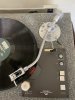
I have a Fluance RT85 TT https://www.fluance.com/rt85w-refer...rntable-natural-walnut#content-Specifications and there's going to be a point where I will maybe want to upgrade/replace the cartridge, and need a bit of help in determining the correct cartridge. I think what's confusing me is that someone was mentioning a graph from the Ortofon site: https://www.ortofon.com/support/support-hifi/resonance-frequency/

The RT85's effective tonearm mass is listed at 27.5g (total mass would be maybe 36.5g if the head shell mass isn't included in the effective tonearm mass spec). The RT85 comes stock with an Ortofon 2M Blue, but the math from that link suggests that even that is a mis-match.

What cartridges would be most compatible with the Fluance RT85 that I should be looking at that would be an upgrade from the 2M Blue?
 
Register to hide this ad
Hi there,

I have a Fluance RT85 TT https://www.fluance.com/rt85w-refer...rntable-natural-walnut#content-Specifications and there's going to be a point where I will maybe want to upgrade/replace the cartridge, and need a bit of help in determining the correct cartridge. I think what's confusing me is that someone was mentioning a graph from the Ortofon site: https://www.ortofon.com/support/support-hifi/resonance-frequency/

The RT85's effective tonearm mass is listed at 27.5g (total mass would be maybe 36.5g if the head shell mass isn't included in the effective tonearm mass spec). The RT85 comes stock with an Ortofon 2M Blue, but the math from that link suggests that even that is a mis-match.

What cartridges would be most compatible with the Fluance RT85 that I should be looking at that would be an upgrade from the 2M Blue?
Why not just measure the resonance frequency of your current setup with the 2M Blue? Just have to record a few seconds of audio while you lower the tonearm onto a record, the deck doesn't even have to be turned on. Just look at the spectrum in audacity ... below is mine with Audio Technica AT-OC9XML on Micro Seiki BL-91, a little bit of a mismatch since the LOMC cart is kind of high compliance and the arm is medium mass, but still sounds great, and I do have some optional damping not shown here that can be applied ...

ao9Wmqt.png
 
The easy solution, assuming the manufacturer chose the 2m as a match because it is one and not to hop on the ortofon train, is to just look at the compliance of the blue and stay in the same ballpark. Unless you just have to have MC moving up the 2m ladder seems like a natural progression.

Also take a look at Origin Lives philosophy on how to apportion for your system and their opinion on the contribution of each component to see if money towards a cartridge makes the most sense. Doesn’t have to be taken literally but is helpful.

It’s pretty much set in stone for me that I can only enjoy vinyl with LC, Shibata, or MR (my favorite) so I’d probably be looking too but within reason.
 
That looks like a mistake in the specs. It doesn't make sense and definitely does not agree with the tonearm looks or the supplied cartridge.

That's sort of part of the confusion - If I add the effective spec + head shell weight + cartridge weight it seems like it's awfully heavy in TT terms. I can try to e-mail them and see if they offer any insight as to what the actual weight of the tonearm happens to be. The other thing is the RT82, which is in the same line-up of their Reference TTs lists 21.78g as the effective tonearm mass. Not sure why they'd have to do something different unless it has to do with the stock cartridge it comes with?

I also think part of the confusion in my head is which compliance spec I'm supposed to use in the math. Most cite dynamic, but Nagaoka also cites a static spec. Ortofon cites "dynamic/lateral" in their compliance spec but I half know from looking at other brands is that the dynamic spec is always lower than the static/lateral spec. I get the math (mostly), but I'm unclear on what to base the math on.

Also, nothing I've read really mentions anything about high mass tonearms. If the Fluance specs are accurate, I'd probably fall in that category.
 
Last edited:
The easy solution, assuming the manufacturer chose the 2m as a match because it is one and not to hop on the ortofon train, is to just look at the compliance of the blue and stay in the same ballpark. Unless you just have to have MC moving up the 2m ladder seems like a natural progression.

Also take a look at Origin Lives philosophy on how to apportion for your system and their opinion on the contribution of each component to see if money towards a cartridge makes the most sense. Doesn’t have to be taken literally but is helpful.

It’s pretty much set in stone for me that I can only enjoy vinyl with LC, Shibata, or MR (my favorite) so I’d probably be looking too but within reason.

I think the same ballpark for me would either be the Nagaoka MP-200 (or MP-150), bumping up to the 2M Bronze or Sumiko Olympia.

I'll take a look at the Origin Lives thing. I'm still learning, and it sometimes takes takes a bit of time for things to sink in. I'm also more of a visual learner, so seeing things exaplained in laymen's terms without too much technical jargon is often really helpful.
 
The easy solution, assuming the manufacturer chose the 2m as a match because it is one and not to hop on the ortofon train, is to just look at the compliance of the blue and stay in the same ballpark. Unless you just have to have MC moving up the 2m ladder seems like a natural progression.

Also take a look at Origin Lives philosophy on how to apportion for your system and their opinion on the contribution of each component to see if money towards a cartridge makes the most sense. Doesn’t have to be taken literally but is helpful.

It’s pretty much set in stone for me that I can only enjoy vinyl with LC, Shibata, or MR (my favorite) so I’d probably be looking too but within reason.
Love the Origin Live Tables and hope to own one some day.....they have excellent tonearms.
 
I think the same ballpark for me would either be the Nagaoka MP-200 (or MP-150), bumping up to the 2M Bronze or Sumiko Olympia.

I'll take a look at the Origin Lives thing. I'm still learning, and it sometimes takes takes a bit of time for things to sink in. I'm also more of a visual learner, so seeing things exaplained in laymen's terms without too much technical jargon is often really helpful.
The compliance and arm matching, moderate and light and all that jazz can take a little to sink in....so don't sweat it man...just read up and lots of cats on these boards will be more than willing to help walk you through it if need be.
 
The counter weight itself only weighs 102 grams so that tells you it's not all that heavy/massy. For example one of my arms has an effective mass of 22 grams and the counter weight is ~140 grams. I bet it's closer to 15 grams.
 
Fluance has no idea what they are talking about when they discuss the effective mass of this arm. Better to take some measurements with known cartridges and calculate the effective mass range for the arm. If it is 20 the ideal resonance frequency range of the 2M blue can not be reached, being too low for that ideal range. One would think they would put a fair match to their arm in the way of installed cartridge but if they liked the sound, they didn't worry about the effective mass/resonance. Just selling tts, not doing much else technically for them it seems.
 
The counter weight itself only weighs 102 grams so that tells you it's not all that heavy/massy. For example one of my arms has an effective mass of 22 grams and the counter weight is ~140 grams. I bet it's closer to 15 grams.

If the spec includes the head shell weight, it would put the tonearm mass right around 18-19g, but even that's an unknown.
 
Fluance has no idea what they are talking about when they discuss the effective mass of this arm. Better to take some measurements with known cartridges and calculate the effective mass range for the arm. If it is 20 the ideal resonance frequency range of the 2M blue can not be reached, being too low for that ideal range. One would think they would put a fair match to their arm in the way of installed cartridge but if they liked the sound, they didn't worry about the effective mass/resonance. Just selling tts, not doing much else technically for them it seems.

What's the best method for taking these measurements? If there's a way to accurately calculate, it would probably make my life a lot more easier, and less confusing when trying to research correct cartridges.
 
Lacking a doctorate in tone arm and cartridge engineering I often can’t make the reality of what I’m hearing and seeing to balance with the results of available mfr data input into online calculators. The eff mass of this arm is unpublished. It came with a 19g headshell which I don’t have. It came to me with a flyweight Accutex LPM cart in a medium weight headshell. Currently it has this heavy Paradox which only required moving the counterweight way back. In between it’s had 3-4 other cartridges. I don’t have a cartridge that will mistrack or misbehave on it. It seems a well designed arm with a wide range of adjustment can and will perform well with a vast variety of cartridges. Even though they didn’t calculate well using several calculators and reasonable estimates off eff mass. If you stay away from the extremes of either one, cartridge and arm matching isn’t all that complicated.
image.jpg
It’s almost like mfr’s intentionally left out a key spec here and there to thwart reverse engineering of their arms and alignment geometry.
 
Last edited:
Japanese std is to state compliance of cartridges at 100 Hz and the RoW uses 10 Hz. Use 10Hz number and adjust the 100 Hz buy multiplier of 1.5-1.9 to get 10 Hz number.
 
Back
Top Bottom