• The move to the new server is done. There are some software and database maintenance updates in process. This has us passing the hat around to help out. We appreciate any donations. Seriously, even a dollar helps. The payment page may be found here - https://www.audiokarma.org/support.html

Need help with some Fisher monoblock

DraKnight13

Active Member
I purchased 3 very weird Fisher tube amplifier today, and quite puzzling about what to do with them. The first one is the 200-A model, which being a single, I may just put it away for the time being.
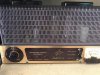
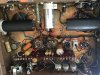
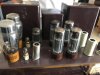
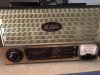
Now the main concern is the other 2, one is being the 125-a amplifier, and 90-a amplifier. I know the model is different, but they looks exactly the same, from the controls to tube lay out (I have not have time to open up the chassis and won't be able for a while). While I have been able to find manual for the 125-a/ax, I have so far fail to even find a mention of the 90-a amplifier anywhere. Question is can I use them as a pair????? Does anyone have any information or schematic or manual of the 90-A???? Pictures of the 2 amps are below, sorry can't take the cage off yet but they are essentially the same tube components inside.
 

Attachments

  • 65909959_2260994517270282_9053536273918066688_n.jpg
    65909959_2260994517270282_9053536273918066688_n.jpg
    141.4 KB · Views: 130
  • 65949929_466235740820836_2877988496205676544_n.jpg
    65949929_466235740820836_2877988496205676544_n.jpg
    122.2 KB · Views: 128
Register to hide this ad
Sorry, I should have clarified. I fail to find any meaning full data pertaining the 90-A. The website you link I don't have the membership to, which only thing that I can see is tube components, which I already know off. The second mention was in a thread 4 years ago about Fisher gear between the 50s and the 60s, where they mention briefly about it. My main thing is asking for a schematic, or some kind of manual that can help me determine if I can use it along with the 125-a as a pair.

They look great, and the previous owner said they haven't been used for more than 10 years, so I just took a chance and hope for the best. My knowledge of tube stuff is still wobbly so I will wait until I can properly work on them.
 
I'm sure the Fisher experts will chime in soon and then you'll get the answer you need.nice pickup of the gear though and well respected.
 
thanks, I have various Fisher receivers and I love them. I still have a Fisher 500C. My goal is to have an amp or a pair of amp for each of the common output tube, and have been looking for one ever since UPS trashed my Marantz 8B. I am happy but cautiously because I want to use them as a pair.
 
I don't have any definitive information on the 90-A, but from the experience I have with virtually all the rest of Fisher's power amplifier stable produced throughout the 50s, and Fisher in general, the 90-A and 125-A will be virtually identical, with the difference in model number quite possibly having nothing to do with any circuit differences at all (or significant ones anyway). About the only thing consistent with the Fisher model number system is that numbers and alphabet indicators for a given model run or series always increased over the years -- they never decreased to my knowledge. That is, the original 50A became the 55, then the 200, etc. The 70-A became the 80-A, became the 100, etc. Receivers when up in numbers the greater their features and capabilities, therefore the 400 was the economy unit, the 500C the performance targeted upgrade, and the 800C basically just as good as the 500C, but also including AM. So numbers and letters went up as a series grew -- not down.

The point of this is that almost certainly, the 90-A preceded the 125-A -- who knows, maybe as a trial balloon. 90 watts was an awful lot of power back in the mid 50's -- considered as stadium level capability, and just a rediculous amount of power for a home setting. Like other manufacturers of high power units, it was no doubt tempting to market that kind of power to industrial applications, and so, the 125-AX which has 70 volt output capabilities and also a 4Ω tap included as well came to be. Fisher may have even changed their power output rating system as well (they certainly played around with that in the 60s) to better target (i.e market) to industrial applications. Renaming the 90-A as then the 125-A to keep it consistent with its brother the 125-AX would hardly be outside the realm of Fisher moves to keep consistency in their models.

The best way to check if they are identical -- or can easily be made so -- is to check the power and output transformer pat numbers (likely on the bottom of them in this case). If they're identical -- and I would strongly bet that they are -- then the units can be considered as identical, or can even be made to be so if there were small production changes between them. The bottom line however, is that it would be completely foreign to Fisher to produce two such identical looking units, but have them not be virtually identical inside. Good luck with your hunt for the 90-A documents. Those are two extraordinarily beautiful pieces!!

Dave
 
Thank you, after reading your post I was too curious so I haul them off the shelves and open them up. I can't seem to find any marking the pat number that you referred too. And the transformers on them do look a bit different (size anyway). The good news is the circuit is completely identical down to the wiring and value of the caps. Only different i found was 1 capacitor on the vertical board was electrolytic on one, and film capacitor on another. Usually, with all of my find, I would have fire them up on a variac and see how they sound, but reading about various thread about how fisher push these tube to the extreme, I will wait until I get better sense of what they are.66008026_419244322266385_1267524696786599936_n.jpg 66034576_2363685113728504_8393035200749109248_n.jpg 66120966_413376716187087_3837539453476274176_n.jpg 66593165_679609759169081_5150686392392613888_n.jpg
 
Interesting that the transformers actually look slightly smaller on the A-125 -- but still plenty big on both to get the needed job done. Could be a change in transformer vendor. Sometimes if you look carefully in the cutout hole for the transformer terminals you can see the transformer part number, or part of it anyway. Otherwise, the transformer has to be lifted from the chassis to see the part number.

There are many things about the design and build of these amplifiers that originated in the original 50A units.

Dave
 
I think for now I will try to hunt down the documentation first, and also I become subscriber today and hopefully some other member will have some identical unit that they want to part with. I am due to have a huge test on Wednesday that I should right now focus on but I was too distracted by these amps. Thank you for the information and I will get back if I have some update.
 
"Blows away" probably not. tube amplifiers are notoriously massive and difficult to move. Blowing definitely won't move a good tube amp. Seriously the flagship models from all of the manufacturers were all in competition with one another for the same markets and using the same stock of available parts with a few exceptions. I haven't done the testing personally, but I would be surprised if there were substantial performance differences between them. It comes down to what you like to collect and listen to. If a substantial performance difference was found in one amp I would suspect something is wrong. meaningful comparison cannot be made when one device is not working correctly...
 
"Blows away" probably not. tube amplifiers are notoriously massive and difficult to move. Blowing definitely won't move a good tube amp. Seriously the flagship models from all of the manufacturers were all in competition with one another for the same markets and using the same stock of available parts with a few exceptions. I haven't done the testing personally, but I would be surprised if there were substantial performance differences between them. It comes down to what you like to collect and listen to. If a substantial performance difference was found in one amp I would suspect something is wrong. meaningful comparison cannot be made when one device is not working correctly...
The others don't have bird with a note in its peak as a logo though :(
 
Nice! :thumbsup:........no wait, really really nice! :bigok:

Those will put out some serious power. Just for comparison sake, the Dynaco ST70 uses four EL34's (2 ea for stereo) 35 WPC for 70 watts total. These Fisher mono amps each use four EL34's in a push pull parallel configuration and depending on what type of circuit they use, I would think that they would at least be able to do 70+ each. :dunno:

Use the two you have for stereo. 70W+70W = some awesome sounding stuff! :music:
 
Very nice looking amps.Yours are in very good condition.If I ever do the mono blocks thing I wouldn't mind these after the experience with my 800c.
 
I'll compare my '51 Coronet console with the R-3 chassis (P-P-P 6V6 300v on the plates) it pushes about 25W total. And that's out of a SINGLE JENSEN 15" Co-Ax. Compare that to a '58 Contemporary with the R-20 Chassis (Push-Pull pair of EL-84's (Sovtek EL-84M's') ) Pushes about 14 W into a 12" JENSEN Woofer, 5" Mid and a 3" Tweeter. Put them side by side and start cranking evenly and the EL-84's run out of steam, while the 6V6's keep it up until the windows are rattling and yer nose bleeds. And that's in a 12x12 room. Put them in a larger room or outside and they both sound somewhat anemic unless you're really close. Then take a 610 with the 560 companion. Very similar to the R20 with the addition of a 30A in the 560. So now you have stereo system, but the wattage is the same as the R-20, but now you have two amps/two sets of speakers. Believe me, the math don't lie. Although you'll get a little more wattage (maybe a watt or two due to less votage drop from the load) you wont notice it. SPL is a little bit more with a Stereo vs. Mono, but again unless you measured it with a meter, you probably couldn't tell difference except for point sourceing.

A Sansui 2000A puts out roughly 38 Watts per channel. Twice the Wattage doesn't equal twice the volume. It's not linear. Using the same speakers on the 2000a from the consoles, it doesn't appreciably increase the volume. Comparing the 2000a to the R20, it has a little more perceived volume. Comparing it to the R3, there is no or barely an audible difference. However! Higher Speaker efficiency will take an overloaded sounding amp/receiver to new levels of performance just from the fact that the speaker put's out more DB at a set level. (Or for a set SPL level the volume control is set lower than for an inefficient spkr). That's one reason Tube gear and S.S. gear below 40W sounds and works better with High Efficiency speakers (greater than 92db), while higher powered S.S. units can sound good with inefficient speakers.
 
Thanks for all the information. I am still trying to track down another piece for those amps just in case but if not, I will use them as a pair.
I finally got some free time, and decide to turn on the Fisher 200-A. (go through the whole variac thing, btw can anyone tell me what is the proper way to use it? I just remove power tube, hook up to a cheap speakers, and do 10 volts per 30 minutes, until 90V, plug the power tube back in and go from there). I did check before hand for any problem, there isn't anything obvious. At 100 volt, there is a hum, doesn't increase with the volume on my preamp, so it is definitely from the amp. I tested all the tubes (they all tested better than new, so this amp is barely seen any usage if any). And much to my disappointment, there is no sound. I stupidly turn the knob on the Z-matic control, and my ear is still ringing now (the speakers produce what can be call a very very loud screech that blow my ear off). So I guess I will leave the Z-matic thing off.
Now I am in a tough spot, if I can, I would have kept all 3, but I did make a promise to offload most of my gears, and did my best to negotiate to keep the 90 and 125, so this 200 have to go. I dont want my inexperience hand to butcher it, and damage something that can't be fix. I do have a bit of free time now so I am reading up on tube amp (the technology behind it, the principles etc...) but I am no where close to tackle these thing and do them justice (I read another member restoration of these amps, and most of that stuff went over my head). So did I miss something obvious that cause there is no sound (amp is turn on, stable and no smoke no red platting no nothing)? How should I put the Z-matic control (off position, or constant power or constant current). Another option is to send it out for professional service, which I don't know how much it will cost, or even who to send it to.
 
Ok, apparently, I either need more sleep, or I am just plain stupid today. I thought for sure I have replug my preamp (was testing my brother pre-amp for him, whole other problem). In my infinite knowledge, 1 end of the RCA was going into one amp, the other end going into the Fisher. I am so lucky I didn't have the other amp turn on. RIght now it singing with very minimum hum, and I will be keeping an eye out on it. It sounds really good on a cheapo Knight coaxial I use to test amp.
Obviously, I want to keep the 125 and the 90 because of the rarity of them (not like 200-A pop up every other day either). Now my problem become which one to keep. If I drag it out long enough maybe girlfriend will forget about them and I will hide then in a corner of garage, but finding the other piece will be a problem on their own, let alone for 3. For now I will let it run for couple hours to make sure nothing happen then I will hook it up to better speaker
 
If anyone is still monitoring this thread, which seems like the best current place to ask this, I have two 125's and one has a short cage and one a taller cage. I'd like to post in the right place to ask if anyone has a similar problem and would like to swap a cage. Where should I post this?

Thanks in advance!
 
Unfortunately that sort of thing goes in Barter town. Which requires a $25 membership fee annually.
Look at it as an opportunity and you'll lean to love it
 
Back
Top Bottom