• The move to the new server is done. There are some software and database maintenance updates in process. This has us passing the hat around to help out. We appreciate any donations. Seriously, even a dollar helps. The payment page may be found here - https://www.audiokarma.org/support.html

New to me pair Bozak B-300 now B-302 Urban with issue

What's the result of the Tobin mod on the B301?

The Tobin modification has four components:
(1) Downwards moves the crossover points for the midrange and woofer from 800 Hz to 400 Hz (inductor taps)
(2) Balances the hotter B-200Y tweeter to the other drivers (attenuator resistor)
(3) Removes the attenuator at the upper end of the tweeters to increase SPL as tweeter falls off
(4) Un-reverses the reversed-polarity midrange so the polarity matches the other drivers.​

The B-450 likely cannot be downwards moved to 400 Hz without hammering the low end of the midrange, so (1) is a non-starter. It might go down to 600 Hz as a compromise, but this would require a new woofer inductor and a new midrange capacitor.

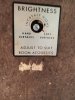
The B-301 only uses a single tweeter, and (at least the CD did) has a brightness control, so (2) likely isn't needed as the equivalent somewhat exists.

Regarding (3), add a supertweeter (band-pass the existing tweeter and band-pass the supertweeter, as I've elsewhere described).

As far as (4), I believe that the midrange polarity was reverse wired in the B-301CD, but I can't remember with certainty. I'd have to find my notes. I remember checking the polarity when I was done rebuilding the crossover, but I no longer remember what it was when I began. I've extensively written about the benefits of unreversed drivers, and how Polarity Reversal ≠ Phase Shift.

If your midrange doesn't have a cover, add the plastic flowerpot as I've elsewhere described. That will prevent cross-modulation between woofer and midrange, and it dramatically cleans up the sound. Do one speaker, then do an A/B comparison using a mono signal. Night and day.

Is the performance of the sealed B301 any better or worse than the small ported Bozaks?

Eh, that comes down to personal preference. I would say superior accuracy, because porting introduces all sorts of inaccuracies from group delay which infinite baffle, by its very definition, lacks. But the lowest frequency reproduced is raised in the smaller cabinet vs the ported cabinet. Some consider that a drawback. I'd rather add a few subwoofers and be done with it.

The only experiment I know with the ported DMS-2500, a modern version of the B-201 Sonora with an Audax soft dome, was that plugging the port and lining the cabinet was an improvement over ported. The bass no longer went as low, but it was much cleaner at the low end. As I noted, I prefer a decent subwoofer to handle the lower frequencies with some accuracy than a ported speaker which sonic meatgrinders the remainder of the sound.
 
It appears the cure is to change the mid driver and cross point. I'll look around and see if I can find some study on modified B301.
I think the speaker has better bass until it stops than the other little sealed box speakers.
 
The upgrade is easy, if you can unscrew the backs. Later versions used glued cabinets which may not be disassembled and require cutting the back and adding cleats.

A pair of B-209 B/Bc/C drivers — do not purchase the A as it requires an external foam damping ring which has long since rotted and is unobtanium — will run you about $100. An N-10102 crossover pair will be about $125. You may build one for less using decent air-core inductors. Sometimes speakers are locally available in pieces for very reasonable prices.

The crossover points for the B-301 are 1,200 Hz and 3,600 Hz. Which is far too high for the B-199, plus it takes the hit right smack dab in the middle of the midrange where humans best hear. If yours is from the 1960s, the crossover likely does not use one of the ferrite-cored, aluminum-wire inductor abominations which plagued later Bozaks.
 
I don't know the exact point where Bozak switched to crappy crossovers with ferrites, aluminum wire, and NPEs, but it was sometime around that point. Copper wire shortage.
 
Wow. Way to hijack a guys post. Anyway y’all can take this to a pm conversation vs. this fact vs fiction dialogue. Regarding Kirks question. I hope you straighten out your wiring issues. Great speakers you have there regardless what braintrust thinks. That is if you can call it that. Not sure why mods haven’t done any hand slapping here. I know they are a busy bunch.
 
Last edited:
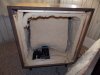
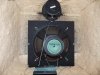
Happy New Year to one and all. I am back to these. Today I took the backs off. These are not B-300 but B-302, here are some pictures, First is left speaker 2nd is right speaker. First crossover is the right speaker it is wired wrong. 2nd crossover is left speaker wired correct at least at speaker connectors. Bozak states connector 1 is common 2 is positive right speaker is opposite DSCN1000.JPG DSCN1001.JPG DSCN1002.JPG DSCN1003.JPG DSCN1004.JPG DSCN1007.JPG Last are two inside shots
 
Last edited:
'nice, that midrange will make all the difference, to say nothing of getting them wired consistently. Opening up Bozak's gives you a good feel for just how well they were made.
 
Some one probably flipped over the rear speaker terminals when they soldered the wires. I had that happen with some Boston and Jensen speakers way back when. TF-3????
 
I suggest, at a bare minimum, (a) replacing all of the capacitors with polypropylene film (the Parts Express's Dayton house brand is perfect) with bypassing (use smaller values for form larger values and parallel with 1 µF, 0.1 µF and 0.01 µF) and (b) add the flower pot modification I've elsewhere described.

The flower pot prevents cross-modulation between woofer and midrange and the A/B comparisons (one speaker covered the other not) have been clearly in favor of the cover.
 
Thanks for all the great info. I was a little disappointed when I took back off. Restoration on the B-300 would have been very simple as it looks like only one cap to be changed but now that it is a 302 much more work to be done, for now I will place the backs back on until I or my tech friend have time to deal with. AS is they do not sound too bad, but not close to the very good sounds that come out of my Cornwalls.
 
I picked up some Symphonies this summer which also sounded pretty good. That made getting around to updating the crossovers a lower priority. In fact, it was so low a priority that I figured I'd never get around to it so I just popped for full replacements (Brodtek). I knew it would help but I was sort of amazed at just how much. Everything was cleaner & better defined and surprisingly the imagining improved remarkably (must less 'box-bound'-'no idea why). Replacement was not cheap & if I had more time doing myself likely would have been in range but however you get there, there is gold in them there boxes which updating the wiry bits can unlock,
DB046847-A208-4CD8-A94C-D49B9FFB9814.jpeg
 
The original air-core Bozak inductors were high quality and may be re-used without detriment to the sound.

In the early to mid 1970s, however, Bozak was cutting every corner to reduce costs and compete with smaller, shoddier speakers, and it switched not merely to ferrite-core inductors, but aluminum-wire inductors with crimped-on copper pigtails. Bleh.

"Believe me, friends, for I have, with my own eyes, seen that ferrite-core and aluminum-wire inductor abomination, whose hideous worship was revoltingly described by von Junzt, and I alone have lived to tell thee of it. I am not ashamed to say that I lost my senses that day, in that loathsome and foetid place with no right angles and horrible phantasms always at the corner of my eyes. All I know is I ran screaming from it, insensate and unreasoning, and somehow safely returned to my house in Providence. But the gibbering horror of the void of non-linear crossover saturation has never fully left me since that day. If only I had carefully heeded Alhazred's warning that those who encounter core saturation may forever be doomed, and to look upon that void is to look upon despair itself." — The Doom that Came to Bozak by H. P. Lovecraft (1928)
 
Thanks for all the great info. I was a little disappointed when I took back off. Restoration on the B-300 would have been very simple as it looks like only one cap to be changed but now that it is a 302 much more work to be done, for now I will place the backs back on until I or my tech friend have time to deal with. AS is they do not sound too bad, but not close to the very good sounds that come out of my Cornwalls.

Yeah, the B-300 only uses a PIO motor-run capacitor for a crossover at 1,200 Hz, so that's a straightforward and inexpensive upgrade.

The B-209 (again, never the paper-cone or A-suffix versions) will greatly improve the sound, but the upgrade does require a crossover.

I'm not surprised it doesn't sound as good as your Cornwalls. I also expect your Karlsons sound significantly better.
 
Yeah, the B-300 only uses a PIO motor-run capacitor for a crossover at 1,200 Hz, so that's a straightforward and inexpensive upgrade.

The B-209 (again, never the paper-cone or A-suffix versions) will greatly improve the sound, but the upgrade does require a crossover.

I'm not surprised it doesn't sound as good as your Cornwalls. I also expect your Karlsons sound significantly better.

Did you notice Brodtek is using your l-pad design? The one that turns out to be a huge sonic failure?

It turns out that wiring in the l-pad that way not only varies the attenuation, but it also varies the crossover point. Unfortunately, the fix is to remove everything in the tweeter circuit but the 8.2uF cap. Then, wire in the l-pad the way the instructions state that came in the box. A proper zobel network for the b200y hasnt been designed, yet.

Biggles
 
'dunno, 'sounds pretty good to me but then I have it full on (no attenuation) so perhaps it's not much of a factor. Passive variable crossover point you say? I'll have to fiddle with that. All I know is when I first got it back together full on sounded best to me, 'perhaps that's why. Besides, there was that hole in the back of the box.....
CD76EB77-46B7-49F1-B11B-4EA10990EAF3.jpeg
 
Did you notice Brodtek is using your l-pad design? The one that turns out to be a huge sonic failure? It turns out that wiring in the l-pad that way not only varies the attenuation, but it also varies the crossover point. Unfortunately, the fix is to remove everything in the tweeter circuit but the 8.2uF cap. Then, wire in the l-pad the way the instructions state that came in the box.

I'm never going to escape that L-pad debacle, am I.

As far as Brodtek's crossovers listed on that auction site, I'm uncertain as to which greater impresses me: the thin, shoddy plywood or the blobby high-school soldering.

I know Biggles has read my analysis of the L-pad as rheostat versus the L-pad as constant-impedance attenuator, but in case others missed it amongst the ten thousand Bozak postings made on the subject, I specifically addressed the L-pad issue in detail in two postings showing the effects as per actual reactance calculations (the math won't lie, unlike the interwebs):

The issue can be clearly seen in this excerpt from Part 2:
Consider the following effects of some sample L-pad settings:
L-pad Shunt = 8 Ω, Attenuation = 8.37 dB, Input/Output Impedance = 8.8 Ω, Delta = +0.2 Ω, f = 2,206 Hz
L-pad Shunt = 7.5 Ω, Attenuation = 8.62 dB, Input/Output Impedance = 8.6 Ω, Delta = 0.0 Ω (Baseline for Tobin Attenuator, standard shunt), f = 2,257 Hz
L-pad Shunt = 6 Ω, Attenuation = 9.54 dB, Input/Output Impedance = 8.0 Ω, Delta = -0.6 Ω, f = 2,427 Hz (NB: Ideal Point for 2,500 Hz Midrange)
L-pad Shunt = 4 Ω, Attenuation = 11.5 dB, Input/Output Impedance = 7 Ω, Delta = -1.6 Ω, f = 2,774 Hz
L-pad Shunt = 2 Ω, Attenuation = 15.4 dB, Input/Output Impedance = 5.7 Ω, Delta = -2.9 Ω, f = 3,405 Hz
L-pad Shunt = 4 Ω, Attenuation = 11.5 dB, Input/Output Impedance = 7 Ω, Delta = -1.6 Ω, f = 2,774 Hz
L-pad Shunt = 2 Ω, Attenuation = 15.4 dB, Input/Output Impedance = 5.7 Ω, Delta = -2.9 Ω, f = 3,405 Hz
L-pad Shunt = 4 Ω, Attenuation = 11.5 dB, Input/Output Impedance = 7 Ω, Delta = -1.6 Ω, f = 2,774 Hz
L-pad Shunt = 2 Ω, Attenuation = 15.4 dB, Input/Output Impedance = 5.7 Ω, Delta = -2.9 Ω, f = 3,405 Hz
​

The obvious conclusion from the handful of examples is that significantly changing the L-pad shunt more than 12 dB will dramatically alter the crossover point leaving a significant gap.

In practice, however, the change in the L-pad shunt from the original attenuator's fixed value of 7.5 Ω is small, so the overall effect on the crossover point will be small. Anecdotal reports of attenuation settings using an L-pad are only slightly more than the stock Tobin network. The point at which problems occur is 12 dB, a considerable amount of attenuation which has only a small shift in crossoverpoint from the actual point of 2,427 Hz to 2,774 Hz, or 273 Hz higher than the desired point of 2,500 Hz and 347 Hz higher than the implemented point of 2,427 Hz. This is why the error in using the L-pad may not be significant — maybe not even detectable by ear — unless the desired attenuation is enormous.

Other factors work to reduce the audibility of the L-pad variation. The filter is first-order so it gently rolls off at 6 dB / octave. The Bozak tweeter is small and highly directional, so off-axis signal reduction is considerable and the volume level can be poor. As a result the downwards shift, creating overlap, or upwards shift, leaving a small gap, may not be readily noticeable. Even a larger gap or overlap, again by virtue of the crossover rolloff, may not be readily apparent.
​
TL/DR: Provided one is attenuating at roughly 6 Ω and 9.54 dB attenuation, which is roughly the baseline for Tobin's analysis that the B-200Y tweeter was 9 dB louder than the other drivers, the substantial shifts at either end may not actually matter in practice and may have never been noticed. Tobin's own T-pad crosses at the incorrect point, because his T-pad is an approximation to match standard resistor values. Having noted this the issue, properly placing the L-pad across the tweeter is the superior approach as it permits continual adjustment across the full range of attenuation without any shift in crossover point.
 
'dunno, 'sounds pretty good to me but then I have it full on (no attenuation) so perhaps it's not much of a factor. Passive variable crossover point you say? I'll have to fiddle with that. All I know is when I first got it back together full on sounded best to me, 'perhaps that's why. Besides, there was that hole in the back of the box.....

Many prefer a louder treble (i.e. greater overlap) because of room dynamics, personal taste, or idiosyncrasies in hearing.

As per the above chart, with the L-pad near maximum value may not be significantly shifting the point. If so, this would buttress my point that the L-pad as rheostat does little or no harm.
 
Back
Top Bottom