• The move to the new server is done. There are some software and database maintenance updates in process. This has us passing the hat around to help out. We appreciate any donations. Seriously, even a dollar helps. The payment page may be found here - https://www.audiokarma.org/support.html

New to Me Yamaha A-1000 - Heat Issue and Sound Cuts

JonLewis

AK Subscriber
Subscriber
I was excited to get a Yammie A-1000 that was sold as working. Being too excited, I took it for a spin without any pre-work. Relay clicks, everything seems fine. Basically the sound drops out completely after 30-40 minutes, no matter the output, and its not in class A mode. Temps did not seem too bad but then I popped the cover and got 140-150 degrees from the tiny board behind the volume and its looks cooked.

Otherwise looks pretty clean, har-har. Sigh. I'm electronically challenged to date, so looking for some folks to weigh in, thanks.
20230417_181829.png
 
Last edited:
Register to hide this ad
These amps run hot in many areas and as a result have many cracked solder joints.
Ideally (at minimum) they need the corrosive glue removed and solder joints re-done in all problem areas before putting into daily use.

It's up to you how far you want to go. If proceeding I recommend building a DBT first, 100W minimum bulb, and use it for first power up after every time you work on the amp. It's becoming increasingly hard to find the (excellent) transistors in these amps so it's important to protect what you have.
 
Will do. If I was not clear, it starts working again after cooling.
Can you upload a photo of the solder side as well please? Sounds like you have some cold/cracked solder joints that lose connectivity based on temperature. Reflow all solder joints, all as in every single one including the RCA and other connectors, before doing anything else, I think your problem will go away … good luck.
 
That amp is likely to have some heavy dollops of glue around the larger capacitors (not the big filter caps), and "overflowing" onto peripheral components. This glue becomes corrosive over time, and potentially conductive. Glue needs to be removed, and any affected components replaced (those with glue on pins/legs).

The resoldering advice above is also dead-on. The A1000 is a very nice integrated amp, but they do run hot (and even hotter with the Class A switch activated).
 
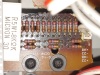
Here's the back of that small board by the volume knob. So the board looks coated, but its not glue? Reminds me of mil comm. gear for the tropics.

20230418_122215.jpg

20230418_122222.jpg
 
I'd definitely get in there and reflow all the solder joints.

Cutting out after it gets warm (softening things so that parts droop out of contact at the solder pad) has been a symptom of bad solder joints in other stuff I've worked on - and it's an easy, cheap fix.
 
Last edited:
Id also replace all these resistors with new ones so you can raise them off the board by 3-4 mm's
to prevent any more heat damage to the board and it may also reduce the heat getting to the solder pad.

index.php
 
Id also replace all these resistors with new ones so you can raise them off the board by 3-4 mm's
to prevent any more heat damage to the board and it may also reduce the heat getting to the solder pad.
Get a price break if you order 10 or more...:biggrin: 27KΩ 1/4 watt 5%
 
Use metal film, match the physical size of the original parts (some 1/4W are smaller, don't use those).

The 3x cement resistors on the phono board and diodes underneath them will need resoldering (often the heat will unsolder the poor factory joints).

All small transistors (TO-92, TO-92L, TO-126 sizes) on the main amp board need resoldering, and there will be glue / damage under the 2x 680uF and 4x 330uF capacitors which needs to be cleaned up + any corroded parts replaced. Be sure not to bump/bend the small bias transistors (2SD-400) mounted to the heatsink while working, the legs are fragile. Search the forum for A-1000 and you'll find most of your questions answered.
 
Here's the back of that small board by the volume knob. So the board looks coated, but its not glue? Reminds me of mil comm. gear for the tropics.

View attachment 2863154

View attachment 2863153
Good Lord, every single solder joint is a cold one, notice the cracked circle pattern on the solder joints.
Happy soldering, make sure you don’t make any solder bridges either as troubleshooting those will be another can of worms …
 
Last edited:
These amps are a ticking time bomb if the cracked solder joints all over the amp aren't addressed. Just don't skip the DBT step.
 
Last edited:
Search the forum for A-1000 and you'll find most of your questions answered.
:lurk: Search AK when they get that issue all squared away..
I have been, that why I asked about another post just above. There is lots of into. The issue with that, for me, is knowing what relates and what does not, and knowing order of things when its important... or not.
 
Good Lord, every single solder joint is a cold one, notice the cracked circle pattern on the solder joints.
Happy soldering, make sure you don’t make any solder bridges either as troubleshooting those will be another can of worms …
Thank you for pointing that out otherwise I would not have known!
 
Take your time and don't rush, one bridged solder joint or slip with a meter lead can destroy the amp.

I think avionic meant don't worry about searching for now (as some have rushed this job in the past and it's ended in disaster). Fair point. This is not an easy amp to work on so just do what you are comfortable with.
 
Actually .. Searching for good AK threads is a whole lot easier. When the fargin search function is running correctly...Hopefully they can get this issue " squared away " asap.... I use AK search a lot myself.
 
Back
Top Bottom