

You are using an out of date browser. It may not display this or other websites correctly.
You should upgrade or use an alternative browser.
You should upgrade or use an alternative browser.
New turntable sound HELP
- Thread starter MeowMark
- Start date
-
- Tags
- audio advice turnables
Register to hide this ad

Audiofreak71
Boerboelicious
Welcome to AK!.
Need a break down of your system and how it's connected first before we can help you, pictures will help if your able to provide them.
Audiofreak71
Need a break down of your system and how it's connected first before we can help you, pictures will help if your able to provide them.
Audiofreak71

JoeESP9
ESL's & tubes since 83
Is this what you have?
https://www.amazon.com/Boytone-BT-1...d=1496450113&sr=8-1&keywords=boytone+bt+17djs
If so, there is very little that can be done to make it sound better. Unfortunately, you've acquired a piece of gear that's really not very good.
https://www.amazon.com/Boytone-BT-1...d=1496450113&sr=8-1&keywords=boytone+bt+17djs
If so, there is very little that can be done to make it sound better. Unfortunately, you've acquired a piece of gear that's really not very good.
Last edited:

MeowMark
New Member
Yes that's exactly what I haveIs this what you have?
https://www.amazon.com/Boytone-BT-1...d=1496450113&sr=8-1&keywords=boytone+bt+17djs
If so, there is very little that can be done to make it sound better. Unfortunately, you've acquired a piece of gear that's really not very good.
Audiofreak71
Boerboelicious
Nevermind I didn't realize it was an all in one setup. Unfortunately Joe is right, not much can be done in this situation to increase the sound quality, unless there are pre outs to add another amp but with that piece of equipment it might not be worth the hassle.
Audiofreak71
Audiofreak71
MeowMark
New Member
Here is the back inputs, the stereo system, and the frontIs this what you have?
https://www.amazon.com/Boytone-BT-1...d=1496450113&sr=8-1&keywords=boytone+bt+17djs
If so, there is very little that can be done to make it sound better. Unfortunately, you've acquired a piece of gear that's really not very good.
Attachments
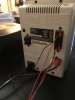

MeowMark
New Member
What would you recommend for a budget turntable that sounds good?Nevermind I didn't realize it was an all in one setup. Unfortunately Joe is right, not much can be done in this situation to increase the sound quality, unless there are pre outs to add another amp but with that piece of equipment it might not be worth the hassle.
Audiofreak71
Audiofreak71
Boerboelicious
There are quite a few that are decent but first off we would need to know what your budget would be before offering any suggestions. Keep in mind you would need either an integrated amp with a built-in phono preamp a receiver with a built-in phono preamp or Seperates, pre amp amp and a Seperate phono preamp.
Audiofreak71
Audiofreak71
JoeESP9
ESL's & tubes since 83
This is the least expensive TT I can recommend.
https://www.amazon.com/Audio-Techni...8&qid=1496450870&sr=8-7&keywords=at+turntable
You will need some stereo gear (ie: amplifier/receiver and speakers) to listen to it.
https://www.amazon.com/Audio-Techni...8&qid=1496450870&sr=8-7&keywords=at+turntable
You will need some stereo gear (ie: amplifier/receiver and speakers) to listen to it.
Audiofreak71
Boerboelicious
U-turn makes some decent budget tables as well, there worth taking a look at.
Audiofreak71
Audiofreak71

There is a line out, but you would need an amplifier before the speakers. Unless you have 'active', or amplified speakers.
What speakers are you using?
What speakers are you using?
MeowMark
New Member
Oh just some ones I've had forever. See pictureThere is a line out, but you would need an amplifier before the speakers. Unless you have 'active', or amplified speakers.
What speakers are you using?
MeowMark maybe it would be better if you tell us what your goal is as far as listening to records. There is no practical way to upgrade/improve the boytone all in one. The suggested AT LP-60 is ever so slightly out of the danger zone of ruining your records but the sound quality wont be any thing to brag about. Casually checking my local Craigslist I'v seen decent performing/sounding systems comprising of a vintage turntable, receiver and a pair of speakers for an asking price of $100 that would run circles around anything new from Amazon. Tell us more about the Panasonic, my guess is it might be a stereo receiver that might require as little as a treatment of Deoxit on the balance control. Also the same goes for speakers on Craigslist, vintage American made compact bookshelf speakers can be had for peanuts that would put those PC speakers to shame.

bobins08
Celebrating Life
Agree. If you want to try buying used from Craigslist and cobble together a system for not much money. Where do you live and what is on out there on craigslist? You might be able to find something to get you started for $100-$200 for speakers, receiver, and TT. Never know, maybe even less.

HTHMAN
Super Member
If you would include your location in your profile, we could look at your local Craigslist and maybe suggest something for you. Location and budget will help a lot.What would you recommend for a budget turntable that sounds good?

Dneprrider
Active Member
Please describe your "original Panasonic" in more detail, model, installed cartridge etc. and a picture would certainly help. You may have a solution aleady at hand without realizing it.I also have this original Panasonic, but after a few minutes of play, the left speaker gets all distorted and crackles. I got a new needle but still doesn't help.

shelly_d
Not An Audiophool
Mark:
It sounds like you are very new to the world of turntables and stereo playback in general so let me go back to basics to describe the various devices that are needed to play back records.
Starting with the record:
The record is run on turntable. That turns at a constant speed, 33 1/3 rpm for lp's. The quality of the turntable can be judged by two specifications, wow & flutter and rumble (sometimes referred to as signal to noise). To judge the quality of a device you can compare these specs. The lower the number for wow and flutter the better. Entry level turntables would be at about 0.1% while very good ones get down to 0.025%. Rumble is a bit strange in that it is a negitive number. The more negative it is the better. So entry level is about -50 ~ -55 dB or so. Some of the best of the bread were able to make -75 ~ -80 dB or so.
The tonearm caries the cartridge across the record. There are very rarely any specs published on a tonearm and when there are it is rarely more then the effective mass. The use of that is match the tonearm to the cartridge to the tonearm to avoid resonance tracking issues. Minor issues caused by mismatch are common and usually take the form of the stylus skipping when you walk by the furniture holding the turntable. Major issues are the vibrations caused by the stylus tracking the groove of the record causes the skipping. I have only seen that once, and I've been part of this hobby since 1968.
The signal of the cartridge is very weak and needs two things to be useful, equalization and amplification. This is done by an RIAA preamp. This can be a stand alone device or can be part of either an audio preamp or integrated amp or receiver or an all in one as you have. The RIAA preamp takes the cartridge signal and boosts it to the level of another so called high level device such as a tuner of CD player.
Out of the RiAA preamp (or phono preamp if you will) the signal goes to the line level or control preamp. This is where your volume, balance, tone controls and input selector switching live. There is more gain in this stage but it's primary job is control of the input, volume and other audible effects.
From the control preamp the signal goes to the basic or power amp. The sole job of this section is to increase the strength of the signal and power to levels that can drive the speakers.
For a starter system, you would want to combine the RIAA preamp, control preamp and power amp in one component, either an integrated amp or a receiver which is a device that also incorporates a radio tuner.
The last piece of the chain is of course the speakers.
With your all in one box, your output that you tried to hook you speakers to is like the output of an RIAA preamp, it needs the control preamp and power amp to drive the speakers.
I know that is overload on one post for someone new to this and without knowing more about what you can afford and what your objectives are it is really hard to help you further.
Shelly_D
It sounds like you are very new to the world of turntables and stereo playback in general so let me go back to basics to describe the various devices that are needed to play back records.
Starting with the record:
The record is run on turntable. That turns at a constant speed, 33 1/3 rpm for lp's. The quality of the turntable can be judged by two specifications, wow & flutter and rumble (sometimes referred to as signal to noise). To judge the quality of a device you can compare these specs. The lower the number for wow and flutter the better. Entry level turntables would be at about 0.1% while very good ones get down to 0.025%. Rumble is a bit strange in that it is a negitive number. The more negative it is the better. So entry level is about -50 ~ -55 dB or so. Some of the best of the bread were able to make -75 ~ -80 dB or so.
The tonearm caries the cartridge across the record. There are very rarely any specs published on a tonearm and when there are it is rarely more then the effective mass. The use of that is match the tonearm to the cartridge to the tonearm to avoid resonance tracking issues. Minor issues caused by mismatch are common and usually take the form of the stylus skipping when you walk by the furniture holding the turntable. Major issues are the vibrations caused by the stylus tracking the groove of the record causes the skipping. I have only seen that once, and I've been part of this hobby since 1968.
The signal of the cartridge is very weak and needs two things to be useful, equalization and amplification. This is done by an RIAA preamp. This can be a stand alone device or can be part of either an audio preamp or integrated amp or receiver or an all in one as you have. The RIAA preamp takes the cartridge signal and boosts it to the level of another so called high level device such as a tuner of CD player.
Out of the RiAA preamp (or phono preamp if you will) the signal goes to the line level or control preamp. This is where your volume, balance, tone controls and input selector switching live. There is more gain in this stage but it's primary job is control of the input, volume and other audible effects.
From the control preamp the signal goes to the basic or power amp. The sole job of this section is to increase the strength of the signal and power to levels that can drive the speakers.
For a starter system, you would want to combine the RIAA preamp, control preamp and power amp in one component, either an integrated amp or a receiver which is a device that also incorporates a radio tuner.
The last piece of the chain is of course the speakers.
With your all in one box, your output that you tried to hook you speakers to is like the output of an RIAA preamp, it needs the control preamp and power amp to drive the speakers.
I know that is overload on one post for someone new to this and without knowing more about what you can afford and what your objectives are it is really hard to help you further.
Shelly_D