• The move to the new server is done. There are some software and database maintenance updates in process. This has us passing the hat around to help out. We appreciate any donations. Seriously, even a dollar helps. The payment page may be found here - https://www.audiokarma.org/support.html

Newbie questions about replacing crossover capacitors in Fisher Xp-9Cs

mcgannahan

New Member
Hey everybody,
I'm tackling my first repair project by bringing a pair of Fisher Xp-9cs back to life. I've already refoamed the woofers and polished up the cabinets, now for the fun part...

I'd like to replace the capacitors before sealing everything back up to to ensure they sound as good as they possibly can. I have very little knowledge about wiring, electrical parts, etc. so please excuse my ignorance.

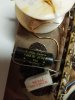
So, looking at the capacitors they are valued as follows:
  • +25uF 50 VNP+
  • +12uF 50 VNP+
  • +4uF 50 VNP+
  • +50 uF 50 VNP+
I just need to purchase new capacitors with matching values, correct?

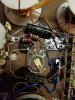
Also (please see my attached pictures), what are the rectangular white components? Different capacitors? Some kind of resistor? Do they need changed also?

And finally, what are the smaller components in the middle with the multi colored bands? Do they need to be replaced as well?

Thanks in advance, and if anyone just wants to drop any helpful tips or knowledge for crossover repair, I'd be very grateful. :)
 

Attachments

  • 20190425_162626.jpg
    20190425_162626.jpg
    64.2 KB · Views: 42
  • 20190425_162721.jpg
    20190425_162721.jpg
    36.4 KB · Views: 36
  • 20190425_162732.jpg
    20190425_162732.jpg
    71.4 KB · Views: 35
  • 20190425_162739.jpg
    20190425_162739.jpg
    46 KB · Views: 37
Register to hide this ad
To help you with this a bit: each of those caps are 50 volts, Non Polarized (50 VNP). You need to find replacement caps that are 1, the same microFarad (uF) value (25, 12, 4, 50) 2, the same or greater voltage (50 volts or higher) and Non Polarized. The most common (and least expensive) higher voltage caps are polarized and therefore are NOT suitable for this application.

If you find film capacitors of the correct voltage they will do best in that application, but non polarized electrolytic will work as well. You may be able to find what you need at Parts Express. It is not the cheapest around but they have great customer service and help you find the parts that you need.

Good Luck

Shelly_D
 
I'd use film capacitors just for the capacitor in series with the tweeter (probably just the 4uF), and perhaps the capacitor in series with the mid-range.

I wouldn't spend that much in the larger capacitors (25 and 50uF). I'd stay with electrolytic in those values.

If you have a DMM, check the resistors. They are probably fine, but those carbon resistors use to drift the value if not in a dry environment.
 
  • Like
Reactions: mbz
Thanks for your response. Would this be an acceptable replacement for the 25 uF caps, or should I not mix different types of capacitors?
https://www.parts-express.com/dayton-audio-dmpc-25-25uf-250v-polypropylene-capacitor--027-438

If you had no objection to the price, sure, it will work.

I would point out that the 2 in parallel is off by only 0.2 %. Even the cap you linked to is a 5% tolerance cap. What that means is that the error is insignificant in comparison to the permitted error in the value of the actual part (tolerance). The originals in the speaker are probably more like 10% or 20% off. Spend the extra if you want but I really doubt that the difference in value will be audible. If will not change the crossover frequencies by any audible amount, at all. Since I suspect that this cap is in parallel to one of the lower speakers (woofer or midrange) all it is doing is shunting high frequencies to ground. You will never hear any signal that passes through it. It's job is to remove unwanted frequencies and prevent them from reaching the driver.

Shelly_D
 
Last edited:
If you had no objection to the price, sure, it will work.

I would point out that the 2 in parallel is off by only 0.2 %. Even the cap you linked to is a 5% tolerance cap. What that means is that the error is insignificant in comparison to the permitted error in the value of the actual part (tolerance). The originals in the speaker are probably more like 10% or 20% off. Spend the extra if you want but I really doubt that the difference in value will be audible. If will not change the crossover frequencies by any audible amount, at all. Since I suspect that this cap is in parallel to one of the lower speakers (woofer or midrange) all it is doing is shunting high frequencies to ground. You will never hear any signal that passes through it. It's job is to remove unwanted frequencies and prevent them from reaching the driver.

Shelly_D

I was actually able to find a few 10 uF and 15uF caps to wire in parallel to take care of the 25 uf caps. I have the rest on order from Parts Express. Now the fun begins.
 
Let us know how it turns out. One suggestion: remove and replace one cap at a time, so you don't get mixed up about what goes where. Not to insult your intelligence, just keeping you out of the same trouble many of us have had at one time or another. :smoke:
 
Let us know how it turns out. One suggestion: remove and replace one cap at a time, so you don't get mixed up about what goes where. Not to insult your intelligence, just keeping you out of the same trouble many of us have had at one time or another. :smoke:
Yep, I plan on it. I've drawn up a diagram and labeled every wire to hopefully avoid any headaches. We shall see.
 
I'd use film capacitors just for the capacitor in series with the tweeter (probably just the 4uF), and perhaps the capacitor in series with the mid-range.

I wouldn't spend that much in the larger capacitors (25 and 50uF). I'd stay with electrolytic in those values.
+1
 
Solder the new caps in parallel to the old caps. Then cut out the old cap. One at a time. Let us know how the Fisher's sound with the new caps.
 
Update:

Last night I soldered in all the new capacitors, stuffed all the insulation back inside the cabinets, and sealed everything up for the maiden voyage. Everything's working great! Even the old fried egg tweeters seem to be working without issue. The bass response is excellent (just as I'd hoped with those monster woofers) and they have a nice, neutral sound to them, if maybe a little flat at times. Hopefully a little more break-in time will resolve that, but overall I'm very pleased.

Thanks to everyone who commented and helped me figure out what I needed!
 
Back
Top Bottom