

Audio_File
New Member

NiceHCK Tears doesn't look like much at first glance, it competes in the crowded $20 to $30 budget IEM market. Comparing it against other popular budget IEMs such as the Chu II, KZ Castor, 7Hz Zero 2, Wan'er and Gate, I've come away pleasantly surprised by the NiceHCK Tears.
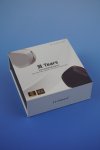

First Impressions
The first thing that stands out about the Tears is how understated it is.
No flashy faceplates, colourful resin shells or attempts to look like a flagship product.
NiceHCK seems to have focused most of the budget on sound rather than appearance.
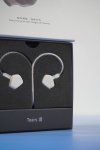
The shells are lightweight and quite compact. The design won't win awards, but it does feel practical and purpose-built.
Build Quality
The build quality is probably the weakest part of the package.
The shells are plastic and the stock cable is basic.
There's no premium feel when you first pick them up.
That said, they don't feel fragile either.
While the materials feel inexpensive, the actual assembly quality is solid enough, with no obvious concerns for durability.
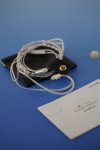
The accessory package is surprisingly good for the price.
- Multiple ear tips.
- Carry pouch.
- Detachable cable.


Fit
Comfort is one of the strengths of the Tears.
The shells are small, light and easy to wear for long periods.
I feel that it is comfortable during extended listening sessions, which isn't always the case with budget IEMs.
The nozzle can be slightly large for some ears, so tip selection may make a bigger difference than usual.
Once fitted correctly though, comfort appears to be excellent.
They're the sort of IEM you can forget you're wearing.
Sound
Overall tuning is best described as warm-neutral with a slight midrange emphasis.
Instead of delivering huge bass or exaggerated treble, the Tears focuses on sounding natural.
The tuning feels mature.
Nothing is overly boosted or feels forced.
Everything works together cohesively.
It's not a show-off tuning.
It's a listening tuning.
Bass
Pleasantly surprised by the bass quality.
Anyone expecting a basshead set should probably look elsewhere.
The Tears isn't built around huge sub-bass rumble or chest-thumping impact.
It does provide clean, controlled and surprisingly realistic bass.
Mid-bass has enough punch to keep music engaging, but avoids bleeding into the midrange.
Bass guitars sound convincing.
Kick drums have definition.
Nothing feels boomy or bloated.
The quality is noticeably better than the quantity.
For genres such as rock, jazz, acoustic recordings and live music, this tuning works well.
Midrange
The midrange is the highlight.
Vocals are where the Tears earns most of its praise.
Both male and female vocals are presented slightly forward, giving them good presence without sounding shouty.
Female vocals in particular seem to benefit from the tuning.
There's a sweetness and realism to voices that I found impressive considering the asking price.
Instrument timbre is also excellent.
Pianos sound natural.
Strings sound believable.
The Tears doesn't try to force details forward, but it still manages to sound clear and resolving.
Everything feels coherent and connected.
That's not something every budget IEM can claim.
Treble
There's enough energy to maintain clarity and openness, but not so much that the listening experience becomes fatiguing.
Cymbals sound clean.
String harmonics come through nicely.
There's a reasonable sense of air.
At the same time, listeners who are sensitive to brighter signatures will likely appreciate the smoother approach.
If I had one criticism, it would be that the very top end could use a little more extension and sparkle.
Not a major issue.
Just something worth mentioning.

Technical
Technical performance is surprisingly good for a budget single dynamic driver.
The semi-open design seems to contribute to a presentation that feels larger and more spacious than expected.
Imaging is solid.
Instrument separation is respectable.
Layering exceeds expectations for a sub-$30 IEM.
No, it's not competing with sets costing several hundred dollars.
But it consistently performs above what most people expect at this price point.

Listening Experience
What I like about the Tears is how easy it seems to be to live with.
Some IEMs wow you initially and then become tiring.
Others have great technical performance but lack musicality.
The Tears appears to avoid both problems.
The tuning works across a wide variety of genres.
Long listening sessions don't become fatiguing.
Vocals remain engaging.
The sound remains balanced.
It's the sort of IEM that encourages you to listen to albums rather than constantly analyse the gear.
And that's probably the biggest compliment I can give it.
Pros
- Vocal Timbre: Organic, engaging midrange with excellent vocal clarity.
- Clean Low-End: Punchy mid-bass that avoids muddying the lower mids.
- Smooth Treble: Non-fatiguing top end with zero sibilance or harsh glare.
- Comfort: Featherweight plastic shells sit effortlessly in the ear for long sessions.
Cons
- Basic Build Quality: Plastic shells and stock cable feel cheap in hand.
- Modest Sub-Bass: Lacks the heavy sub-bass extension desired by hard-line bassheads.
- Micro-Detailing: Average detail retrieval during fast, highly complex electronic tracks.

Final Verdict
The NiceHCK Tears feels like one of those products that understands exactly what it wants to be.
Instead of chasing trends, it focuses on fundamentals.
- Natural tuning.
- Excellent vocals.
- Good timbre.
- Comfortable fit.
But very few budget IEMs seem to deliver such a balanced and mature overall package.
If your priority is musical enjoyment rather than chasing the most impressive specification sheet, the Tears deserves consideration.
For the price, it’s worth it.
Overall Score: 8/10