• The move to the new server is done. There are some software and database maintenance updates in process. This has us passing the hat around to help out. We appreciate any donations. Seriously, even a dollar helps. The payment page may be found here - https://www.audiokarma.org/support.html

Noob questions

apoc

music lover
I have a Pioneer receiver (VSX-5500S) which pas a continuous power output of 110W per channel. Pluged into this receiver I have Advent Loudspeakers which are limited to 120 watts rms per channel. Recommended amplifier power is 20 watts rms per channel.

What does this mean? Am I giving enough power to the speakers or too much?
 
Register to hide this ad
The volume control is the power valve. At "normal" listening levels, you probably aren't even using 10 watts. On the other hand, if you dime the controls with a room full of people, then you're using closer to max power.

The "rule-of-thumb" in pro audio is to have twice the power as the RMS rating of the speaker. You want even the peaks to be clean power. You should easily be able to hear if you start to over drive the speakers. The clipping distortion sounds nasty. So, if it sounds good, its probably ok.
 
Artie is spot on. Just remember...
Don't turn that dial towards 12 o'clock. And tell your friends to keep their hands off of your volume knob.
 
I have Advent Loudspeakers which are limited to 120 watts rms per channel. Recommended amplifier power is 20 watts rms per channel.

I am slightly at a loss to understand this statement. Is 20W the minimum recommended amp power? I should have thought so, as they don't usually specify maximum o/p powers. If so, you' OK.

Otherwise if 20W is the maximum recommended amp power, you need to get some new speakers. When I got a new high power amp back in 1979, my old under-powered speakers lasted only a few days.
 
I am slightly at a loss to understand this statement. Is 20W the minimum recommended amp power? I should have thought so, as they don't usually specify maximum o/p powers. If so, you' OK.

Otherwise if 20W is the maximum recommended amp power, you need to get some new speakers. When I got a new high power amp back in 1979, my old under-powered speakers lasted only a few days.

APOC's statement is crystal clear, nearly all speakers have a maximum power rating and a nominal power requirement, 120 WPC and 20 WPC in this case. Maybe because it wasn't written in the King's English led to your confusion. :naughty:
 
20 watts is the minimum recomended power, to avoid severe clipping by trying to play the music too loud with an under-powered amp. that will kill the tweeters. poof! you should have no problems with that receiver, as long as you dont try to drive the woofers out of the boxes. advents like power :)
 
The "rule-of-thumb" in pro audio is to have twice the power as the RMS rating of the speaker.

So I should have a receiver that puts out about 240W of power?

Sorry about all these questions, but I just blew a set of speakers a couple days ago and dont want to do it agian. They went without warning and I was NOT listening to them extremely loud. But they weren't very good speakers. Just a tweeter and a woofer inside a cabinet, nothing else.
 
Also, I'm thinking of picking up these speakers.

Optimus5 Oiled Walnut
12" Acoustic Suspension Woofer
2 Midrange Drivers, 1 Tweeter
Frequency Responce 20Hz - 20kHz
100W - 8 Ohms

What kind of receiver will work best with these?
Also, is it ok to connect two kinds of speakers together to the same receiver?


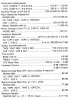
Check out the specs on the Pioneer VSX-5500S. One thing I don't understand is that there's A and B channels and rear channel. But it says nothing about the rear in the spec sheet.
 

Attachments

  • PioneerVSX5500S.jpg
    PioneerVSX5500S.jpg
    70.6 KB · Views: 14
Last edited:
APOC's statement is crystal clear, nearly all speakers have a maximum power rating and a nominal power requirement, 120 WPC and 20 WPC in this case. Maybe because it wasn't written in the King's English led to your confusion. :naughty:
I got confused by the term "max-power" expressed as "rms". Max-power is usually expressed as "peak power" and is not in fact rms, and is fairly irrelevant as only relating to transient energy. Going by my own experience, to have an amp with a continuous rms power o/p / channel of over fives times the nominal speaker rms power / channel is going to destroy your speakers in a short time (if that is what the situation is).
 
Last edited:
So I should have a receiver that puts out about 240W of power?

Sorry about all these questions, but I just blew a set of speakers a couple days ago and dont want to do it agian. They went without warning and I was NOT listening to them extremely loud. But they weren't very good speakers. Just a tweeter and a woofer inside a cabinet, nothing else.

No you don't need that much power 10 to 20 watts is around average listening and even that's pretty loud.
 
The volume control is the power valve. At "normal" listening levels, you probably aren't even using 10 watts. On the other hand, if you dime the controls with a room full of people, then you're using closer to max power.

The "rule-of-thumb" in pro audio is to have twice the power as the RMS rating of the speaker. You want even the peaks to be clean power. You should easily be able to hear if you start to over drive the speakers. The clipping distortion sounds nasty. So, if it sounds good, its probably ok.

Yes, that is the pro audio "rule of thumb" but most name brand pro audio speaker manufacturers give a much more detailed explaination of the power rating of the speakers.

JBL, for example, often gives continuous rating, program rating, and peak rating for a speaker. Curiously (well, not really) program rating is usually twice continuous rating and peak rating is usually twice program rating. Usually, the continuous rating is pretty well spelled out and the subsequent program and peak ratings are mentioned as to what they are.
 
Back
Top Bottom