• The move to the new server is done. There are some software and database maintenance updates in process. This has us passing the hat around to help out. We appreciate any donations. Seriously, even a dollar helps. The payment page may be found here - https://www.audiokarma.org/support.html

Oddball Bang & Olufsen Beocord 8004 pics and questions

darklife

Modulating Madness
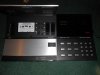
Got this out of the trash and figured I'd rescue it.
Power cord was cut along with the external DIN plug. They just snipped without even unplugging the damn audio cord leaving the external jack just hanging plugged in!

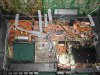
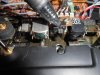
Opened it up gave it a look, inside is clean, caps look "okay" for testing, belts are still good with tension.
Pulled out the power transformer, replaced the cord double checking that the transformer was good before putting it back in.
Plugged it in with a dim bulb tester and wouldn't you know.. it works fine!

Onto the questions and hopefully the pictures help..

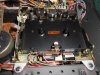
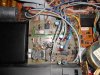
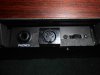
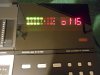
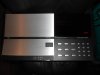
There are no images I can find of this model online that has that analog VU meter installed (10 center). It is professionally installed along with what looks to be some kind of added on board (6) inside where the tape head wires go to and some of the control wires. Stranger yet on the front where the Mic In should be there is a switch and DIN jack (8) with a black sticker over the front top saying "Sinc In/Out" and what I assume is the three switch positions that all mention Sync with Rec/Play. Also an added POT (7) on back that goes to that addon board.

I'm guessing this has to be some kind of professional addon installed since it does not look amateurish with the nice sticker (10 bottom over silver plate) and high quality board inside that sits over the motor control board, but what on earth is it for and does it hurt or increase the value of this tape deck?
Also are these decks all that good and worth much?

Thank you.

Lots of pics...
1DSCN1059.JPG 2DSCN1060.JPG 3DSCN1061.JPG 4DSCN1062.JPG 5DSCN1063.JPG 6DSCN1064.JPG 7DSCN1065.JPG 8DSCN1066.JPG 9DSCN1068.JPG 10DSCN1069.JPG
 
Register to hide this ad
A few more notes..

I am surprised over the build quality of this. Been repairing electronics for many years and have seen a lot of equipment. Thing is built like a tank.
I can honestly say this is the first tape deck I've ever seen that has a heat sink in back! I thought for sure when I first looked at it that it had some kind of built in amplifier, turns out it's just for the voltage regulators inside.
Not sure if I am going to use it for or sell. Not really a tape guy. Thing weighs a ton and is huge compared to any other cassette deck I've owned.

More of that weird meter..
DSCN1070.JPG DSCN1071.JPG
 
Last edited:
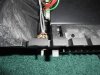
Okay this is getting weirder. There is this little head installed between the other heads that only has two wires coming out of it which goes to that strange (aftermarket?) board inside. It looks like a button but I assure you it's some kind of head that fits into the small slot on the bottom of a cassette next to the middle slot.

This is not in the original Beocord 8004 pictures I find online. Also the main playback/record head might not be original and has two extra wires coming out of it going to the same board.. WTF o_O:crazy:

DSCN1072.JPG
 
Finally think I might have answered my question :idea:

Looks like the Sync switch and its DIN jack are for putting a "stripe" on side B with what's called a SMPTE timecode while recording normal stereo to side A. Explains the analog VU meter, it shows the sync signal level when recording. Then on playback the front DIN jack for Sync plays back the analog timecode while the normal audio back DIN is used for stereo in/out as usual.

I guess the purpose is to control external devices to sync up with tape playback like drum machines or stage effects or even movies?

Why on earth this B&O Beocord was built with this inside is beyond me. No idea yet if this was aftermarket or the company made a few special versions of this tape deck for some specific use. Luckily I can disable the feature and use it as a normal 8004 deck.

The mystery continues :dunno:
 
Another common use for sync tracks were for automating slide projection presentations. Back when slide projection was common there were several companies that were modifying consumer decks to add the 3rd track for this purpose. These decks were not uncommon in the media departments of Universities and large organizations. I have a Wollensak and a late model Denon modified that way. Being it is a modified consumer deck and not a pro machine, such as a Nagra, I'd be more inclined to suspect its intended use was more along these lines versus the movie industry.
 
Another common use for sync tracks were for automating slide projection presentations. Back when slide projection was common there were several companies that were modifying consumer decks to add the 3rd track for this purpose. These decks were not uncommon in the media departments of Universities and large organizations. I have a Wollensak and a late model Denon modified that way. Being it is a modified consumer deck and not a pro machine, such as a Nagra, I'd be more inclined to suspect its intended use was more along these lines versus the movie industry.
Neat info, thanks!

Well today I went to power it up after finally patching that cut DIN cable to RCA jacks and wouldn't you know upon powering the right channel VU died. Still audio on phones but not on output. Two hours later tracing the signal down with my oscilloscope by probing and following the schematic I found that the IC for the PPM circuit labeled IC1 was not showing any output on one half except negative voltage on its output on one side of its dual OPAmp package, other half was showing fine for the Left channel.
Replaced the original LF353 with an OPA2134 since I had a batch of samples from TI. Crossed fingers and powered up only to find it works again!
But this has me worried now.. hopefully these original LF353 OPAmps aren't all going to flake out one after another from age. No idea what the reliability is on LF353, never used them before or had to replace.

Either way got some Dire Straits playing, some Moody Blues. All is going good. Definitely have to replace a few capacitors on the power supply board though, they worry me.
 
A great visual example of another use for the Synch track can be seen in the 1974 Francis Ford Coppola film “The Conversation”. There is a scene where Gene Hackman is running a bank of UHER reel to reel decks that are all synchronized together and operating from one master. Pretty neat.
 
Finally think I might have answered my question :idea:

Looks like the Sync switch and its DIN jack are for putting a "stripe" on side B with what's called a SMPTE timecode while recording normal stereo to side A. Explains the analog VU meter, it shows the sync signal level when recording. Then on playback the front DIN jack for Sync plays back the analog timecode while the normal audio back DIN is used for stereo in/out as usual.

I guess the purpose is to control external devices to sync up with tape playback like drum machines or stage effects or even movies?

Why on earth this B&O Beocord was built with this inside is beyond me. No idea yet if this was aftermarket or the company made a few special versions of this tape deck for some specific use. Luckily I can disable the feature and use it as a normal 8004 deck.

The mystery continues :dunno:

It is most likely pilot tone for synchronizing slide projectors and audio narration and music tracks for audio-visual use. And also even for fancier multi-image slides and narration/music tracks synchronized. Most likely done by a specialist firm like ASC or a audio/visual company in house for this application. Also similar arrangements are done for home movie and filmstrip presentations as well. This was often done in the 1950's through 1970's until videotape began replacing these methods of audio-visual communications. Just to give you some information and insight as to why this was modified.

SMPTE was not a viable thing for an audio cassette to do, as it really didn't have room for a wide or accurate enough sync track. And the medium was not speed accurate enough to sync with. That was an open reel audio machine application or digital recorder application later on.
 
Last edited:
It is most likely pilot tone for synchronizing slide projectors and audio narration and music tracks for audio-visual use. And also even for fancier multi-image slides and narration/music tracks synchronized. Most likely done by a specialist firm like ASC or a audio/visual company in house for this application. Also similar arrangements are done for home movie and filmstrip presentations as well. This was often done in the 1950's through 1970's until videotape began replacing these methods of audio-visual communications. Just to give you some information and insight as to why this was modified.

SMPTE was not a viable thing for an audio cassette to do, as it really didn't have room for a wide or accurate enough sync track. And the medium was not speed accurate enough to sync with. That was an open reel audio machine application or digital recorder application later on.
So this has me wondering then if I should leave the unit as is or if I should look into removing the added circuitry?

I suppose it's not hurting anything leaving it since I'd have a hole where that analog VU meter is that would need something to cover it. Looking at the addon board inside it looks easy enough to convert the deck back to its original form.

Guess it just makes me feel weird having that feature installed with no real use but also wonder if it could be useful somehow for anything modern or in my little recording studio.. :dunno:
Could use the sync track to narrate my own stereo recordings as a "third track" I suppose lol.

Either way it's a cool machine and I really want to incorporate it somehow in my HIFI stack if even for playback of old tapes I have.
 
Beocords and grams have a reputation for power supply problems.

Most of the problems are capacitors and bad solder joints. I restored a Beogram 8000. Man, that was some work, the platter would speed at a high RPM. B & O would shave their leads after soldering. This would lead to fractured solder joints when in time would become open. Mine after the recapping and new Tachodisc would sill have issues so I just resoldered every solder joint on the main pcb and where the microprocessor was at. That did the trick, now everything works great.
 
Most of the problems are capacitors and bad solder joints. I restored a Beogram 8000. Man, that was some work, the platter would speed at a high RPM. B & O would shave their leads after soldering. This would lead to fractured solder joints when in time would become open. Mine after the recapping and new Tachodisc would sill have issues so I just resoldered every solder joint on the main pcb and where the microprocessor was at. That did the trick, now everything works great.
Yup already had a power supply capacitor problem lol. Had it playing music a few days back and there was this foul stench coming from the unit that progressively got worse. Opened it up and sure enough the 5000uF silver looking capacitor on the PSU board was leaking. What an odd part value too. I replaced it with a 6800uF and the stink is gone hehe.
 
Yup already had a power supply capacitor problem lol. Had it playing music a few days back and there was this foul stench coming from the unit that progressively got worse. Opened it up and sure enough the 5000uF silver looking capacitor on the PSU board was leaking. What an odd part value too. I replaced it with a 6800uF and the stink is gone hehe.

Yeah, their caps seem they don't last like others. Glad that's all it was but should have it recapped soon because they will start to got bad. This way you don't have to worry about that part anymore. Yes, that is a weird value 500uF, even 4700uf would have worked to.
 
Sounds like my old Triumph Spitfire I had as a kid, once driveable, something else broke, I became a pretty good mechanic with ownership.

Great find, I look at most of my equipment as beautiful examples of design when they put a lot of effort into it. I've got a the full 2400 BeoMaster Tuner/Tape Deck and one of the turntables, mostly trash finds like yours but fully working. B & O popped on my radar as a young boy watching American Gigolo and seeing his stereo, which was so different than all of the others available. I've been reading a lot of the online stereo magazines and except for the speakers, B & O equipment never gets written up, as a young kid I never saw it in our local shops.

I can't read what's on the sticker, the meter is very nicely done but I'd scan the sticker and pull it off.
 
Looks like the Sync switch and its DIN jack are for putting a "stripe" on side B with what's called a SMPTE timecode


Baby
Sna-a-a-a-a-a-a-a-a-a-kes
They live in a ho-ho-hole
(Tiny hole)
That is usually empty
(Usually empty, tiny too)
They live by a code
(Dit dit dit dit)
That is usually SMPTE
Which stands for
Society of Motion Picture & Television Engineers

Maybe I think
That is what keeps them in sync
They're wet 'n' they're pink
I think I'll give 'em a, give 'em a
Give 'em a drink
Baby Sna-a-a-a-a-akesss

Songwriter: Frank Zappa
 
Looks like your head is modified. Here is a picture of my 8004 stock.
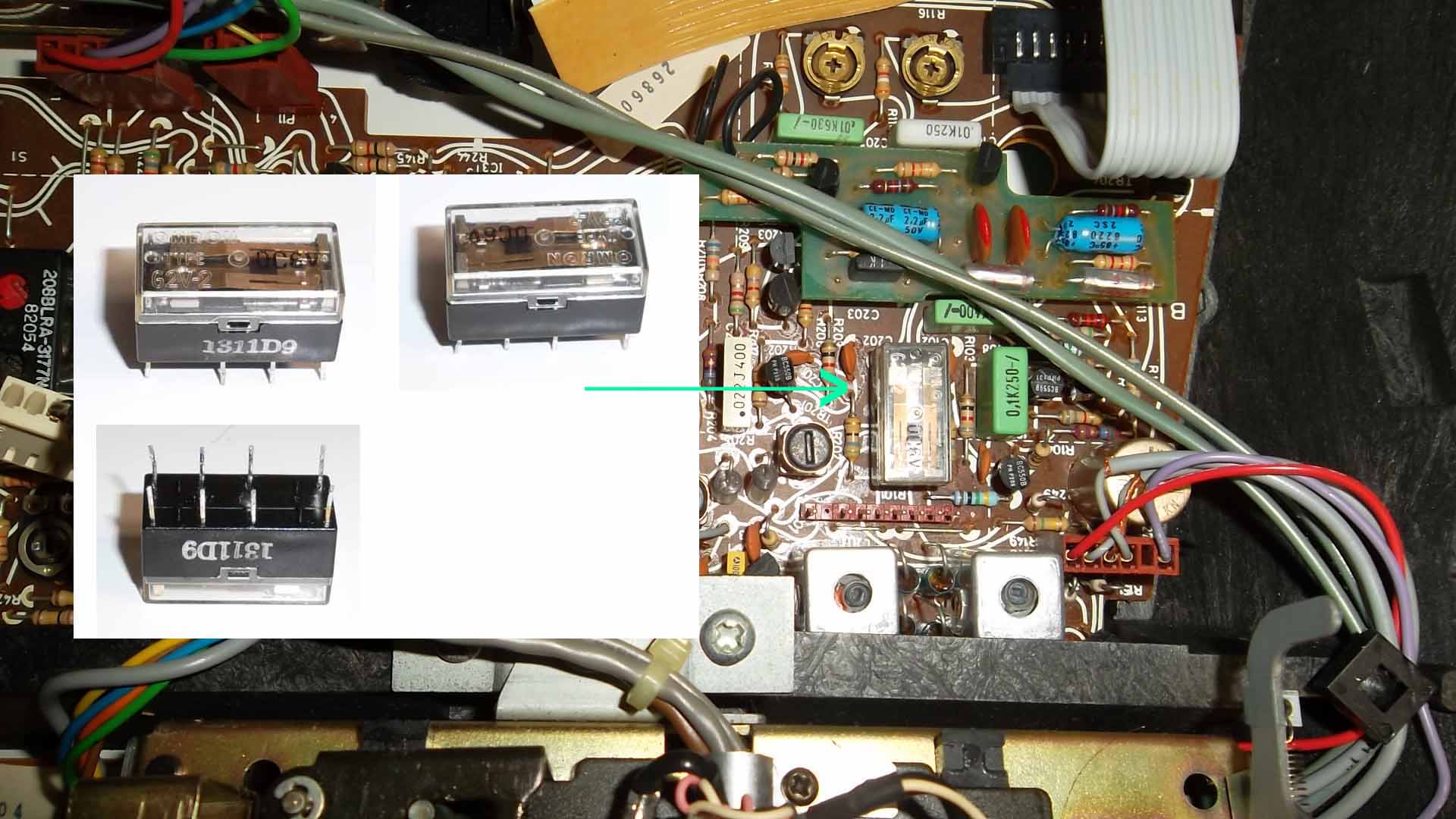
Do you guys also know where I can get a head relay. Looks like this is an Omron G2V-2 6-volts. I wonder if this Omron G5V-2-DC6 would work??
Thanks,,,

1.jpg


2.jpg
 
Back
Top Bottom