Sam08861
Super Member
A few weeks ago, I was offered the opportunity to review some Burson Vivid V7 Air dual op amps and thought I'd give my thoughts here. These are a new offering from Burson where there may size or current draw considerations fro their top line V7 Vivid Pro offering, which is much larger and draws about twice the current. Use cases are portable devices and other items where there may be smaller power supplies, lower voltages/current, etc.
Having had good experience with their V6 offerings, particularly the V6 Classic in a DAC and the V6 Vivid in a Reel to Reel Deck, I decided give these a go, with the idea of replacing the playback op amps in my Nakamichi DR2 cassette deck, and replacing the JRC4558 ICs. As good as the Nakamichi sounds and its amazing playback heads, it's always played second fiddle to the fully discrete Harman Kardon CD401 deck with it's 2sk170 jfet outputs. Hoping this will at least level the playing field around the playback line amplifier sections of the Nakamichi and really get the most out of those playheads. I thought this would also be a nice opportunity to compare to some of the other op amps I've had in the past.
Anyway, onto the review.. These arrived in a nicely finished box and ‘coffin’ to hold the op amps. Included are some silicon retainers, dip8 sockets and a ‘voiced by Burson’ sticker. Reminds me of those 'powered by intel' stickers from the 90's, lol.
Thankfully I got the Kangaroo lifetime warranty

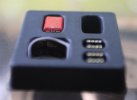
The back of the box was interesting in that the AIR model isn't among the ones listed specifically, but V5i, V6 and V7, assuming these mean the V7 Classic and Vivid Pro models in the lineup. The description also shows the construction of the pro models with the aluminum heat sink. The rest appears to be common

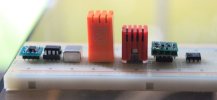
Here's a shot to give you an idea of relative size vs other popular op amps... Definitely on the larger end, but substantially smaller than the V6 Classic from the prior generation. (Orange one in the photo). About twice the height, but similar footprint to a Sparkos SS3602. I keep this breadboard next to my DAC and tend to use op amps like one would use tubes or phono cartridges/styli. I just can't help myself, lol.

Looks like, vs the V6, there's more airflow considerations with larger vents and an open bottom.
Enough pictures, onto the review..
I could find no tech spec sheet for the V7 VIVID AIR so perhaps that's forthcoming at a later date. The tech info I could find was as follows, with guidance on min/max input voltage and current consumption, with the notable item being the V7 AIR is about half of the current consumption of the V7 PRO. Despite the current draw, the applications are the same, but the AIR preferred on sound cards and car amplifiers and PRO high resolution and more demanding 'higher end' applications.

I decided to compare to the V6 Classic and V6 Vivid and the Sparkos SS3602, since those are in the same league, price wise, and I don't have V7 Pro models on hand to compare to.
I first compared the op amps in the output buffer stage of my DAC and the differences are apparent to me.
Test setup was as follows:
---Sources (Nakamich DR2 cassette deck and Topping D50s DAC) —> Technics SU9070 preamp —> Analog active crossover 24db slopes @ 1.5kHz + EQ —> 2 Luxman amps (160W lo, 70W hi) —> Speakers (bi-amped 2 - Way Altec Lansing Model 14s - Compression driver/Mantaray horns and ~14” woofers.)
---I listened to Dire Straits SACD, Alan Parsons I Robot and Dire Straits Love Over Gold, both in DSF to compare the op amps. For the Cassette deck, I listened to Supertramp, Live in Paris and Fleetwood Mac, Tango in the Night.
Sound
First impressions are that if you like the sound of the V6 Vivid, you’ll like the sound of the V7 Vivid Air. It’s not the ultimate in clarity or smoothness, but I think a very clear presentation for those seeking detail in the treble domain. In the V6 lineup,I prefered the classic to the Vivid, in my analytial system, so finding synergy is important.
Comparisons to other op amps….
---VS V6 Vivid — More of the same.. if you like the v6, there’s more of the same reward with the v7 air and the more you turn it up, the more you hear.
---VS V6 Classic - Much the same as the V6 generation, the v7 vivid series is a bit more analytical and revealing, while the classic a bit more laid back
---VS Sparkos SS3602 - The sparkos excels in realism, particularly in the mid bass texture area, whereas the V7 Vivid Air with a more forward treble region. Soundstage in the Sparkos is wider, but the Burson a bit deeper. If the 3602 is a wide bean shape, the AIR is more of a triangular oval, in my imagination.
If you have an analytical system the sparkos or V6 Classic (and I'm assuming V7 Classic is better) may be better match, while those needing brightness, 'Air' or greater clarity or emphasis in the treble region,such as phono stages with op amps, the Bursons would be a better match.
Where I ended up finding the Vivids to be the best match were in my Nakamichi DR2 Cassette Deck, in the playback section, replacing the stock 4558DDs.
When comparing in the cassette deck, the first thing I noticed, is that vs. stock ICs, the difference witth any of the discrete options is immediately noticeable. I was surprised that an analog source would have such a big impact, to be honest. I guess of age/performance of the stock ICs is the big culprit here. It's quite amazing how much more detail/information is picked up off the tape! In this case, the V7 AIR seemed to get more off the tape, perhaps due to the emphaisis on "Air" and treble clarity.
Worth the price? For my cassette deck, I’d say a solid improvement and worth the price of admission for sure! I'm assuming this should be the case for anyone with ancient op amps in a high performing device.
Having had good experience with their V6 offerings, particularly the V6 Classic in a DAC and the V6 Vivid in a Reel to Reel Deck, I decided give these a go, with the idea of replacing the playback op amps in my Nakamichi DR2 cassette deck, and replacing the JRC4558 ICs. As good as the Nakamichi sounds and its amazing playback heads, it's always played second fiddle to the fully discrete Harman Kardon CD401 deck with it's 2sk170 jfet outputs. Hoping this will at least level the playing field around the playback line amplifier sections of the Nakamichi and really get the most out of those playheads. I thought this would also be a nice opportunity to compare to some of the other op amps I've had in the past.
Anyway, onto the review.. These arrived in a nicely finished box and ‘coffin’ to hold the op amps. Included are some silicon retainers, dip8 sockets and a ‘voiced by Burson’ sticker. Reminds me of those 'powered by intel' stickers from the 90's, lol.
Thankfully I got the Kangaroo lifetime warranty
The back of the box was interesting in that the AIR model isn't among the ones listed specifically, but V5i, V6 and V7, assuming these mean the V7 Classic and Vivid Pro models in the lineup. The description also shows the construction of the pro models with the aluminum heat sink. The rest appears to be common
Here's a shot to give you an idea of relative size vs other popular op amps... Definitely on the larger end, but substantially smaller than the V6 Classic from the prior generation. (Orange one in the photo). About twice the height, but similar footprint to a Sparkos SS3602. I keep this breadboard next to my DAC and tend to use op amps like one would use tubes or phono cartridges/styli. I just can't help myself, lol.
Looks like, vs the V6, there's more airflow considerations with larger vents and an open bottom.
Enough pictures, onto the review..
I could find no tech spec sheet for the V7 VIVID AIR so perhaps that's forthcoming at a later date. The tech info I could find was as follows, with guidance on min/max input voltage and current consumption, with the notable item being the V7 AIR is about half of the current consumption of the V7 PRO. Despite the current draw, the applications are the same, but the AIR preferred on sound cards and car amplifiers and PRO high resolution and more demanding 'higher end' applications.
I decided to compare to the V6 Classic and V6 Vivid and the Sparkos SS3602, since those are in the same league, price wise, and I don't have V7 Pro models on hand to compare to.
I first compared the op amps in the output buffer stage of my DAC and the differences are apparent to me.
Test setup was as follows:
---Sources (Nakamich DR2 cassette deck and Topping D50s DAC) —> Technics SU9070 preamp —> Analog active crossover 24db slopes @ 1.5kHz + EQ —> 2 Luxman amps (160W lo, 70W hi) —> Speakers (bi-amped 2 - Way Altec Lansing Model 14s - Compression driver/Mantaray horns and ~14” woofers.)
---I listened to Dire Straits SACD, Alan Parsons I Robot and Dire Straits Love Over Gold, both in DSF to compare the op amps. For the Cassette deck, I listened to Supertramp, Live in Paris and Fleetwood Mac, Tango in the Night.
Sound
First impressions are that if you like the sound of the V6 Vivid, you’ll like the sound of the V7 Vivid Air. It’s not the ultimate in clarity or smoothness, but I think a very clear presentation for those seeking detail in the treble domain. In the V6 lineup,I prefered the classic to the Vivid, in my analytial system, so finding synergy is important.
Comparisons to other op amps….
---VS V6 Vivid — More of the same.. if you like the v6, there’s more of the same reward with the v7 air and the more you turn it up, the more you hear.
---VS V6 Classic - Much the same as the V6 generation, the v7 vivid series is a bit more analytical and revealing, while the classic a bit more laid back
---VS Sparkos SS3602 - The sparkos excels in realism, particularly in the mid bass texture area, whereas the V7 Vivid Air with a more forward treble region. Soundstage in the Sparkos is wider, but the Burson a bit deeper. If the 3602 is a wide bean shape, the AIR is more of a triangular oval, in my imagination.
If you have an analytical system the sparkos or V6 Classic (and I'm assuming V7 Classic is better) may be better match, while those needing brightness, 'Air' or greater clarity or emphasis in the treble region,such as phono stages with op amps, the Bursons would be a better match.
Where I ended up finding the Vivids to be the best match were in my Nakamichi DR2 Cassette Deck, in the playback section, replacing the stock 4558DDs.
When comparing in the cassette deck, the first thing I noticed, is that vs. stock ICs, the difference witth any of the discrete options is immediately noticeable. I was surprised that an analog source would have such a big impact, to be honest. I guess of age/performance of the stock ICs is the big culprit here. It's quite amazing how much more detail/information is picked up off the tape! In this case, the V7 AIR seemed to get more off the tape, perhaps due to the emphaisis on "Air" and treble clarity.
Worth the price? For my cassette deck, I’d say a solid improvement and worth the price of admission for sure! I'm assuming this should be the case for anyone with ancient op amps in a high performing device.