• The move to the new server is done. There are some software and database maintenance updates in process. This has us passing the hat around to help out. We appreciate any donations. Seriously, even a dollar helps. The payment page may be found here - https://www.audiokarma.org/support.html

Ortofon 2M Red setup.

Yes, everyone who refuses to do the installation/adjusment/alignment properly - by tools and instruments - have zero chance to get their cartridges sound the way vendors specified.
Alas, the fraudulent "industry" selling all sorts of snake oil - those protractors, glass blocks, mirrors, etc, - makes great efforts to spread myths and scums about possibility to fine tune precision hardware by naked eye only. It is like to follow an "advise" to repair one's wristwatch with a sledgehammer.

Remember, the stylus is SO little, the groove is SO narrow, that it is not possible to look at without a microscope. Nowadays advanced stylus shapes REQUIRE the instrumental checks and measurements for proper alignment.
It was somewhat possible in the era of spherical stylii. Even the elliptical stylii were beyond the capability of a naked eye. Shapes like Replicant 100 and MicroRidge/SAS, have gone much further in the area of positioning precision.

OK catBot, at this point you have stated your position/view clearly, and it has been soundly rejected by the majority of the participants of this thread. At the risk of "beating a dead horse", AKA "Crusading", I am asking you to let this drop here & now.
 
OK catBot, at this point you have stated your position/view clearly, and it has been soundly rejected by the majority of the participants of this thread. At the risk of "beating a dead horse", AKA "Crusading", I am asking you to let this drop here & now.
If only there was a scientific way to measure how much beating a dead horse needs to finally stop the beating. Clearly simple measurements, adjustments and listening can’t.
 
OK, but from my point of view - crusade here those who promote unscientific (i.e. not based on instrumental measurements) ways of cartridge alignment.
 
There is nothing wrong with wanting to just enjoy the music with a cartridge alignment that is not 'perfect' but good enough. Many turntable owners don't even go as far as the OP with setup. Maybe they are missing out on how good their systems could sound. Maybe they don't care or don't want to spend the time and money on such precision.
If you want to educate us on your method of cartridge setup, start a new thread for that purpose. You can be as detailed as you want. I for one would be interested in seeing it.
 
Yes, everyone who refuses to do the installation/adjusment/alignment properly - by tools and instruments - have zero chance to get their cartridges sound the way vendors specified.
I've always used the alignment gauges or protractors provided by the turntable or cartridge manufacturer (like the ones included in the box by BIC, Garrard, Thorens, Well Tempered, Shure, and Rega) or purchased the one recommended by an authorized dealer (such as the Geo-Disc recommended by my Linn dealer). I'm using what the vendors either provide or recommend, so I should be getting the performance they expect their products to deliver.
 
If you want to educate us on your method of cartridge setup, start a new thread for that purpose. You can be as detailed as you want. I for one would be interested in seeing it.
OK. When have the time and mood for that - I'll do the post. I promise the photos and screenshots of instrumental measurements, showing the initial THD level, initial cartridge position, - and final THD and final cartridge position. The THD level drops three~four times, while there is no visible change - to the naked eye - in the cartridge's roll angle.
I would agree that it is indeed rather time-consuming operation, but it does not require any extra money to be spent. Everyone has a sound card, there are lots of software packages - free or paid but unrestricted during the evaluation period to do the actual measurements.
But one should have a test record with at least two tracks/bands - one with the lateral modulation, one with the vertical modulation.
 
OK, but from my point of view - crusade here those who promote unscientific (i.e. not based on instrumental measurements) ways of cartridge alignment.

OK. When have the time and mood for that - I'll do the post.

catBot, I have asked you nicely once to please drop the subject of how you set up carts in this thread, and still you persist. Now, you are more than welcomed, in fact you are encouraged, to start your own thread on how you set up carts and the method you use will be front & center in that thread.

I am showing you very much patience & leniency here in not having thread banned you, yet, from this thread, but, patience does have it's limits.

You'd be wise to not push this any further.......
 
I understand this is your little hobby horse, and while azimuth isn’t an apt word for the mechanism, it is the word the inventors of the technology chose to use decades ago. Trying to change that now is not only pointless, but only serves to confuse people.

Thanks. Effective communication means using the generally acknowledged terms.
 
Interestingly, many listeners, myself included, are of the opinion that the 2M Blue is enough better than the Red as to be a completely different cartridge, even though they're electrically identical. This leads me to the conclusion that it's somewhat dependent on the TT, the associated electronics, and especially the individual, as to whether the 2M Red sounds good, or not very.

I've listened to the Red and Blue on my system, though not on the same turntables.

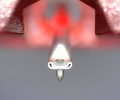
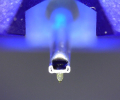
The stylus mounting is very different. And I think that when I looked at the Blue, the cantilever appeared of a different alloy than the Red one. Although I could be wrong.

Pictures from U-turn audio:

2M Red
1769400279381.png

2M Blue

1769400304698.png
 
OK. When have the time and mood for that - I'll do the post. I promise the photos and screenshots of instrumental measurements, showing the initial THD level, initial cartridge position, - and final THD and final cartridge position. The THD level drops three~four times, while there is no visible change - to the naked eye - in the cartridge's roll angle.
I would agree that it is indeed rather time-consuming operation, but it does not require any extra money to be spent. Everyone has a sound card, there are lots of software packages - free or paid but unrestricted during the evaluation period to do the actual measurements.
But one should have a test record with at least two tracks/bands - one with the lateral modulation, one with the vertical modulation.

Hi catBot,

This would be a great contribution and I would greatly enjoy such thread. To post such a thing would be a positive contribution to AK. I am aware of some of these methods since they have been posted on another forum. It is time we have our own here at AK.

However, to say that anybody that is not following your procedure is "not doing it properly", is not a positive contribution to AK. Please keep this in mind.
 
Back
Top Bottom