Gerald D
New Member
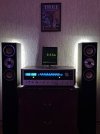
I've collected a few vintage receivers over the years some needed work some didn't. I'll use them and pass them on so someone else can enjoy them. I'm down to just a few pioneer receivers. I had a nice SX 1010 rehabilitated which took more transistors than caps but sounds great now. I also
have an SX1080 in very good condition. I set both up and pretty much did an AB comparison shootout. I own both receivers so no bias here. We all have those pieces of test music we use to check out or systems. So I played the same music on both receiver with the same speakers, same room like for like comparison.
Used two sets of speakers, a set of JBL L100s and a set of ADS L620s, check out my ADS post, whole other story. I could switch things out very fast, so my music memory was fresh in my mind.
Some stereo reviewers must have a PHd in the use of big words. I'm not one of those guys...
Here's what I came up with. Both are excellent and have a place in my home. They both have lots of similar features. Close in power 110 watts vs 120 watts.
The tone control is very different the 1010 has more options and takes less input to get the same result, IE one half throttle on the 1010 treble and base VS three quarter throttle on the 1080. You get the same volume of tone like in cymbals and percussion. The 1010 actually lets you hear the wooden drumstick hit the metal cymbals the 1080 isn't as well defined if that makes any sense. That applies to most of the highs throughout the spectrum.
Midranges, the 1010 edges out the 1080 here to, vocals are clear in both, acoustic guitars on the 1010 seems like you can tell the musician is using a pic where not an apparent on the 1080. The 1010 was just brighter all the way around.
Now to the bass. The 1010 shined here. The 1080 could get that over driving bass sound but could be easily tuned into good sound depending on the quality of the recording.
The 1010 just seemed to keep the bass under control a lot better without changing any settings. Bass was fast and never got soggy with the 1010
After putting everything together and doing some overall listening both do an excellent job of separation, the 1010 was more defined than the 1080
When it came to all out cranking the S--- out of both (Pissing off the Neighbors). The 1010 just kept going. the louder it gets, the better the separation the cleaner the bass all of the factors at low volume are more pronounced at high volume. the sound doesn't fall apart at all, nothing is harsh on your ears just clean, clear music which is easy to listen to.
The 1080 did get less easy to listen to if that makes any sense. Everything was there but not as brilliant as the 1010. It did seem like the instrument ran together at times because the separation wasn't as good at higher volumes
I did do all of this with my SX980 at the same time, which was identical to the 1080, didn't want to make this post too long
In the end the SX1010 did better overall in my opinion, seems more like a tube amp in a solid state body. I wish they carried these sound characteristics to the 50 and 80 series.
They are all great sounding machines just my opinion. I did move on the SX 1080 and JBLs to a new owner
Thanks for reading