• The move to the new server is done. There are some software and database maintenance updates in process. This has us passing the hat around to help out. We appreciate any donations. Seriously, even a dollar helps. The payment page may be found here - https://www.audiokarma.org/support.html

pioneer sx-1500TD extreme static

pdouble

New Member
Hello - I'm hoping that someone here may be able to help me out with an issue that has developed with my sx-1500TD. First of all - it is a wonderful receiver - great sound, beautiful design and until the last few weeks - great durability. After all - it's 52 years old! Recently I started having issues where when it was left on for a while I would start hearing major static/distortion sounds coming from the other room. These would be short and intermittent - I'd come in and just catch the tail end or not at all - but recently it has become a full time thing with this receiver.

The symptoms are this awful sound - it comes from both speakers. The sound does lower when I adjust the volume but persists no matter which input I set the reciever to (radio, phone, aux) and comes from both speakers no matter how I pan the balance. I am attaching a video for demonstration:

Any thoughts/ideas as to what to check would be greatly appreciated!

Cheers,
Phil
 
Register to hide this ad
Welcome to AK! The SX-1500TD has multiple transistors on the shoot on sight list that are notorious for exhibiting the behavior you're experiencing. It's definitely worth having serviced and if you tell us your location I'm sure someone can recommend repair shops near by, or perhaps walk you through doing it yourself. That unit is 52 years old and I think definitely warrants a full restoration if its a piece you're hoping to keep around a long time.
 
Thank you! Wow - that was fast! I live in Durham, NC... I was thinking about taking a run at this myself if it's not too complicated... I have multiple vintage pieces that I've had serviced by others but I've wanted to start learning how to repair myself.
 
A good place to start would be to download the service manual which you can do here and you absolutely will need a DBT ( dim bulb tester) which will help protect what you're working on. You can find numerous threads here on AK on how to build one and I'm sure videos on Youtube if that's your thing. Do you have a multimeter and soldering experience?
 
I have very basic soldering experience (raspberry pi type stuff) and a basic soldering iron. I can purchase a multimeter - have been considering that for a bit. I'll place order today - any suggestions on a good model? I'll look at creating a DBT... It will take a bit because I'm working in Germany for the next two weeks but will hit that up when I get home...
 
Many of the techs around here use Fluke meters, but those can be on the pricier side. I'd say an auto ranging Klein Tools MM400 meter from Amazon, Home Depot etc would probably be fine. I'd also recommend if you don't have it flux, solder wick, and leaded solder by a company like Kester. Silver based solder is more difficult to work with and requires more heat, and the solder pads on these old stereos don't appreciate extended high heat. Other than that I'd say get a cheap Chinese transistor checker as you'll save yourself many a headache if you can verify the parts going in are correctly oriented the first time.
 
Amazing! Thank you for all of this info - it is deeply appreciated. Sounds like some hard learned wisdom that you're sharing.
 
These were another one of those old cap coupled receivers with the 2SC458LG at the front of the main amp circuits. The one I got off Ebay years ago one channel had a blown fuse and trimmer other was just spewing noise. Tuner output was fine out the tape rec jacks. Also noise prone vintage transistors on the tone board and in the phono/input boards. Usually replacing the problematic transistors, new electrolytic caps, and cleaning the controls can be a nice sounding receiver.

The 2SC458LG one of the most problematic vintage transistors and widely used. Not uncommon for the NPN types in the tone/preamp section to get a bit noisy too. More 2SC458LG on the phono input board. Shows 2SC870 and 2SC871 here. KSC1845 would be the general replacement for them all. FTA means they are in a row taped to a cardboard strip, FBU are loose individual ones (bulk). But when units get this old transistors not known to be prone to issues and other components can be acting up.

+2 on the cheap transistor tester. Also helpful checking new ones when you need matched pairs. Usually a good idea to put new cermet adjustment trimmers on the amp board too.

My memory of this one you will need to disconnect some wires at the bottom in order to pull the amp card/heat sink combo out the top to work on it.

I live in Greensboro.
 
Usually noisy transistors start acting up as the unit warms up, seems to usually be in the 5-10 minute range after initial power up. Often the problem starts intermittently tends to get worse over time. Noisy transistors will usually give good numbers on a cheap transistor tester.

Some things you can try to narrow down the problem board. There is a PRE & MAIN switch on the back panel when in INTERCONNECTED internally connects the pre-amp and main-amp. In SEPARATED the two are disconnected. Can power up with switch in separated. The amp circuit will have no input if you get the noise the problem should be in the amp circuit. If you have another properly working receiver with PRE and MAIN amp connections can have one pre driver the other main and vice versa. Can also have the pre-out of the 1500TD drive another device with line level inputs if that sounds good points to amp board. If it has the noise then problem is likely in the pre-amp. Not impossible to have noise issues in both sections.
 
The fact that turning the volume down affects it makes me think it may not be transistor related. Both channels also make me suspect the issue is elsewhere. Far from impossible there are bum transistors in both channels, but if the noise is the same in both speakers I'm going with not it. If the noise is similar but not identical, that makes it more likely. Here is the block diagram out of the service manual for this general chunk of the circuits

.

1722517373952.png

The rotary switch is source selection. Output of that goes through volume and balance, into the control amp, out of that into the tone controls, out of that to the low cut switch, and from there it ends up at the main amp through the jumpers. If the transistors in the control amp were the problem, the volume control wouldn't do anything.

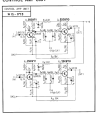
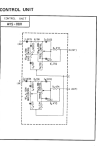
Schematic for the control amp. "in" here comes from the volume control, out goes to the tone controls, low cut switch, then to the power amp so the volume control wouldn't affect anything coming out of the control amp.

1722517165459.png

I wonder if its something in that selector switch arcing. It does also switch the source lamps so crusty contacts might cause it.
 

Attachments

  • 1722517281082.png
    1722517281082.png
    92.8 KB · Views: 2
These were another one of those old cap coupled receivers with the 2SC458LG at the front of the main amp circuits. The one I got off Ebay years ago one channel had a blown fuse and trimmer other was just spewing noise. Tuner output was fine out the tape rec jacks. Also noise prone vintage transistors on the tone board and in the phono/input boards. Usually replacing the problematic transistors, new electrolytic caps, and cleaning the controls can be a nice sounding receiver.

The 2SC458LG one of the most problematic vintage transistors and widely used. Not uncommon for the NPN types in the tone/preamp section to get a bit noisy too. More 2SC458LG on the phono input board. Shows 2SC870 and 2SC871 here. KSC1845 would be the general replacement for them all. FTA means they are in a row taped to a cardboard strip, FBU are loose individual ones (bulk). But when units get this old transistors not known to be prone to issues and other components can be acting up.

+2 on the cheap transistor tester. Also helpful checking new ones when you need matched pairs. Usually a good idea to put new cermet adjustment trimmers on the amp board too.

My memory of this one you will need to disconnect some wires at the bottom in order to pull the amp card/heat sink combo out the top to work on it.

I live in Greensboro.
A belated thank you! I just came back to this thread today and noticed your post. This is come great info - appreciated.
 
Back
Top Bottom