• The move to the new server is done. There are some software and database maintenance updates in process. This has us passing the hat around to help out. We appreciate any donations. Seriously, even a dollar helps. The payment page may be found here - https://www.audiokarma.org/support.html

Pioneer VSX-9900S with steady hum?

louder

Member
I picked up a super clean looking VSX-9900S the other day at a flea market, the guy said it plays but that's all he knew about it.
I get it home, hook up a CD player and a pair of speakers I don't care about. When I first turned it on I got no sound, nothing at all. Then after about a minute or two it started to play. The first thing I noticed was a loud hum coming through the speakers.
The hum is always there and increases with the volume control. Its present on all selector positions.
I rechecked all connections and no change. I checked for DC volts at the speakers but found none at all.
I did find that if I turn it on an off a few times, every so often it'll start up without the hum, but if left on for a few minutes, the hum returns. Its always there, I can hear is through the music.
I pulled the cover and this thing looks like new inside, no burnt parts, no dust, no signs of any recent repairs.
I also noticed that if I touch the preamp jumpers the hum gets louder.
 
Register to hide this ad
Welcome to AK!
Manuals here; (free to join and no nags) (for readers this is an a/v unit)
https://www.hifiengine.com/manual_library/pioneer/vsx-9900s.shtml

Just a shot. (a long shot) Reminds me of a voltage regulator as described and a certain amount of intermittent when switched on and off and hum returns. On page pdf pg. 15 of the SM you'll see two regulator circuits. regulator 1 is a 12vdc with a transistor. reg. 2 I didn't look up. pg. 62 has the pn's for these as well as the schema isn't that clear.

This is a very complex unit but I think most hum issues could relate to the regulators on this one.
 
Just for the hay of it, and for something that takes no technical expertise, take the cover off and (with the unit unplugged, of course), tighten all the screws on the various circuit boards. The ground circuit was somehow tied into the screws on those circuit boards, and they were too loose. That fixed a Sony of mine.
 
I'll check the board hold down screws.

I did notice something else today, with the top off and it powered up connected to speakers if I tap on one of the large black relays the hum goes away, but returns as soon as music is played. Tapping on it again will momentarily stop the hum but it returns almost instantly. I also tried powering it up with the preamp bridge jumpers out. With the jumpers out, I get a slightly different hum, but it increases as I move my hand near the preamp in jacks. Touching the outer part of the preamp in jacks also causes the hum to get extremely loud. I removed the jumpers to try and figure out if it was in the preamp or amp sections but if it is in the power supply circuit, I don't think that would have mattered.

I did download the manuals for this, but I'm limited on my skills when it comes to following a schematic.

What actually causes a hum through the speakers? Its there even without any inputs connected. Its there with the speakers connected, no inputs, and the volume all the way down. The hum starts out as a moderate background noise but as the volume is turned up it gets pretty loud by about 1/5 volume. At 1/3 volume, its loud enough that I'd worry about damaging the speakers.
It gets louder as it gets warm.
It seems definitely affected by temperature.

I talked to the guy who had it before me, he said it worked fine before he packed it up for a move a few months ago, when he unpacked it and set it back up in his new house it had a hum in the speakers but he felt it went away when he played music. He offered to give me my $25 back but I'd rather figure it out and fix it.
Cosmetically its like new, not so much as a scratch on it. There's no sign of it being dropped or rough handled at all.
 
I tried tightening the screws that connect the boards to the chassis, when I first fired it up, it seemed like it was fixed, but after it played for a few minutes, I lowered the volume to zero, and the hum was there again, although not as bad.
Tapping on the one odd sized relay definitely affects the sound.
There are four copper coil looking things next to a small transformer at the rear of the main board, these copper coils get HOT, when they're cool, the hum isn't there, as soon as they get hot to the touch, the hum appears. Cooling them with cold air lessens or almost eliminates the hum. There are two medium sized electrolytic capacitors right next to the smaller transformer crammed up against two heat sinks and transistors, those two capacitors also get hot, along with the heat sinks. They are hot enough to burn skin in about 2 minutes. The copper coils have discolored the board a bit and it can be seen from underneath on the other side of the board.
I have something called Freeze Spray, its super cold air in a can for cooling things down in a hurry, (we use it at work), if i spray the hot points after its been playing or use it to keep them cold, the hum stays away. So its definitely something overheating. What ever it is, it gets hot fast, in less than a minute. Could the caps be the problem? They look discolored compared to the other blue caps of the same type on the other boards. From what I can see, replacing them requires complete disassembly, the access plate on the bottom doesn't expose the bottom of that part of the board. The board spans almost the entire bottom of the chassis from the heat sink to the rear panel with all other boards affixed to it at 90°.
 
I have one of these and it only plays sound in DIRECT mode..if I try to use dolby or anything I get a distorted mess
 
I have also VSX-9900s that only work with a Direct mode. I think the problem is in the DSP board AWX3570 but I getting hard time to trace where the fault is. It could be the 3 filter IC?

1-3-2019
Updates: I have a friend of mine exactly the same model VSX-9900s with working condition. I ask my friend to borrow his one and exchange the DSP board and definitely my receiver is working again after swapping a working DSP board but I need to try to Troubleshoot what components is faulty on my board I’m guessing would be The filter IC.
 
Last edited:
I never did anything more with mine, it sort of got put on the shelf here after I found another one that worked fine. I have the one noisy and one working 9900s and a D1S now.
 
if you want to get rid of the hum the first order of business is to replace the power supply capacitors. It is a b*tch to get to them without having to remove every thing inside the receiver but I can tell you that I have 2 VSX-D1S units and 1 9900s and they all use the same power supply right down to the capacitor used.

The 2 large main filter caps are usually okay so no need to change those out but the little capacitors tucked in beside the transformer is what the issue is. The caps there start leaking and of course doesn't filter/regulate/provide the proper voltages to the rest of the unit which then causes cascading problems such as relays not working quite right or transistors going on the fritz. The cost of a few capacitors is cheap but the process of getting to them without causing damage is a bit unnerving. Took my merry time taking things apart and I can assure you the hum that was once there is completely gone after replacing those caps. I'm holding the 4-5 bad caps in my hand right now. Well made caps but they weren't 105C rated caps that were crammed into a spot where there is a fair bit of heat.
 
@Stevescivic is 100% right on. I have a 9900S and a d902s, and for the most part, everything is identical, with the exception of the power output wattage for the rear and center channel. That said, you need to replace the two capacitors that are next to the power transistor (the one mounted to a tall silver heat sink) and is right next to the transformer. That transistor gets so damn hot, you can burn yourself, and the adjacency causes those capacitors to also get hot enough to burn you. Opening this up and replacing is not for a novice, it’s a real pain in the butt getting to them and you have to disassemble everything.

One more item of suggestion, I picked up a bunch of very small heat sinks on Amazon, they literally are 1 cm x 1 cm square and probably a half a centimeter deep. There’s no power conductivity between that hot power transistor and the chassis, so I simply mounted a heat sink between that transistor and the chassis - it acts as a heat dissipation bridge so now that heat is diverted to the chassis and the newly replaced capacitors will never be a problem again, it actually runs “cool” now with the heat sink wedged and offsetting the heat. (You won’t be sorry doing this, but also make sure you reflow the solder on this power transistor prior to putting pressure on it).

What I mentioned above will get rid of the steady buzzing hum that is either intermittently present within the L&R channels,or gets louder as you turn it louder.

To make matters more complex, my 9900S only works in direct audio mode starting about a year prior to the humming starting. That’s mentioned above in the thread by others. It started about a year before I had the hum issue, and I don’t believe it’s tied to the capacitors, which I replaced above. When I turn on the Dolby or the surround circuit or direct mode off, I either get absolute silence or digital static - it’s random and it does not pass audio, however, the component pre-outs are passing audio! (I’m not talking about the preamp jumper ins and outs) It’s not a hum, it is digital static noise. I have opened up the DSP module and can’t find anything wrong. And I thoroughly checked and looked for loose connections however, I did not check the capacitors or replace them because it doesn’t get hot, and I don’t suspect any problems with the capacitors in there. And it has nothing to do with the preamp jumpers, the pinhole reset, or any setting - it’s like the unit is stuck in some sort of funk.

I’m looking for a solution that will get me out of needing to use the “direct only” mode. And this is an issue everywhere based on Google searches and nobody seems to have a definitive answer, other than that it can go away after use, which it has not done for me. The D1S and D901S also have the same issues above as the main boards use the same core parts (D1S does have a different DSP board though).
 
Last edited:
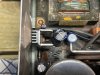
I took a picture of the heat sink I added in the post above, this is wedged somewhat tightly between the hot transistor and the chassis, it did have a glue square, so it is sticking to the back of the heat sink. I also put a little bit of hot glue just to ensure that it stays. Those two capacitors to the right or the ones that need to be replaced for sure.
 

Attachments

  • 138DF6C5-D53E-4AA1-8981-7082D8880EBD.jpeg
    138DF6C5-D53E-4AA1-8981-7082D8880EBD.jpeg
    109.6 KB · Views: 43
Dear Sirs, could you please tell us the values of the capacitors that you have replaced?
As it will be very useful to buy them in first place and then dismantle all this beast instead of disassembling the unit and leave it laying around while waiting for the caps.
Thank you very much!
 
Unfortunately, I did not take note of what was replaced. I thought one was a 470uf. I suggest putting your phone camera in there and you should be able to easily get the values.
 
Unfortunately, I did not take note of what was replaced. I thought one was a 470uf. I suggest putting your phone camera in there and you should be able to easily get the values.
Thank you for your prompt response, I appreciate it.
Maybe someone else can tell... :-)
 
A follow up note for a similar hum issue in a VSX-902S. In this receiver there are a number of dc positive and negative voltage rails and some of them require a considerable disassembly to reach and test (let alone repair). In this case it was ultimately traced to a failed 47 uF 16 V filter capacitor for the -12 Vdc rail but the issue was first observed in the -5 Vdc rail. The -12 Vdc rail is used as input to a -5 Vdc linear voltage regulator chip. Overall, I replaced the -12 and -5 Vdc filter caps and the voltage regulator but I think only changing out the 47uF/16 V cap was really needed. Because of its position on the main board, it was a pain to access. The receiver needed to be mounted on its side and all of the screws holding the main board and the connected peripheral pieces needed to be removed before carefully angling out the main board far enough to replace the errant cap.
 
Last edited:
Back
Top Bottom