• The move to the new server is done. There are some software and database maintenance updates in process. This has us passing the hat around to help out. We appreciate any donations. Seriously, even a dollar helps. The payment page may be found here - https://www.audiokarma.org/support.html

Polk Audio Monitor 10b Passive Radiator issue (Rattle)

98%chimp

Member
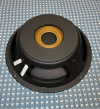
The other day I started noticing a rattling sound coming form one of my 10Bs'and was really baffled when I realized it was coming from the passive radiator. I mean without a voice coil to rub against and without anything electromagnetic happening in there, how could that even happen? Seems like I'm not entirely alone, one other guy at the Polk forums was having a similar problem. I think I might´ve figured out the how, though... someone suggested an air leak test by pressing on the passive radiator this makes the drivers pop out due to a pressure increase in the box and if the drivers settle back in their position in less than 3 seconds you have an air leak. I don't, but so I go and do it on the other speaker and, again, no air leak but I did notice the PR is not as easy to push, and it doesn't klang into the spider quite like the one with the problem does. So I'm thinking its just good old, old age...probably the materials have lost some rigidity with the years and the cone "gives" too much. So I'm guessing I have to replace the passive radiators now (just got the tweeter replacement for all my 4 Polks) so two questions. 1) How and where do you get those replacements... new hopefully. Either separate as parts or as a unit? 2) Do you ever find yourself not spending more money in your system?
 
Register to hide this ad
I suspect that the spider is loose somewhere- either where it meets the cone in the middle, or where it meets the basket on the outside...

Or- and this has happened to me- the stupidly simple possibility is that some wire has migrated, and is now sitting in a location where the passive radiator can strike it.

Definitely worth removing the PR and having a look.

Regards,
Gordon.
 
1) How and where do you get those replacements... new hopefully. Either separate as parts or as a unit?

You can easily find them on the Bay, but before you go an buy one both suggestions of unscrewing and removing it for visual inspection would be my first start.

Post pictures here and we can help in ascertaining if there is any visible damage as I believe there were2 versions that Polk used the SW100 & SW105

Screen Shot 2023-08-30 at 11.57.10 AM.png
Screen Shot 2023-08-30 at 11.57.43 AM.png
 
Last edited:
I suspect that the spider is loose somewhere- either where it meets the cone in the middle, or where it meets the basket on the outside...

Or- and this has happened to me- the stupidly simple possibility is that some wire has migrated, and is now sitting in a location where the passive radiator can strike it.

Definitely worth removing the PR and having a look.

Regards,
Gordon.
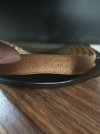
You were right, it's loose where it meets the basket... What addhesive did you use?
 
Easy fix then. I'm curious myself what adhesive is best to use in case the radiators in my 10's start to rattle at some point.
 
I had that happen a couple years ago. Right or wrong, I used some Aleenes I had laying around , worked for years with HEAVY use untill I sold them. I would ho all the way around d the spider on both drivers if they were mine.....
 
I've reconed probably 15000 speaker drivers in the last 25 years, using superglue on the spider.

During that time, I also noted that many companies, incluiding EV and JBL, currently use cyanoacrylate (superglue) to hold spiders to the frames.

Always worked for the work I've done.

Regards,
Gordon.
 
Aleene's has a slight bit of give to it whereas super glue or epoxy are rock hard, which puts the stress on the spider material instead of the glue.
 
Aleene's has a slight bit of give to it whereas super glue or epoxy are rock hard, which puts the stress on the spider material instead of the glue.

That's fine, if you want to change the effective stiffness of the spider, and therefore change the parameters of the speaker (resonance, Q, Vas and such).

If you want it to be what it was originally- use a glue as hard as the original glue.

Most companies use a very hard glue for spiders... and it's been that way for many decades.

And, if one takes the time to notice- the ones that do use a softer glue (like a neoprene or hot-glue type adhesive), usually use wider flanges- which also restricts the rotation/bending of the flange. The spider material still winds up taking the bending stress at the corner where it goes upward from the flange, in any case.

Regards,
Gordon..
 
Last edited:
The slight bit of give isn't changing anything other than a longer life of the spider.

I've measured Fs errors of up to several percent, when in the early days of me reconing speakers, I used too soft of an adhesive on a spider joint.

At first, I couldn't believe that it was just the glue. But, when I went back and used the correct hard-setting adhesive- the parameters settled right back down into the correct ranges.

Maybe not enough for some people to hear- but an error, nonetheless, and possibly audible, to at least some other people.

I prefer to do the job properly, to get the most precise results possible.

Regards,
Gordon.
 
Back
Top Bottom