DavidBowie
New Member
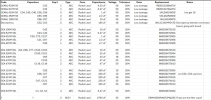
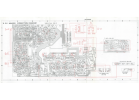
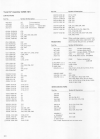
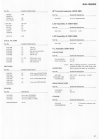
I've got a pioneer sx-3500 that I'm planning on recapping. This is my first time recapping anything, so I'm worried I chose the wrong capacitors for the job. Included are the values of the capacitors I figured out from the service manual on an Excel sheet, the service manual, and the Digikey link to the capacitors I have chosen.
Digikey Link
I took the capacitor values from the service manual I found online. For the capacitors labelled low leakage, I chose Nichicon UKL or KEMET R82 film capacitors. For the rest, I chose capacitors from Würth Elektronik as the price is pretty great, and I've heard they aren't bad. However, I am worried that I should have more low leakage caps. The physical board has orange-coloured caps to indicate low leakage, but also some peach-coloured ELMA capacitors, which I also believe to be low leakage, but I am not 100% sure.
Furthermore, there is a discrepancy between the board and the schematic. The schematic lists non-low-leakage 220uF 10V capacitors, while the board has the peach ELMA 100uF 16V capacitors. I went with what was on the board and found some Nichicon UKL 100uF 16V capacitors to be safe.
I also think I maybe should replace the large 4700uF 35V capacitors that I believe are for mains filtering from what people say online. I couldn't find them listed in the service manual, but I chose what I believe to be a suitable replacement from Chemi-Con. I've also heard online that these sometimes last longer than usual, so they could be fine, but I have no LCR meter to test them.
Did I make the right choices with these capacitors? Should I have more low-leakage capacitors? Are Würth Elektronik capacitors not good enough for the general capacitors that they list? Thanks!
Digikey Link
I took the capacitor values from the service manual I found online. For the capacitors labelled low leakage, I chose Nichicon UKL or KEMET R82 film capacitors. For the rest, I chose capacitors from Würth Elektronik as the price is pretty great, and I've heard they aren't bad. However, I am worried that I should have more low leakage caps. The physical board has orange-coloured caps to indicate low leakage, but also some peach-coloured ELMA capacitors, which I also believe to be low leakage, but I am not 100% sure.
Furthermore, there is a discrepancy between the board and the schematic. The schematic lists non-low-leakage 220uF 10V capacitors, while the board has the peach ELMA 100uF 16V capacitors. I went with what was on the board and found some Nichicon UKL 100uF 16V capacitors to be safe.
I also think I maybe should replace the large 4700uF 35V capacitors that I believe are for mains filtering from what people say online. I couldn't find them listed in the service manual, but I chose what I believe to be a suitable replacement from Chemi-Con. I've also heard online that these sometimes last longer than usual, so they could be fine, but I have no LCR meter to test them.
Did I make the right choices with these capacitors? Should I have more low-leakage capacitors? Are Würth Elektronik capacitors not good enough for the general capacitors that they list? Thanks!