Dr.Turner
Active Member
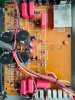
Just finished this nice Proton AM-452 recap/upgrade, following a detailed 2016 article on AudioReview italian magazine.
You can find a quite accurate English G-translation here.
 ..........
On top of the magazine suggestions I have replaced:
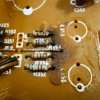
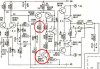
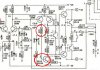
Since I didn't have a 820 Ohm resistor to replace R352 I serialized a couple of 390 and 430 Ohms.
The replaced 330 Ohm resistor was running quite hot (63° C) becase it proved less than 1/2 watt (chinese bulk buy from 10 years ago).
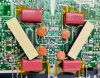
So I made a temporary heat sink from 1,8 mm solid copper wire: it was fine-hammered and flattened on the ends to follow resistor contour, bent and secured with heat shrink tubing. And it does the job lowering temps to 46° C.
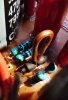
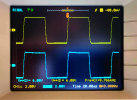
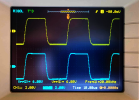
I would like to share this empirical method also, to test package rating wattage which I used to check my resistors (360 mW instead of 500 mW).
Please find attached:
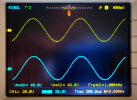
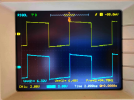
I didn't performed an extensive, full source test, but with Kenwood KT-990D tuner the improvement is audible to my 55 years concert-abused hearing also...

BTW the KT-990D is an outstanding tuner...slimmer than the big brother, EU only sold, KT-7020 but exactly the same circuitry and PCB, at half the price.
If you find one don't pass on it!
You can find a quite accurate English G-translation here.
.......... On top of the magazine suggestions I have replaced:
- all the electrolytic capacitors in the PS + bypass cap kapton tape protected
- four resistors, damaged from filtering cap leaking/glue mix
Since I didn't have a 820 Ohm resistor to replace R352 I serialized a couple of 390 and 430 Ohms.
The replaced 330 Ohm resistor was running quite hot (63° C) becase it proved less than 1/2 watt (chinese bulk buy from 10 years ago).
So I made a temporary heat sink from 1,8 mm solid copper wire: it was fine-hammered and flattened on the ends to follow resistor contour, bent and secured with heat shrink tubing. And it does the job lowering temps to 46° C.
I would like to share this empirical method also, to test package rating wattage which I used to check my resistors (360 mW instead of 500 mW).
Please find attached:
- a still readeable copy of the schematics (unfortunately it's impossible to find the SM online)
- cap relacement list
I didn't performed an extensive, full source test, but with Kenwood KT-990D tuner the improvement is audible to my 55 years concert-abused hearing also...
BTW the KT-990D is an outstanding tuner...slimmer than the big brother, EU only sold, KT-7020 but exactly the same circuitry and PCB, at half the price.
If you find one don't pass on it!
Attachments
Last edited: