• The move to the new server is done. There are some software and database maintenance updates in process. This has us passing the hat around to help out. We appreciate any donations. Seriously, even a dollar helps. The payment page may be found here - https://www.audiokarma.org/support.html

Queen: A Musical Journey

KevinJS

Lunatic Member
In 1968, Brian May placed an advertisement for a drummer on the noticeboard at Imperial College, London. Roger Taylor responded to the ad and was given the job. Tim Stafell was the third member, and introduced his friend, Farrokh Bulsara, to the band, who became a keen fan.

The band was known as Smile, and signed to Mercury in 1969. Stafell left the band to pursue other interests, Bulsara joined the band, changed his name to Freddie Mercury and suggested that the band change their name to Queen. John Deacon was enlisted and what would become one of rock's premier bands was born.

The line-up would not change until the death of Freddie Mercury in 1991. Queen became known for their huge arena performances, Freddie's over-the-top persona and an almost continuous supply of hits. Queen were very much a singles band and Bohemian Rhapsody remained at Number 1 in the UK for 9 weeks, popularizing the music video as a result. The band's music was used in movies, notably Flash and Highlander. Bohemian Rhapsody featured in Wayne's World and triggered a reissue of the single in the US.

This thread will examine each of the albums of Queen, and hopefully provoke some discussion from fans.
 
Register to hide this ad
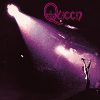
Queen

Queen_Queen.png

Track List:

1. Keep Yourself Alive (May)
2. Doing All Right (May/Stafell)
3. Great King Rat (Mercury)
4. My Fairy King (Mercury)
5. Liar (Mercury)
6. The Night Comes Down (May)
7. Modern Times Rock 'N' Roll (Taylor)
8. Son And Daughter (May)
9. Jesus (Mercury)
10. Seven Seas Of Rhye (Instrumental) (Mercury)

It is immediately obvious that Queen brought together a phenomenal team of musicians. Synthesizers were out, as noted on the record label. This was a band that intended to play real music without electronic help, although virtuoso performances on standard instruments sometimes leave one wondering.

The band were not confined to one composer. 5 of the tracks were composed by Mercury, 4 by May (of which one, Doing All Right, was co-written by former Smile member Stafell). The remaining track, Modern Times Rock 'N' Roll was composed by drummer Roger Taylor, who was also the singer on the track. An 11th track, Mad The Swine, was left off the album because the band were not satisfied with it. Other tracks on the album came under close scrutiny by the band before passing the unyielding perfection demanded by the members.

Queen took 8 months from final mixing to release. By the time Trident eventually released it, the band was well on the way to completing the second album.
 
I wonder if Hot Space still causes a lot of heads to spin? That album was panned by most music critics upon its initial release in 81/82. I always liked it however, as it demonstrated a Queen not confined to its rock-opera past. Oops, just realized you will posting each album sequentially. Sorry if I jumped the gun here with Hot Space.
 
I wonder if Hot Space still causes a lot of heads to spin? That album was panned by most music critics upon its initial release in 81/82. I always liked it however, as it demonstrated a Queen not confined to its rock-opera past. Oops, just realized you will posting each album sequentially. Sorry if I jumped the gun here with Hot Space.

No worries, Rob. Any discussion of the band is welcome, regardless of where I am with my posts.
 
In 1968, Brian May placed an advertisement for a drummer on the noticeboard at Imperial College, London. Roger Taylor responded to the ad and was given the job. Tim Stafell was the third member, and introduced his friend, Farrokh Bulsara, to the band, who became a keen fan.

The band was known as Smile, and signed to Mercury in 1969. Stafell left the band to pursue other interests, Bulsara joined the band, changed his name to Freddie Mercury and suggested that the band change their name to Queen. John Deacon was enlisted and what would become one of rock's premier bands was born.

The line-up would not change until the death of Freddie Mercury in 1991. Queen became known for their huge arena performances, Freddie's over-the-top persona and an almost continuous supply of hits. Queen were very much a singles band and Bohemian Rhapsody remained at Number 1 in the UK for 9 weeks, popularizing the music video as a result. The band's music was used in movies, notably Flash and Highlander. Bohemian Rhapsody featured in Wayne's World and triggered a reissue of the single in the US.

This thread will examine each of the albums of Queen, and hopefully provoke some discussion from fans.

Did not know any of that. This will be a history lesson for me. Thanks in advance
 
Really enjoyed your Rush thread, by the way!

Queen was my favorite band as a child of the 70s.
And "A Night At The Opera" was the first record I bought with my own money.

I remember riding my bike to a record store/headshop near my house and discovering Queen one.
I remember the guy at the counter was real tall and skinny and had a giant 70's afro.
He tried talking me out of buying Queen and going for Black Sabbath or something. A girl who also worked there told him to let me buy what ever I wanted to buy.
I've since replaced it with a copy that's not worn out.
Great album!
 
Some time in the end of Jan. 1977 myself and a some friends were at the Ticketron counter in Macys Kings Plaza mall in Brooklyn NY going to by tickets to see Jethro Tull . The clerk informed us that some Queen tickets were just released for the Nassau coliseum after finding out the seats were 5th row center we bought all 6 .The show was the Night at the opera tour the opening act was Thin Lizzy . As a 17 year old I was blown away by the performance. This memory has a special meaning every time I listen to Queen . It was one of the best concerts I have ever attended .
 
Last edited:
I asked my musician father (former band director) to listen to the whole album of Night At The Opera as it burst onto the charts as a way of attempting to bridge the musical generation gap. It must not have taken too well as he recalled it recently as that time that I forced him to listen to a Kiss album all the way through. I have never owned a Kiss album.

It is funny how we all perceive things in our memory in our own unique way!
 
Some time in the end of Jan. 1977 myself and a some friends were at the Ticketron counter in Macys Kings Plaza mall in Brooklyn NY going to by tickets to see Jethro Tull . The clerk informed us that some Queen tickets were just released for the Nassau coliseum after finding out the seats were 5th row center we bought all 6 .The show was the Night at the opera tour the opening act was Thin Lizzy . As a 17 year old I was blown away by the performance. This memory has a special meaning every time I listen to Queen . It was one of the best concerts I have ever attended .

Queen aside, Thin Lizzy were smokin' @ that '77 tour.
 
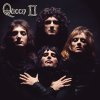
Queen II

Queen_II.jpg

Track List:

1. Procession (May)
2. Father to Son (May)
3. White Queen (As It Began) (May)
4. Some Day One Day (May)
5. The Loser in the End (Taylor)
6. Ogre Battle (Mercury)
7. The Fairy Feller's Master-Stroke (Mercury)
8. Nevermore (Mercury)
9. The March of the Black Queen (Mercury)
10. Funny How Love Is (Mercury)
11. Seven Seas Of Rhye (Mercury)

Queen's second album was released by EMI in the UK, and Elektra in the US, in March 1974. The original vinyl version had a "White" side and a "Black" side rather than the conventional A and B sides. Some of the tracks had been composed several years prior to the release of the first album. The band intended to wait until they had more control over their music before release. "White Queen (As It Began)" was written by May while still a member of Smile.

The band members switched quite freely among instruments for Queen II, with May taking a turn at the piano on "Father To Son" and taking on lead vocals on "Some Day One Day", Deacon playing acoustic guitar on "Father To Son" as well as his more usual bass guitar, Taylor supplied lead vocals on his composition "The Loser In The End". Again, no synthetic instruments were used. Multi-tracking was used extensively, to the point that some of the songs were impossible to play live, notably "The March Of The Black Queen". Less conventional instrumentation included harpsichord (Mercury), gong and marimba (Taylor).

The short instrumental "Seven Seas Of Rhye" from the first album was extended into a full version with vocals.

Although Queen II has a much heavier feel to it than later albums would, it is clearly a highly polished work and clearly shows the professionalism and attention to detail that would become a signature of the band.
 
Queen

View attachment 940446

Track List:

1. Keep Yourself Alive (May)
2. Doing All Right (May/Stafell)
3. Great King Rat (Mercury)
4. My Fairy King (Mercury)
5. Liar (Mercury)
6. The Night Comes Down (May)
7. Modern Times Rock 'N' Roll (Taylor)
8. Son And Daughter (May)
9. Jesus (Mercury)
10. Seven Seas Of Rhye (Instrumental) (Mercury)

It is immediately obvious that Queen brought together a phenomenal team of musicians. Synthesizers were out, as noted on the record label. This was a band that intended to play real music without electronic help, although virtuoso performances on standard instruments sometimes leave one wondering.

The band were not confined to one composer. 5 of the tracks were composed by Mercury, 4 by May (of which one, Doing All Right, was co-written by former Smile member Stafell). The remaining track, Modern Times Rock 'N' Roll was composed by drummer Roger Taylor, who was also the singer on the track. An 11th track, Mad The Swine, was left off the album because the band were not satisfied with it. Other tracks on the album came under close scrutiny by the band before passing the unyielding perfection demanded by the members.

Queen took 8 months from final mixing to release. By the time Trident eventually released it, the band was well on the way to completing the second album.
I'm listening to this album as I read this entry. Still one of my favorites from Queen.
 
Queen

View attachment 940446

Track List:

1. Keep Yourself Alive (May)
2. Doing All Right (May/Stafell)
3. Great King Rat (Mercury)
4. My Fairy King (Mercury)
5. Liar (Mercury)
6. The Night Comes Down (May)
7. Modern Times Rock 'N' Roll (Taylor)
8. Son And Daughter (May)
9. Jesus (Mercury)
10. Seven Seas Of Rhye (Instrumental) (Mercury)

It is immediately obvious that Queen brought together a phenomenal team of musicians. Synthesizers were out, as noted on the record label. This was a band that intended to play real music without electronic help, although virtuoso performances on standard instruments sometimes leave one wondering.

The band were not confined to one composer. 5 of the tracks were composed by Mercury, 4 by May (of which one, Doing All Right, was co-written by former Smile member Stafell). The remaining track, Modern Times Rock 'N' Roll was composed by drummer Roger Taylor, who was also the singer on the track. An 11th track, Mad The Swine, was left off the album because the band were not satisfied with it. Other tracks on the album came under close scrutiny by the band before passing the unyielding perfection demanded by the members.

Queen took 8 months from final mixing to release. By the time Trident eventually released it, the band was well on the way to completing the second album.
A writeup I read on the band indicated the critics were cool to both Queen and Queen II. I've never listened to the critics. I listen to the music. I was turned on to this and these two by my brother in law and quickly fell in love with them.
 
Queen II

View attachment 940736

Track List:

1. Procession (May)
2. Father to Son (May)
3. White Queen (As It Began) (May)
4. Some Day One Day (May)
5. The Loser in the End (Taylor)
6. Ogre Battle (Mercury)
7. The Fairy Feller's Master-Stroke (Mercury)
8. Nevermore (Mercury)
9. The March of the Black Queen (Mercury)
10. Funny How Love Is (Mercury)
11. Seven Seas Of Rhye (Mercury)

Queen's second album was released by EMI in the UK, and Elektra in the US, in March 1974. The original vinyl version had a "White" side and a "Black" side rather than the conventional A and B sides. Some of the tracks had been composed several years prior to the release of the first album. The band intended to wait until they had more control over their music before release. "White Queen (As It Began)" was written by May while still a member of Smile.

The band members switched quite freely among instruments for Queen II, with May taking a turn at the piano on "Father To Son" and taking on lead vocals on "Some Day One Day", Deacon playing acoustic guitar on "Father To Son" as well as his more usual bass guitar, Taylor supplied lead vocals on his composition "The Loser In The End". Again, no synthetic instruments were used. Multi-tracking was used extensively, to the point that some of the songs were impossible to play live, notably "The March Of The Black Queen". Less conventional instrumentation included harpsichord (Mercury), gong and marimba (Taylor).

The short instrumental "Seven Seas Of Rhye" from the first album was extended into a full version with vocals.

Although Queen II has a much heavier feel to it than later albums would, it is clearly a highly polished work and clearly shows the professionalism and attention to detail that would become a signature of the band.

Have been told this is a straight up rock album, Before the upcoming style tweeting. Need to get this after listening to a few tracks. Thanks
 
Queen II

View attachment 940736

Track List:

1. Procession (May)
2. Father to Son (May)
3. White Queen (As It Began) (May)
4. Some Day One Day (May)
5. The Loser in the End (Taylor)
6. Ogre Battle (Mercury)
7. The Fairy Feller's Master-Stroke (Mercury)
8. Nevermore (Mercury)
9. The March of the Black Queen (Mercury)
10. Funny How Love Is (Mercury)
11. Seven Seas Of Rhye (Mercury)

Queen's second album was released by EMI in the UK, and Elektra in the US, in March 1974. The original vinyl version had a "White" side and a "Black" side rather than the conventional A and B sides. Some of the tracks had been composed several years prior to the release of the first album. The band intended to wait until they had more control over their music before release. "White Queen (As It Began)" was written by May while still a member of Smile.

The band members switched quite freely among instruments for Queen II, with May taking a turn at the piano on "Father To Son" and taking on lead vocals on "Some Day One Day", Deacon playing acoustic guitar on "Father To Son" as well as his more usual bass guitar, Taylor supplied lead vocals on his composition "The Loser In The End". Again, no synthetic instruments were used. Multi-tracking was used extensively, to the point that some of the songs were impossible to play live, notably "The March Of The Black Queen". Less conventional instrumentation included harpsichord (Mercury), gong and marimba (Taylor).

The short instrumental "Seven Seas Of Rhye" from the first album was extended into a full version with vocals.

Although Queen II has a much heavier feel to it than later albums would, it is clearly a highly polished work and clearly shows the professionalism and attention to detail that would become a signature of the band.
The song The Fairy Feller's Master Stroke was written by Mercury after a visit to an art exhibit where he saw a painting of the same name by painter Richard Dadd.
 
A writeup I read on the band indicated the critics were cool to both Queen and Queen II. I've never listened to the critics. I listen to the music. I was turned on to this and these two by my brother in law and quickly fell in love with them.

I have no time for critics. There was a recent post detailing how Richard Goldstein wrote a scathing review of Sgt Peppers Lonely Hearts Club Band, without realizing that one of his speakers was toast. To me, that tells us everything we need to know about critics.

https://www.washingtonpost.com/ente...64dc781686f_story.html?utm_term=.d6b919763da6

I won't mention critics again. I deliberately steered clear of any mention of them in the Rush thread, and I'll do the same here. In my opinion, they do not form any part of the music industry (or the human race).
 
I have no time for critics. There was a recent post detailing how Richard Goldstein wrote a scathing review of Sgt Peppers Lonely Hearts Club Band, without realizing that one of his speakers was toast. To me, that tells us everything we need to know about critics.

https://www.washingtonpost.com/ente...64dc781686f_story.html?utm_term=.d6b919763da6

I won't mention critics again. I deliberately steered clear of any mention of them in the Rush thread, and I'll do the same here. In my opinion, they do not form any part of the music industry (or the human race).
I was always told not to be critical.
 
Back
Top Bottom