Hi, I'm new to audiokarma but have read a few articles related to vintage speakers and vintage Sansui amplifier. Recently, I pick up a used Dynaco ST-70. The seller claimed that he is the original owner and included the manual. Once I got home and take a closer look at the tubes, I notice the 2 of the EL34 tubes is made by Realistic in China, one made by RCA in USA and another one by RCA in China. I check the lead on #2 and #7 for continuity and all 4 tubes has it. My question is, should I replace the tubes to improve the sound? Thanks.


You are using an out of date browser. It may not display this or other websites correctly.
You should upgrade or use an alternative browser.
You should upgrade or use an alternative browser.
Question about Dynaco ST-70 Original Tubes
- Thread starter vtth
- Start date
-
- Tags
- dynaco st-70 el34
Register to hide this ad

shelly_d
Not An Audiophool
There are a number of other things to do before replacing the tubes. There are some caps in the power supply that, if they are still the original ones, are either at the end of their service life or are on life support. The power supply "can" capacitor can go south in a catastrophic cascade failure. In mine it took the rectifier and power transformer with it. Also needing evaluation are the caps in the bias supply and the electrolytics in the circuit that are the 4 coupling caps. If all of these are original, then they should be replaced to improve the reliability of the amp.
Good luck with it. When in good condition these amps can be really fine sounding.
Work on the reliability issues first. Then we can offer you options on sound quality improvement.
Shelly_D
Good luck with it. When in good condition these amps can be really fine sounding.
Work on the reliability issues first. Then we can offer you options on sound quality improvement.
Shelly_D
Thank for the replies. I will need to read more in detail on the manual. The seller told me that the unit is work, so I plug it in and use it. Further reading and observing of the amp, I noticed the tubes have mismatch vendor, missing GZ34 tube. But he did mention that there's a diode mod was done on this unit. Currently, I"m using Dynaco preamp (PSA 3) and feed it to ST-70. This is my first true tube amp. I'm hoping some guiding from those who has experienced with this set. Any advice is much appreciated. Relating to Can capacitors, electrolytic, what is the best way to test if it's good or not? Also, to buy the replacement, should I check all the required component off the manual and order it? Lastly, which online is recommend for buy capacitor/resistor?
Also, while the amp is on, if I plug or unplug the input RCA jack, there's a loud crackling noise, is this normal for vintage tube amp?
Thanks a lot!
Also, while the amp is on, if I plug or unplug the input RCA jack, there's a loud crackling noise, is this normal for vintage tube amp?
Thanks a lot!
Last edited:

century tek
Addicted Member
Since the ST-70 is a straight power amp, it is always at full volume so its basically a big no no to plug in or unplug anything on the amp while it is powered up. Always turn it off first. You're lucky as tube amps are more forgiving than solid state amps. With my luck, if I were to do this with my big Pioneer SX-1010 solid state receiver in which I am currently using as a power amp only, I would probably blow a fuse or worse, an output transistor. Years ago, I did that only once...........ONCE! 

Start with using the amp for a while, check bias ( Get the manual !) .Hi, I'm new to audiokarma but have read a few articles related to vintage speakers and vintage Sansui amplifier. Recently, I pick up a used Dynaco ST-70. The seller claimed that he is the original owner and included the manual. Once I got home and take a closer look at the tubes, I notice the 2 of the EL34 tubes is made by Realistic in China, one made by RCA in USA and another one by RCA in China. I check the lead on #2 and #7 for continuity and all 4 tubes has it. My question is, should I replace the tubes to improve the sound? Thanks.
Replacing the EL34 with a matched quad is probably "A Good Thing" to do. Otherwize if it is in original
condition the best you can do is do nothing for the moment.
A while down the road you could :
- check if the bias selenium rectifier is replaced, if not get a biad replacement kit from dynakitparts.com.
If you have a good soldering iron and is capable, then you can also get a replacement "can cap" ( the
large electrolytic capacitor).
Besides that you should probably let it be "as is".
Congrats !
shelly_d
Not An Audiophool
Thank for the replies. I will need to read more in detail on the manual. The seller told me that the unit is work, so I plug it in and use it. Further reading and observing of the amp, I noticed the tubes have mismatch vendor, missing GZ34 tube. But he did mention that there's a diode mod was done on this unit. Currently, I"m using Dynaco preamp (PSA 3) and feed it to ST-70. This is my first true tube amp. I'm hoping some guiding from those who has experienced with this set. Any advice is much appreciated. Relating to Can capacitors, electrolytic, what is the best way to test if it's good or not? Also, to buy the replacement, should I check all the required component off the manual and order it? Lastly, which online is recommend for buy capacitor/resistor?
Also, while the amp is on, if I plug or unplug the input RCA jack, there's a loud crackling noise, is this normal for vintage tube amp?
Thanks a lot!
This kit:
http://www.triodeelectronics.com/st70capupgrade.html
will rebuild both your high voltage and bias supply. The only way to test the cap with any reliability is to do a leakage test at working voltage and the results won't mean too much because we have no standard to judge what leakage current is acceptable in the amp. The best practice with the amp is to replace the can capacitor if it is original. I am using a earlier version of the same kit I linked to. It is an expensive step, but is will extend the life of the power supply at least 15 to 20 years. If that can is original, it is on borrowed time. Posting some photos of the amp, including the underside, will allow us to better help you figure out what is needed. BE CAREFULL. The power supply caps can retain voltage once the amp is turned off and you don't want a shock. Don't poke around on the inside with anything, just remove the bottom cover, take clear pics and post them.
Shelly_D

nj pheonix
Lunatic Member
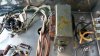
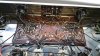
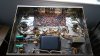
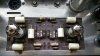
ThanKS a lot for your responses. I've upload a few photos of the top and bottom of the amp. solder look good, but there are sign of rust on the connection metal. The choke look in bad shape, replace? The diode on the rectify area is 125NT, good or should replace with a different diode?
Attachments


kvflyer
Super Member
Actually, the choke looks fine. What appears to have been done is that the rectification by GZ34/5AR4 has been replaced by two silicon diodes. Some will call this heresy and go on and on about cathode stripping and soft start etc. Myself, I prefer the original GZ34 just because I do. As to the cathode stripping etc., that is unsubstantiated. It may apply to huge RF tubes. But not to our amplifier tubes. Consider: HH Scott used silicon diodes in the 340B and 380 receiver, Fisher used them in the 500 and 800 tube receivers. No problem there. So, you can leave them as you see them.
But that missmatched bunch of tubes may well work. But I am in the camp of NOS Great Britain or USA manufactured tubes. Not to say that there are others out there that won't work. For that matter, I would jump on Japanese NOS before current manufacture.
Just my opinion and certainly others may agree or disagree. (BTW, that is what makes our country free!)
But that missmatched bunch of tubes may well work. But I am in the camp of NOS Great Britain or USA manufactured tubes. Not to say that there are others out there that won't work. For that matter, I would jump on Japanese NOS before current manufacture.
Just my opinion and certainly others may agree or disagree. (BTW, that is what makes our country free!)
kvflyer
Super Member
It appears that your original selenium rectifier, which makes the negative bias voltage is still in place. If you get enough negative voltage to properly bias the output tubes, it is still good.
I have two of these amplifiers. In one, I replaced the selenium, in the other, I did not. Both of mine have USA, Great Britain or Japanese (vintage) tubes.
I also see that the coupling capacitors have been replaced as well.
I have two of these amplifiers. In one, I replaced the selenium, in the other, I did not. Both of mine have USA, Great Britain or Japanese (vintage) tubes.
I also see that the coupling capacitors have been replaced as well.
shelly_d
Not An Audiophool
Yes, the coupling caps have been replaced. They are 4 of the 6 yellow caps on the top of the circuit board. That is a good thing. The multisection can capacitor for the high voltage sections looks like it is original. Since you also still have the original selenium rectifier I would come to the conclusion that the only power supply work done on the amp was replacing a blown rectifier tube with the silicon diodes. The good parts of that is the transformer no longer needs to supply the current needed to run the filament of that tube. The "bad" part is the high voltage is a little higher and it appears on the output tubes immediately. Some folks think this is bad for the output tubes, I don't. There and a great many of these fine old amps, suing the same tubes, with similar voltages that do just fine with silicon diodes.
The real question now is what to do about that can. In case you are not exactly sure which part I am referring to, it is the tall silver tube standing up in front of the transformers to the right of the bias adjustment pots. There are places on the web that sell new manufacture replacements for that. They, in fact, have actually dropped in price since I needed to do mine. Here are two links for the exact replacement part:
https://www.amplifiedparts.com/products/capacitor-ce-mfg-525v-30202020uf
https://www.tubesandmore.com/products/capacitor-ce-mfg-525v-30202020uf
At about $39, they are far more reasonable now they they were about 5 to 10 years ago when they first appeared. If you go with that part, you will not need the kit I linked to earlier. However if you do replace that can with one of those linked to parts, there are two other caps that need to be addressed. Shoes are in your bias supply. They are the two blueish greenish cans wired to the terminal strip on the underside of the amp. Any modern cap of the right value (50 uF) and voltage (greater then 75 volts) will work for this.
Address those 3 parts and you should have an amp that is reliable enough to start evaluating, checking voltages, evaluating the tubes, judging the condition of all the other parts and of course, best of all, listening to it.
Good luck with it.
Shelly_D
BTW, if you are concerned with that choke (I would not be) they can be had for about $30 or so:
http://www.triodeelectronics.com/c354.html
Enjoy the ride. It is fun.
The real question now is what to do about that can. In case you are not exactly sure which part I am referring to, it is the tall silver tube standing up in front of the transformers to the right of the bias adjustment pots. There are places on the web that sell new manufacture replacements for that. They, in fact, have actually dropped in price since I needed to do mine. Here are two links for the exact replacement part:
https://www.amplifiedparts.com/products/capacitor-ce-mfg-525v-30202020uf
https://www.tubesandmore.com/products/capacitor-ce-mfg-525v-30202020uf
At about $39, they are far more reasonable now they they were about 5 to 10 years ago when they first appeared. If you go with that part, you will not need the kit I linked to earlier. However if you do replace that can with one of those linked to parts, there are two other caps that need to be addressed. Shoes are in your bias supply. They are the two blueish greenish cans wired to the terminal strip on the underside of the amp. Any modern cap of the right value (50 uF) and voltage (greater then 75 volts) will work for this.
Address those 3 parts and you should have an amp that is reliable enough to start evaluating, checking voltages, evaluating the tubes, judging the condition of all the other parts and of course, best of all, listening to it.
Good luck with it.
Shelly_D
BTW, if you are concerned with that choke (I would not be) they can be had for about $30 or so:
http://www.triodeelectronics.com/c354.html
Enjoy the ride. It is fun.
Thanks a lot for all your inputs. Just got back from a short camping that has no connection. I will go ahead and make a purchase for the can capacitors and the choke and the 2X 50uf capacitors. I know that other suggest the choke is working, but I want to keep this unit running for at least 5 more years, I'll replace the choke. Also, since there's no pinpoint method to determine the durability of the capacitors, I'll replace it now. After all this, I will check the voltage according to the manual.

RCA China? New one on me. I guess its not impossible at some point they were buying Chinese tubes and re-branding them. Realistic I'd say the same thing about, often those were Japanese but of course they never made their own tubes. They simply bought from whoever would sell them and at one point in time it may have been the Shugang factory. Of course its just as likely the RCA logo was simply screened on there without RCA ever having been involved. I have a "Westinghouse" tube around somewhere that says it was made in England, but its neither of those.
Tend to agree about wanting a matched quad, or at least two matched pairs for best performance. Loads of options and opinions about this of course but EL34, 6CA7 or KT77 will all get it done. New make, NOS, good used, thats your call. I've run new Electro-Harmonix 6CA7's without any complaint.
Tend to agree about wanting a matched quad, or at least two matched pairs for best performance. Loads of options and opinions about this of course but EL34, 6CA7 or KT77 will all get it done. New make, NOS, good used, thats your call. I've run new Electro-Harmonix 6CA7's without any complaint.
shelly_d
Not An Audiophool
Just got back from a vacation. I haven't make any order yet, for those who upgraded their capacitors board, is it really make a big different? My goal is to get a detail sound with this amp. Should I get the upgrade or replace a can capacitor? Thanks.
The power supply caps will not make much of a difference in sound quality, certainly not in providing detail in the mids and highs. They provide reliability and long life. The way to get better detail is to address the coupling caps on the circuit board and, sometimes, the input circuit. If the coupling caps that are already on the board, (the 4 yellow ones that are oriented left to right) are labeled as .22 uF or larger, they have already been addressed and I would put it into service after the power supply replacements and voltage checks to see what it sounds like. You can then decide if the circuit needs further upgrades.
Shelly_D
Thanks. I will go ahead with the minimum changes, so I will order a replacement for the can capacitor from one of the above link. So far, I've been testing it on different speakers to see if any particular speaker provides the sound that i like. So far, I like the University C-12HC speaker that I picked up recently. Although, I think i need to replace the capacitor for that pair of speakers too.The power supply caps will not make much of a difference in sound quality, certainly not in providing detail in the mids and highs. They provide reliability and long life. The way to get better detail is to address the coupling caps on the circuit board and, sometimes, the input circuit. If the coupling caps that are already on the board, (the 4 yellow ones that are oriented left to right) are labeled as .22 uF or larger, they have already been addressed and I would put it into service after the power supply replacements and voltage checks to see what it sounds like. You can then decide if the circuit needs further upgrades.
Shelly_D


Retrovert
Addicted Member
The ST-70 choke is a borderline component, either because of (a) poor construction, or, (b) design limits being exceeded in the circuit (cf rectifier tube).
No way to know what the design goals were; everyone who knew is beyond questioning.
What we do know is that many complaints from Dynaco owners exist about overheating and burning out. A search will readily find more than you'd care to read. So replacement is a good idea.
No way to know what the design goals were; everyone who knew is beyond questioning.
What we do know is that many complaints from Dynaco owners exist about overheating and burning out. A search will readily find more than you'd care to read. So replacement is a good idea.
Thanks. I will eventually replace the choke too. I'm looking through some resistors, does it matter to get the right Watt rating? Also, if the old resistor is 1k 0.5W, could I replace it with 1K 1W or 2W piece? Lastly, the resistance should be match? (ie, 10k vs 12K) Thanks.
I also acquired the PAS3, so I'm looking to buy resistors and capacitors for both units. I did order a capacitor upgrade kit for PAS3 since the kit replaced the selenium rectifier, capacitors below it and can capacitor.
I haven't touch the dynaco FM unit yet.
I also acquired the PAS3, so I'm looking to buy resistors and capacitors for both units. I did order a capacitor upgrade kit for PAS3 since the kit replaced the selenium rectifier, capacitors below it and can capacitor.
I haven't touch the dynaco FM unit yet.