• The move to the new server is done. There are some software and database maintenance updates in process. This has us passing the hat around to help out. We appreciate any donations. Seriously, even a dollar helps. The payment page may be found here - https://www.audiokarma.org/support.html

RABCO ST-4. Help please.

randballen

Active Member
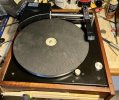
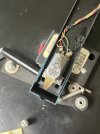
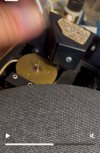
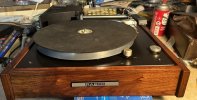
Hello all. I recently retired and have started tabling with old turntables. Today I picked up a RABCO ST-4. She’s dirty and needs some veneer work but I brought her home any way. I’m a novice so please bear with me here. The deck powers on and the motor starts. Unfortunately the “spindle”(?) on the motor that drives the belt that turns the platter just spins even the the motor is running. It appears too loose on the motor shaft. I attempted to show this in the video. Any idea what can be done to fix? Thanks. Oops, unable to add the video. ‍♂️
 

Attachments

  • IMG_1302.jpeg
    IMG_1302.jpeg
    196.9 KB · Views: 58
  • IMG_1300.jpeg
    IMG_1300.jpeg
    106.6 KB · Views: 59
  • IMG_1303.jpeg
    IMG_1303.jpeg
    103.9 KB · Views: 54
  • IMG_1304.jpeg
    IMG_1304.jpeg
    103.4 KB · Views: 57
Register to hide this ad
If all you need is for the pulley to turn while the motor is running, possibly something as simple as a drop of superglue on the spindle.
Just a thought. Not an expert at all.
 
First thing first: That B&O SP 12 cartridge is worth protecting - with or without a stylus in good shape, it has value, so I suggest removing it and replacing it with some cheap cartridge while you work on the thing.
I had two of those heart breakers, both from the same tag sale - apparently I wasn't the only optimist. When it worked, it sounded surprisingly good, especially in light of the cost to performance ratio. But there were problems. My motors fell apart - they appeared to be press fit clamshells, and they had loosened. The various housing parts were made of folded aluminum riveted together, and the rivets were loose, so nothing was exactly fixed in place where it was supposed to be. I hope yours is nice and tight.
I'd try a dab of white glue on the motor shaft to see if the pulley can be glued in place. White glue has the merit of being a pretty weak bond with metal, so you can undo it relatively easily if you need to (and I have heard that a little diluted ammonia (or Windex) helps with the dissolution of any bond.
Good luck with your labor of love.
 
Hi all. Well the motor is shot, soooooo, I’m in the search for a replace. They maybe be near impossible to find but if anyone has one or knows of a possible source, I would appreciate that information. I may be forced to just sell it and let someone one much wiser electronically try to fix. She has cleaned up nicely, I just wish I could hear her sing.
 

Attachments

  • IMG_1400.jpeg
    IMG_1400.jpeg
    102.1 KB · Views: 20
.... Well the motor is shot, ....
Huh? Originally you said the motor was running but the pulley was slipping on the shaft, now it's "shot"? What happened?

The correct original motor is essentially unobtainable (unless you're willing to spend hundreds of $$$).

Original: Synchron 600 series "D" mount, 600RPM, 110V, 6W(att).

I've spent countless hours searching the web for a replacement. Never found one. Did find a 5 watt version (used in old Crosley turntables). It's installed and "kinda" works, but underpowered - if you can leave the turntable in 45-50ºF temperature, it might run all day, but at 65-75 ambient, it overheats in 20-30 minutes and slows down.

Synchron (the original manufacturer) was absorbed by Hansen Corp. They still make the 600 Series motors, but only gear-reduction types.

https://www.hansen-motor.com/products/ac-synchronous-motors/600Series-Synchron-A-D-mount/

I spoke with them 6 or so years ago, they will custom make non-reduction motors, but only with minimum quantities at great cost. The rep did check with all their distributors at the time to see if any had old-stock non-reduction left in inventory. None did, so I live with my original noisy motor and the weak 5W motor.

A person might get a gear-reduction unit (if you can find a 6W one) and remove the gear-reduction top. I've considered trying, but never found a 6W unit.
 
Motor: Surplus Sales of Nebraska ended up with all of the Weathers TT service parts. The Synchron motor for the Weathers is a direct drop-in for the original Rabco Synchron motor with a few caveats. It needs to have the shaft cut down a bit so that it doesn't stick up too far, it needs a small nylon spacer (available at ACE Hardware) added under the pulley, and right now I'm trying to get one of the 60 year old NOS motors run in so that it will actually run right in my ST-4 without bogging down. Right now (installed about an hour and a half ago) it will spin fine if you give it a nudge, but so far I can't get it to run with the arm drive belt installed. The shaft cut and the nylon spacer were necessary for my ST-4, which is the early (I think) version with the small diameter drive pulley on top. I think later models turned it over, from what I've seen.
 
Sam, my post earlier was in error: I said I got a Crosley motor, but it was actually a Weathers motor from Surplus Sales of Nebraska, as you found above. It was physically the same, including shaft, but only 5 watt power. It runs out of steam from overheat in short order. That missing 1 watt makes quite a difference.
... but so far I can't get it to run with the arm drive belt installed. The shaft cut and the nylon spacer were necessary for my ST-4, which is the early (I think) version with the small diameter drive pulley on top. I think later models turned it over, from what I've seen.
1) you can R&R the pulley to put the smaller diameter closer to the bearing.

2) The tracking shaft "bearings" (I use the word lightly) get gummed up with old dried out grease. With the drive belt/o-ring removed, the shaft should spin freely for a few revolutions. If not, ya need to disassemble the shaft from the stanchions, clean out the old grease from the holes & plastic bushing inserts with a light solvent, and reassemble with a light machine oil. Oil is better for reduced friction, but ya may need to reapply a drop every once in a while.
 
Sam, my post earlier was in error: I said I got a Crosley motor, but it was actually a Weathers motor from Surplus Sales of Nebraska, as you found above. It was physically the same, including shaft, but only 5 watt power. It runs out of steam from overheat in short order. That missing 1 watt makes quite a difference.

1) you can R&R the pulley to put the smaller diameter closer to the bearing.

2) The tracking shaft "bearings" (I use the word lightly) get gummed up with old dried out grease. With the drive belt/o-ring removed, the shaft should spin freely for a few revolutions. If not, ya need to disassemble the shaft from the stanchions, clean out the old grease from the holes & plastic bushing inserts with a light solvent, and reassemble with a light machine oil. Oil is better for reduced friction, but ya may need to reapply a drop every once in a while.
The problem, as I found, is that the shaft is spinning inside the pulley. The shaft on the new Weathers-spec motor is the same as the old Rabco-spec motor, but through age and wear or whatever reason, the pulley doesn't have a good enough grip on the shaft to overcome the weight of the platter and the tension of the belt. I need to find some way to bond the shaft to the pulley so that it spins properly.

I'll fish my old motor back out, I think it was only a 5W unit. But I think my ST-4 was also an early model, they may well have upgraded. I've tossed around some ideas for using an entirely different motor and having an appropriate pulley made to fit.
 
The Weathers motors were clock motors, and worked in the Weathers because the platter was so light and the tracking force of the Weathers cartridges was so low. The later versions that could be used with other cartridges, perhaps tracking a little higher, had two motors to cope with the added drag.
The Rabco, though, has a heavy platter and the motor also has to drive the linear arm mechanism. I'm not surprised that the motor struggles in that use.
It has been so long since my short time with ST4s - I picked up two at the same tag sale(!) - that my memory is dim, but I think I remember that the on/off mechanism included a kick starter very like that on the Connoisseur BD2 and 2a. Such a thing might help, though you can do exactly the same thing - giving the motor a boost - with your finger. That was standard procedure for those with the AR table who didn't want to wait for it to get up to speed.
 
There's a current production synchronous motor that's close to a direct drop-in, but's it's special order and the only place I could find that lists a price has it at $105 - the Hurst AB series 3011-001. 600RPM, 6.5W input, but it's a 2-hole mount, and the shaft is about twice the size of the original Synchron motor, which would require modification of the pulley. Still, it's definitely an option to fix an otherwise non-working ST-4.


I did just buy an older equivalent for about half of the price of the 3011-001, the Hurst SB series 4005-001. The shaft on it is even larger than the AB, so I'm going to have to carefully drill it out or take it to a machine shop to be drilled to be a press-fit on the Hurst motor, and make a new mounting bracket or modify the old one to work. The 4005-001 is a 7W input, so it should have a nice durability margin over the original Synchron motor. Unfortunately, the one I bought was the last one Radwell had in stock.


Hurst makes a few others like the PB series 3203-001 and 3230-001 which could likely be adapted to fit the ST-4 without much difficulty if one could be located at a good price, and which are well over the 6W power range of the original motor.


There is one possibility for a reasonably priced 600RPM synchronous Hurst motor - over on the auction site, there are some surplus Hurst 3204-029 PB series geared motors for sale. Those are a 115V 10W input, 200RPM output with a reduction factor 3 gearbox bolted on, so they should be 600RPM motors. The problem is that inside the gearbox I have no idea how long the output shafts are, what's attached to them, and if any such attachments are reasonably removable. If someone wants to grab one and report back, it might be a good way to get a 600RPM synchronous motor with a four-bolt mounting pattern that should fit the motor opening in the chassis, even though it will need a new mounting bracket fabricated.

Update: In addition to the 4005-001 I already purchased, I got the seller (not the same seller) to knock $10 off of one of the 3204-029 gear motors. I'll open it up and see if the shaft can be easily adapted to play nice with the Rabco pulley. Being a 10W motor, if it works, it should just loaf along stress-free in place of the original 6W Synchron.
 
Last edited:
The Weathers motors were clock motors, and worked in the Weathers because the platter was so light and the tracking force of the Weathers cartridges was so low. The later versions that could be used with other cartridges, perhaps tracking a little higher, had two motors to cope with the added drag.
The Rabco, though, has a heavy platter and the motor also has to drive the linear arm mechanism. I'm not surprised that the motor struggles in that use.
It has been so long since my short time with ST4s - I picked up two at the same tag sale(!) - that my memory is dim, but I think I remember that the on/off mechanism included a kick starter very like that on the Connoisseur BD2 and 2a. Such a thing might help, though you can do exactly the same thing - giving the motor a boost - with your finger. That was standard procedure for those with the AR table who didn't want to wait for it to get up to speed.
The original ST-4 motor was almost the exact same clock motor as the Weathers used, just built for a bit more power. Same manufacturer (Synchron), same series, same size housing. Maybe still a bit under-done, which is why I floated some options above that could be used with a new bracket fabricated, and the shaft hole in the pulley opened up to fit.
 
Last edited:
The ST4s I worked on had motors by a different manufacturer than the syncron motors that the Weathers I was just given by an AKer. I remember a sort of clam shell arrangement to the motor's outer casing which came apart easily - very frustrating. In size and shape I remember it as more reminiscent of the motor on the ARs.
But Weathers chose the motors specifically for their quietness despite very low power, and your experience that they really don't have enough oomph for the Rabco even before attaching the arm drive suggests that the Rabco had a different one.
 
The ST4s I worked on had motors by a different manufacturer than the syncron motors that the Weathers I was just given by an AKer. I remember a sort of clam shell arrangement to the motor's outer casing which came apart easily - very frustrating. In size and shape I remember it as more reminiscent of the motor on the ARs.
But Weathers chose the motors specifically for their quietness despite very low power, and your experience that they really don't have enough oomph for the Rabco even before attaching the arm drive suggests that the Rabco had a different one.
The Synchron motor was riveted into the original mounting bracket, which is a rather odd wraparound design. With my Weathers/Synchron motor experiment, I used some 4-40 screws and nuts to replace the rivets. The Hurst motor experiments are going to require fabrication of new mounting brackets. The "clam shell arrangement" you're describing sounds EXACTLY like a Synchron. They have a brass outer cover that's staked in place. I've seen a few of them in clocks that have fallen off or have been removed to clean/lubricate the mechanism over the years.

The motor pictured above in randballen's original post is 100% a Synchron motor.
 
Last edited:
I don't doubt that ranballen's motor is a Synchron motor. What I am questioning is whether it is the same motor as the Synchron in the Weathers. Given that it appears to be lower wattage and doesn't have enough torque to run even the platter by itself, much less the arm (which is driven by a belt off the spindle), it seems to me that the Surplus Sales of Nebraska motor may not be a viable alternative. And trying one out isn't cheap.
I was curious, so I did a bit of research, and found a couple of threads about the ST4, and in one from 2018, I found a post I made about the motors in my two ST4s, in which I describe them as being like the motors in the AR, and mention the insecure mating of the clamshell top and bottom. While it is possible that, even in 2018, I was misremembering, but I think it is quite likely that Rabco could have changed motors during production. And I didn't identify the motors I had as Hursts - I don't know who made them, though if they said Synchron on them, I think I would have noticed. And my memory is that the case was not brass, but rather aluminum or steel or some similar colored metal.
I believe I am correct that on/off switch gives the platter a kick to get it going - that was mentioned in the threads I read.
 
I don't doubt that ranballen's motor is a Synchron motor. What I am questioning is whether it is the same motor as the Synchron in the Weathers. Given that it appears to be lower wattage and doesn't have enough torque to run even the platter by itself, much less the arm (which is driven by a belt off the spindle), it seems to me that the Surplus Sales of Nebraska motor may not be a viable alternative. And trying one out isn't cheap.
I was curious, so I did a bit of research, and found a couple of threads about the ST4, and in one from 2018, I found a post I made about the motors in my two ST4s, in which I describe them as being like the motors in the AR, and mention the insecure mating of the clamshell top and bottom. While it is possible that, even in 2018, I was misremembering, but I think it is quite likely that Rabco could have changed motors during production. And I didn't identify the motors I had as Hursts - I don't know who made them, though if they said Synchron on them, I think I would have noticed. And my memory is that the case was not brass, but rather aluminum or steel or some similar colored metal.
I believe I am correct that on/off switch gives the platter a kick to get it going - that was mentioned in the threads I read.
I think the "kick" you're thinking of is the brake releasing. Mine always turns clockwise a bit, even with the power off, when it's switched to "on" and the brake lets go.

Progress with the motor hunt:
Hurst SB series 4005-001, 7W. Nice motor, but very noisy.
Hurst PB series 3204-029, 10W. Nice motor and quiet with the gearbox removed, but the shaft is quite short due to the gearbox.

In today's mail: Hurst PB series SP-3628, 600 RPM, 10W (I believe this is the same as the 3203-001, the specs are the same). The .82uF run cap will be in next week, but this motor should be just as quiet as the 3204-029. It has a shaft that's approximately 3/16" in diameter, which will not only require boring the pulley opening out quite a bit, but the boss in the bottom of the pulley that extends the center level with the bottom of the outside edge will be completely gone. In order to make sure the pulley sits at the right level when it's pressed onto the shaft, I've ordered a 3/16" shaft collar with a set screw to mount on the shaft as a stop. Next step, designing a motor bracket. Mounting it so the center of the shaft lines up with the location of the center of the existing motor shaft will put the edge of the motor very close to the cutout in the top plate, but I will also have to set the top of the motor a bit lower than the original Synchron motor to accommodate a raised area in the top plate that surrounds the shaft. In the end, this should be a significant upgrade to the ST-4.

I may do a bit of tinkering to see if there is any benefit to replacing the gear-drive Synchron motor that operates the cueing mechanism with a more powerful Hurst gear-drive motor, and if one would fit in the available space.

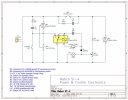
Dumb question: the Hurst synchronous motor is a four wire power input, vs. the Synchron's two wire setup. Two blue wires, one black, one red. The blue wires are connected together to one side of the power line, the red and black are connected together with a capacitor between them. Which wire (red or black) has the direct, no-capacitor connection to the power line determines whether the motor rotates clockwise or counterclockwise. The original design has a 0.1uF capacitor and 100 ohm resistor parallel with the on-off switch. I assume that's there for dampening purposes and not as a motor run cap? Confusingly, the gear-drive Synchron motor for the cue lift/drop also has a 0.1uF capacitor, this time with a 220 ohm resistor, but it's placed across the power connections to the motor and not parallel to any of the three switches connected to that motor. Per the service bulletins, that cap and resistor have something to due with proper operation of the motor when the cue switch or the electrical end-of-record sensor is activated, though I'm not really sure what. Two-wire Synchron motors tend to just work when power is applied to them. The electrical design of this thing is a wee bit confusing, considering how few parts it has.

 
Last edited:

Much, much nicer than the schematic I had. Thank you!

The 250uF electrolytic in the cueing circuit has been changed out for a 500uF cap in my ST-4. I may swap that back at some point.

One silly thing that I've been kicking around in my head is replacing that old momentary leaf switch in the cueing circuit (SW1) with something that has a more positive feel. The original switch is hard for me to tell when it has made contact, it has a kind of mushy feeling.
 
Re-motoring experiment:
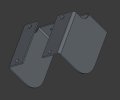
I gave myself a crash course in CAD modeling and ordered a motor bracket from SendCutSend for the Hurst PB series motor. It should be here by the 10th. I'll have to either carefully drill out the hole in the pulley for the 3/16" motor shaft, or find someone with a lathe to bore it.

This should be a significant upgrade over the Hansen 600 series Synchron motor, which seems to have always been a bit under-spec'ed for a table with a heavy platter.
 

Attachments

  • Rabco ST-4 Hurst motor bracket.jpg
    Rabco ST-4 Hurst motor bracket.jpg
    30.1 KB · Views: 0
  • Rabco ST-4 Hurst motor.jpg
    Rabco ST-4 Hurst motor.jpg
    99.5 KB · Views: 0
I wonder if a switch with momre positive feel might require more actuating force, which would require more deflection of the cantilever. The mushy feel of the original switch may be a feature, not a bug. But this is just conjecture on my part.
 
Back
Top Bottom