• The move to the new server is done. There are some software and database maintenance updates in process. This has us passing the hat around to help out. We appreciate any donations. Seriously, even a dollar helps. The payment page may be found here - https://www.audiokarma.org/support.html

Radio Station Phono Preamps

GeoffC

Active Member
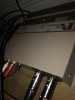
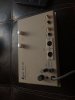
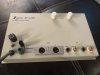
My new (to me) preamplifier has no phono stage so on the search for a phono preamp. A friend of mine who is also my audio tech has recommended trying out some salvaged / restored phono preamps that were used at a local radio station. One is a Logitek BPA200 Balanced Phono Preamp while the other is a Peak Audio Incorporated Economist Turntable Preamplifier. The Logitek has balanced and unbalanced RCA inputs, XLR outputs, variable left/right gain, MM and MC selection. All discrete components. The Peak has the same inputs and outs (via modification from original spade connector interface), no MC option, but features separate power supply.
It does have ICs in its layout.

My goal is low noise, accuracy, and reliability/supportability.

I have performed a side by side and find both very appealing. A slight nod to the Peak with lower noise and a bit more laid back. Both offer detailed delivery.

Has anyone had experience with either of these two preamps?
F124F38A-3736-4859-9996-AEB70FA296A2.jpeg
 
Register to hide this ad
Nice! I'd imagine radio station gear would be made to be rugged and well performing without needing gimmicks and snake oil to market them.
Thanks - I was thinking the same thing. The preamps are not pretty to look at and upon inspection they are very well built and designed to run 24/7. They are pro reference level of +4db with consumer reference level of -10 db. All referenced to equal 0 vu. gain. So I literally need to only crack open the gain pots on the preamps for my system. So far I’m hearing everything presented very well and no noise.
 
I have a Radio Systems brand phono pre, works quite well. Quiet, does what you'd expect it to do. Only gripe I have with it, the outputs are all on screw terminals so to get it connected to a common home preamp I have RCA cables with one end cut off and fork connectors crimped on. Its designed to be wired for balanced or unbalanced. A few years ago it lost an op amp for unknown reasons. They were all socketed, took no effort to pop and swap it. I swapped the power supply caps while I was at it since they were pushing 30 years old. Nicely built unit, very obviously intended for lots of hours of run time and easy service.
 
image.jpg image.jpg Agree - I’ve read these preamps are meant to run 24/7 and follow strict RIAA equalization. Not very pretty to built well and perform great. Making modifications for home use is sometimes required.

The Logitek is straight forward and has RCA inputs and XLR outputs. I had the gain pots changed out to allow for knobs to be used.

The Peak has a row of terminals. So ran jumper wires across and implemented RCA and XLR connections for ease.

Built like tanks
 
Mine is probably slightly more home-friendly just by its basic physical layout. All of the ins and outs are on the end panel rather than on the large face.

I should actually swap that back in. Maybe do a little A/B/C swapping to compare my preamp's internal stage, the broadcast stage, and my Garrard MRM for sound quality.
 
They work well and you should be fine.
That said, they were designed for an environment where reliability and ease of service are paramount. The best possible sound was not the goal.

I am not saying they sound bad, but I am saying you might prefer one designed for hi-fi listening... All part of the journey.
 
They work well and you should be fine.
That said, they were designed for an environment where reliability and ease of service are paramount. The best possible sound was not the goal.

I am not saying they sound bad, but I am saying you might prefer one designed for hi-fi listening... All part of the journey.
Tend to disagree on sound goal. Do you really believe a radio station system engineer would specificy a component that is not going to perform function prior to signal being amplified and broadcast? I’d assess the basic functions of a phono preamp are all met (increase signal voltage, adjust for RIAA equalization, lowest noise possible) plus being able to run continuously and be easily serviced. Pro audio requirements vs consumer electronics requirements in play. The design requirements for a phono preamp are few and straight forward.

I’m have been conducting A/B testing between the Krell/radio station phono stage and my McIntosh preamp (includes phono stage). I’ve been performing all listening tests below 75db so far and grading on perceived clarity, intonation, and noise. So far I’m enjoying the Krell set up better.
 
you may want to check the phase on that phono stage. Depending on the age of a given unit, some older balanced devices used pin 3 as hot, while newer units used pin 2 as hot. If you pick the wrong pin as hot your signal will be out of phase.
 

and there you go. Engineers tend to be data people. They would specify a component that meets the required specs. They likely are not auditioning things with their golden ears and listening for things that don't show up on measurement tests and the bulk of the public either can't hear or don't care about. While I'm sure it sounds fine, reliability and adherence to specs would have been more of a critical thing. Of course if you build something to meet reliability and performance specs that sort of forces high quality parts and good overall design so it probably can't help but sound good. It would almost be a challenge to make something that is highly accurate and reliable but still sound bad.
 
Why would you think a audiofool would have a better ear than an EE?
Qualify a golden ear for me please?
When you design your own gear you might be biased for it but you could also be very accurate in its assessment because you want it to be the best you can do for what it’s intended purpose is within the cost structure.
Someone with a trained ear would imo be a musician or a sound eng. perhaps. I think women have better hearing than a man does so a good male EE would ask their wife, assuming it is a women, you never know these days, to do some evaluation or at least this is the way I do it.
As long as both channels are in phase does it matter if they are out of phase from in to out?
 
Last edited:
You probably don't need to worry about absolute phase if you listen to typical modern fold, spindled and mutilated assembled music. If you listen to naturally recorded, high quality single stereo mic recordings, then it can really make a difference when right. All in the musical style and your concern (or not) for quality.

Older pro was almost always pin 3 high as balanced. It was easy then to remember...3-2-1. High-low-shield.

The pro phono preamps and made more for the rugged use and service than for fine quality. I've spent a career installing, caring for and listening to such. They are more likely to be decent IC based, cap coupled designs with enough gain to drive balance outputs. Something like the Krell mentioned is also going to be well built, but might be more likely to be careful about throwing in cap coupling and more likely to use discrete transistor design. I would expect a pro design to be more resistant to external noise and the more expensive to be likely to have a lower noise floor. But each design would need to be looked at to see.

EV3
 
I’m kind of partial to this broadcast phono preamp, because I designed it. DC coupled, very low noise, very low distortion, excellent immunity to overload. Adjustable cartridge loading, adjustable gain, truly balanced electronic outputs.

spjrnbl9bd4xmsdibrvp.jpg
 
Last edited:
Nice! I'd imagine radio station gear would be made to be rugged and well performing without needing gimmicks and snake oil to market them.
I'm guessing the emphasis for radio station equipment is reliability, with sound quality rated as acceptable if it is "good enough". That said, phono preamps aren't exactly rocket science. :)
 
Why would you think a audiofool would have a better ear than an EE?


Why would the engineer need to hear anything? Can be completely deaf and select a phono preamp for a broadcast station. The required specs are known, and the specs on the preamps are published. Pick one that fits the needs and thats it. We're the weirdos that swap phono stages and other equipment trying to see which sounds better. Also consider most of us are not exactly all that young, which means most of us have at least somewhat compromised hearing. I've got tinnitus and freely admit that a lot of things people swear make a difference are completely inaudible to me. I wouldn't trust my sonic opinions to select the best sounding phono stage for some broadcast application.
 
I’m kind of partial to this broadcast phono preamp, because I designed it. DC coupled, very low noise, very low distortion, excellent immunity to overload. Adjustable cartridge loading, adjustable gain, truly balanced electronic outputs.

spjrnbl9bd4xmsdibrvp.jpg
Thanks so much for sharing! I’d like to find one of these and honor your achievement. I worked with some great people at Harris as I spent 30 years at Raytheon.

After having spent a few days with the two units I have under test I find them to be better than the phono stage in my McIntosh preamp. I plan to keep both and likely update the RCAs to Cardas or WBT.

As an aside, successful engineers don’t just design, they also go to the field and integrate to validate and verify their designs. I doubt successful audio engineers are deaf lol.
 
Many thanks for sharing Lavane. Straight forward package.

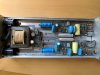
opened the lid first on the Logitek. A little more involved given MM/MC selection. Nice layout - and a nice toroidal transformer. Built in 1989.

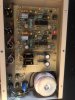
Currently listening to the other one I have made by Peak. It’s a MM only but features a separate in line transformer power supply to mitigate noise within the phono preamp chassis.

image.jpg
 
I've been meaning to build one of those CNC pbono preamps and run it off a bank of 9v batteries. Nice and quiet and several OP amps to choose from.
Having the power supply in a separate chassis is always a good idea.
 
Agree, the DC battery source would be the ultimate. The Peak I have could be updated to that configuration given separate power supply already.

I found a Bradley Broadcast catalogue from 1993 that offers everything you’d need for a station and found the Logitek listed - cited highly accurate - wholesaled for $400.
 
Back
Top Bottom