• The move to the new server is done. There are some software and database maintenance updates in process. This has us passing the hat around to help out. We appreciate any donations. Seriously, even a dollar helps. The payment page may be found here - https://www.audiokarma.org/support.html

RCA audio cables from one room to another

pdardeau

Member
This might be a strange question, but I'll ask anyways.

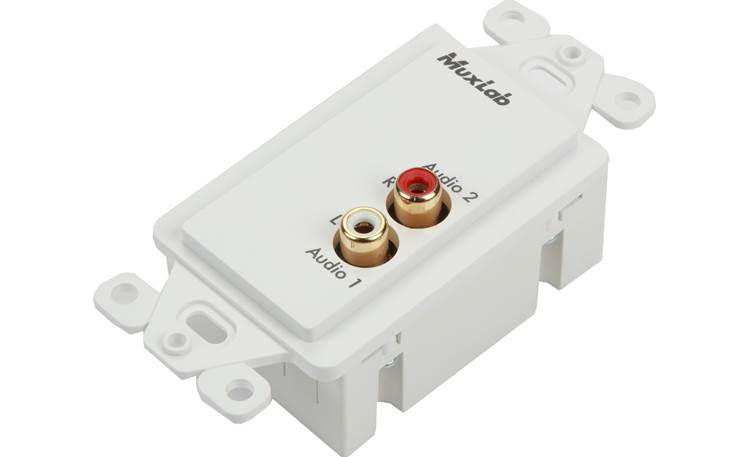
I have 2 stereo system setups: 1 in the den and 1 in my office. The den and the office share a wall and stereo system in the den is against that shared wall. In my office, the stereo system is on a different wall (not on the common wall). I'm mostly using digital music managed by both (separately) Plex and mpd. My computers and networking gear are in my office on the common wall with the den. I'd like to be able to run RCA cables through the common wall so that my stereo system in the den can play my music in either mpd or Plex. Would it be weird or inadvisable to set up an outlet box with female RCA jacks on both sides of the common wall and then cabling to connect all the way from my digital music library to my stereo system in the den? Would you do it this way? Any other setups that I should consider?

Thanks in advance!
 
Register to hide this ad
The danger you are going to have is hum when connecting the two systems together especially if they are on different AC electrical service circuits. Remember you have two different phases in your circuit breaker box. Plus there could be differences in ground potentials depending on how many junctions there are between the wall out let and the circuit breaker box. All you can do is try it and see what happens. You could always install two Jensen isolation either in the wall for each channel or two at one end of the cable. You also have to decide which system is going to be the master and I gather that would be the office since that where the computer is. You have all sorts of options but lets just start off simple.

When I started I had hum problems, like you may have, between the HT electronics in one location the Displays in another location the stereo electronics in another location and then the new Stereo amps in another location. Plus I was trying to use cable TV for sound. Well I had to give up on cable TV and go with satellite to stay away from the cable companies different ground and noise issues. I had to run a long extension cord from my displays to the HT electronics to get rid of that ground loop. I also had to use balanced connections between the HT and Stereo system lifting the ground at the HT end to get rid of that ground loop. When I remodel the Kitchen I had home runs, with no junction boxes, run to the displays, HT, and Stereo system its amps on the same phase of the circuit breaker box. Results: no hums buzzes or annoying little noises even when the HVAC system cycled or Appliance turned on in off in the laundry or Kitchen, which had happened before. Sewing machines and water heaters don't cause any issues either. Tools in the garage and the garage door opener are quiet, too. Lets hope you don't have to rewire your electrical service like I did.

You may find in addition if your computer is hard wired to your components that it can cause issues. They most likely won't be hums either. Mostly annoying random irritations. That why I use wire less connections, Apple TV module for the computer to the HT system and a great blue tooth wireless connection for the stereo system. I would rather see you use an external DAC than depend on the sound card in the computer.
 
If your stereo system in the office has outputs for two sets of speakers, you could run speaker wires through the wall to the speakers in the den.
 
It sounds like your in-wall run is basically the depth of the common wall?

But, otherwise: Options, options.

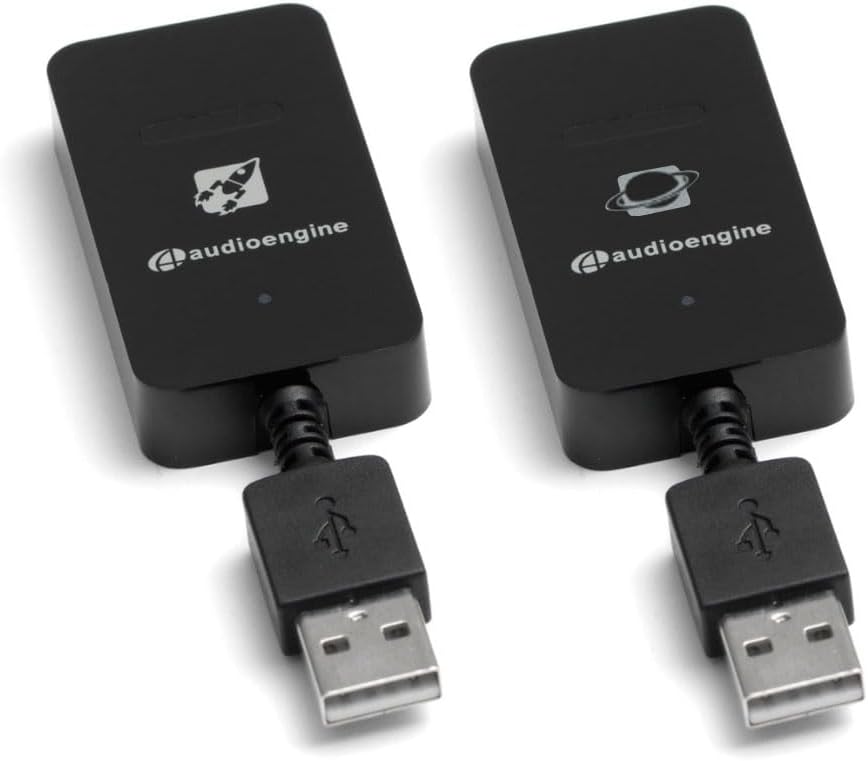
Probably the most interference proof for a long run might be to run an Ethernet cable and use two of these:


These use the twisted pairs of ethernet to send the signal. Twisted pairs help reject interference. The baluns convert the single-ended RCA signal to a balanced signal and back again at the other end, which will eliminate any noise introduced along the path of the wires.

If you go with RCA cables, consider using plenum or in-wall rated cables (if there's a fire, they won't give off toxic fumes when burning).

I'm currently running a 10 foot RCA cable in a raceway to get audio from my computer over to my receiver. It works well, and I have not noted any noise. But, it's not running through a wall.
 
Last edited:
I've run good RCA cables five meters long between two rooms with no ill effects, but they went straight through holes in the walls. When I tried two RCA cables joined by a female-female connector however, I got hum and noise. As mentioned above, equipment on two different house circuits is also problematic. If the same circuit breaker shuts off both rooms, you should be OK in that respect.
 

I go from TapeRec(output) to AUX(input).
 
It sounds like your in-wall run is basically the depth of the common wall?

But, otherwise: Options, options.

Probably the most interference proof for a long run might be to run an Ethernet cable and use two of these:


These use the twisted pairs of ethernet to send the signal. Twisted pairs help reject interference. The baluns convert the single-ended RCA signal to a balanced signal and back again at the other end, which will eliminate any noise introduced along the path of the wires.

If you go with RCA cables, consider using plenum or in-wall rated cables (if there's a fire, they won't give off toxic fumes when burning).

I'm currently running a 10 foot RCA cable in a raceway to get audio from my computer over to my receiver. It works well, and I have not noted any noise. But, it's not running through a wall.
I`ve been successfully and hum, noise free using that type audio and analog video 7 room distribution since 2009, but not MuxLabs brand, "because at that time", MuxLab audio ethernet cable based baluns were not as HiFi HQ, as I desired, so I went with another Co. called ETS (Energy Transformation Systems) www.etslan.com.
Their baluns are not inexpensive, but HQ performance never is.

And have been impressed with the high quality (ruler flat from below 20 Hertz to over 20 k Hertz) ethernet/balun choice I made over 15 yrs. ago, which allowed me to ground all the audio and video electronics that I had to PREVIOUSLY lift their equipment`s power plug`s ground to remove most of the ground loop hum using HQ Belden brand coax cables routed through the attic, but I could still hear faint clicks in the audio when my HVAC, room lights turned on, or fridge cycled, but that all disappeared when I went to the ETS ethernet cable/balun route from my living room`s master A/V rack to the distant 6 rooms of my house`s A/V systems.
 
This might be a strange question, but I'll ask anyways.

I have 2 stereo system setups: 1 in the den and 1 in my office. The den and the office share a wall and stereo system in the den is against that shared wall. In my office, the stereo system is on a different wall (not on the common wall). I'm mostly using digital music managed by both (separately) Plex and mpd. My computers and networking gear are in my office on the common wall with the den. I'd like to be able to run RCA cables through the common wall so that my stereo system in the den can play my music in either mpd or Plex. Would it be weird or inadvisable to set up an outlet box with female RCA jacks on both sides of the common wall and then cabling to connect all the way from my digital music library to my stereo system in the den? Would you do it this way? Any other setups that I should consider?

Thanks in advance!
you should look at using balanced connections, either XLR or TRS. the only downside is your preamps will need balanced inputs, or you can buy online a xlr/trs-rca box.

using balanced connections you should be good for up to 300'. rca's can and do recieve interference with long runs, and ground loop hums are a HUGE problem with long runs of rca cables, especially with devices on different outlets. Balanced connections alleviate much of this

you could also buy two of these to send the balanced signal, then convert it back to rca at the receiver, and still reap most of the benefits of balanced connectors.
 
you should look at using balanced connections, either XLR or TRS. the only downside is your preamps will need balanced inputs, or you can buy online a xlr/trs-rca box.

using balanced connections you should be good for up to 300'. rca's can and do recieve interference with long runs, and ground loop hums are a HUGE problem with long runs of rca cables, especially with devices on different outlets. Balanced connections alleviate much of this

you could also buy two of these to send the balanced signal, then convert it back to rca at the receiver, and still reap most of the benefits of balanced connectors.
That`s what my setup does as I described, just uses quality ethernet cable which is twisted balanced pairs that is RJ-45 connected to baluns at each end (send and receive) to convert to unbalanced RCA jacks to interface to the audio equipment using decent patch cables.
There are even versions that allow the use of all four pairs of the twisted pair of the Cat. cable for 2 L/R send or receive paths, as the baluns are non directional, and their extremely low path loss (assuming the use of quality Cat. 5, or higher cable in their conversion, even though being passive using HQ balun transformer technology.
 
I don't fully understand your hardware, but, you're in digital. Stay there. Figure out some way to get digital out to each system, preferably ethernet, and do your DAC there at each system. Ethernet is good for 150 feet. Even coaxial RCA in digital is fine.
 
I don't fully understand your hardware, but, you're in digital. Stay there. Figure out some way to get digital out to each system, preferably ethernet, and do your DAC there at each system. Ethernet is good for 150 feet. Even coaxial RCA in digital is fine.
cat5, 5e and 6 easily can go 300 feet without loss. Used to do it all the time rigging shows in convention spaces, theaters, etc.

balanced can as well.

Agree about keeping it digital during transmission, if possible.
 
cat5, 5e and 6 easily can go 300 feet without loss. Used to do it all the time rigging shows in convention spaces, theaters, etc.

balanced can as well.

Agree about keeping it digital during transmission, if possible.
My attic is strung with Cat cable for seven rooms of A/V distribution since 2009 using either passive baluns for L/R audio or passive/electronic for the 4 channels of different types of video signals, some digital.
 
This might be a strange question, but I'll ask anyways.

I have 2 stereo system setups: 1 in the den and 1 in my office. The den and the office share a wall and stereo system in the den is against that shared wall. In my office, the stereo system is on a different wall (not on the common wall). I'm mostly using digital music managed by both (separately) Plex and mpd. My computers and networking gear are in my office on the common wall with the den. I'd like to be able to run RCA cables through the common wall so that my stereo system in the den can play my music in either mpd or Plex. Would it be weird or inadvisable to set up an outlet box with female RCA jacks on both sides of the common wall and then cabling to connect all the way from my digital music library to my stereo system in the den? Would you do it this way? Any other setups that I should consider?

Thanks in advance!
I made a set of 15 foot long RCA patch cords out of high-grade COAX cables with premium RCA adapters. They work great. Perhaps something like those would be something to consider. :)
 
I made a set of 15 foot long RCA patch cords out of high-grade COAX cables with premium RCA adapters. They work great. Perhaps something like those would be something to consider. :)
When you say high grade coax cables, are you indicating that you used some cable like RG-59, or RG-6 like the cable TV and little dish installers use ?
Since you also indicate the use of premium RCA adaptors, is what makes me think that is what you`re using, which other than those type cables can be a bit physically stiff to route around behind the equipment their connecting to.
Other than that their performance capability for very high RADIO/TELEVISION frequencies make them a easy cakewalk for any audio signals sent through them with no degrading signal effects.
 
When you say high grade coax cables, are you indicating that you used some cable like RG-59, or RG-6 like the cable TV and little dish installers use ?
Since you also indicate the use of premium RCA adaptors, is what makes me think that is what you`re using, which other than those type cables can be a bit physically stiff to route around behind the equipment their connecting to.
Other than that their performance capability for very high RADIO/TELEVISION frequencies make them a easy cakewalk for any audio signals sent through them with no degrading signal effects.
I don't quite remember if it was RG-59 or RG-6, but they were quite expensive... each cable was in the neighborhood of $30, which I think is pricey for coax. They are stiff, that is for sure. When I ordered the cables were supposedly designed for satellite use and fully sealed. I wanted something that was completely sealed against corrosion. Then I purchased these gold plated RCA to COAX adapters, which I then fastened and used heat-shrink covering those. The connectors were like $10 for 4 or so if I remember correctly.

I use them to connect my preamp to the power amps (which are about 12 feet away. I have been extremely happy with that cabling. The only negative, as you have mentioned, is that they are rather stiff. In terms of performance, they are superior to the Audioquest cables I was utilizing. There is not a hint of static or interference. This was not the case with the previous cabling. :)
 
Last edited:
There are a few balanced converter pairs that have been made over the years. A/d/s made one. You get a transmitter that converts your unbalanced to balanced, and one that takes it from balanced to unbalanced again. Was great for cars, but it'll also allow you to send a really clean analog signal much farther.
 
There are a few balanced converter pairs that have been made over the years. A/d/s made one. You get a transmitter that converts your unbalanced to balanced, and one that takes it from balanced to unbalanced again. Was great for cars, but it'll also allow you to send a really clean analog signal much farther.
Yes, Baluns (Balanced to Unbalanced) are what the converters are technically called.
They are passive and uni, or bidirectional to facilitate the conversion at each end of the cable run.

Like I posted earlier, I`ve successfully use them in all 6 rooms of my house from my living room`s master A/V signal sources rack to feed my stereos in those rooms using unshielded Belden brand Media Twist Cat-6E as my twisted pair balanced cable runs through the attic.

My in use since 2009, etslan.com brand passive HQ (ruler flat 15H~20 KH bandwidth) endpoint connected baluns have L/R RCA jacks at one end of the balun`s (~3"X3"X1" sized) plastic case and a RJ-45 ethernet jack at the other end.

No house electrical device switching noise, no hum, no RFI, & no ground loop issues whatsoever, and appear to be sonically transparent to me, or wouldn`t be in use.
 
cat5, 5e and 6 easily can go 300 feet without loss. Used to do it all the time rigging shows in convention spaces, theaters, etc.

balanced can as well.

Agree about keeping it digital during transmission, if possible.

It's rated for 150. I am sure it can go further. My setups have to go 20 years or so and, if they fail, and I cut corners, I get yelled at.
 
Back
Top Bottom