• The move to the new server is done. There are some software and database maintenance updates in process. This has us passing the hat around to help out. We appreciate any donations. Seriously, even a dollar helps. The payment page may be found here - https://www.audiokarma.org/support.html

RCA MI-9335 - Need some direction!

nickdinatale

Active Member
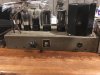
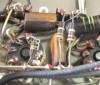
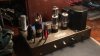
So yesterday I picked up two old tube amps. One is an Altec 324A which is pretty gutted, granted, the schematic is readily available. I also got an RCA MI-9335 in the deal, which is much more complete, despite looking like a rats nest underneath. I was hoping someone may have a schematic for the RCA, or some direction for me, as I can't seem to locate one anywhere online.

With that said, maybe this thing isn't even worth trying to bring back - pictures are below. Worst case, I could just turn both of these amps into parts.

Note: the two 5U4GB's are just sitting there as the guy I got these from just threw them on as an extra (didn't have any 6L6's on hand at the time)
52231209923__F48DDD3A-63EB-412F-944F-92416F866704.JPG 52230333089__980B48E8-2B32-4412-AB6F-9C24C9103187.JPG
 
Last edited:
Register to hide this ad
I rebuilt an old RCA PA/theater amp a while ago,,, took some time to find a readable schematic, but I finally got it rebuilt( there's a thread on here some place),,, Its a pretty cool amp running 6146A outputs and OC3 screen regulators,,, It was a in a lot worse shape than yours,,,
Good luck with it,,,
 
If you can't find the schematic then it can still be an interesting project assuming the transformers are good. I would suggest testing the transformers then proceeding on the basis of intended use. There are plenty of photos of this amp online with underneath shots that might help to guide you. So, if you plan to use this as a mono amp, for example as a guitar amp, then just rebuild based on a 6L6 amp circuit that interests you. Others here could help with circuit suggestions. If you wanted a stereo set up, then it might be easier to look for a second unit that is intact and use that to rewire this one so you have identical original wired units - or rewire them both for any improvements.
 
Also,, I forgot to mention,,, my amp has a couple mic input/stages, a phono stage, and a line stage that eliminated the pre amp, tone and volume controls... Yours looks to be a power amp with just a volume control, so you may be able to find an integrated amp schematic that uses the same power supply/output stages as yours... look for something that uses the same tubes... The radiomuseum site has chassis pics...
 
knockbill & Tinkerbelle - thanks so much for the feedback and advice. I think I'll just have to work on it with the intent to use it as a mono amp, possibly modified to be integrated? (Though I'll feel a bit guilty if I go changing it around).

knockbill - do you happen to have any info on either of the transformers? 901041-1 (Audio) and M 142318-1 (Power). Not sure if either of these appeared in yours. I've spent quite a bit of time looking around and can't seem to dig anything up.
 
No, my tx are different... I don't have the matching tx for the mic inputs,,, so I made one of them into a guitar stage...
Pull the tubes bring it up slowly on a DBT and variac, and check PT voltages,,, use the Turns Ratio formula to check the OPT... I'd try to match the tube socket wiring with an RCA tube manual... you may be able to put the proper tubes in place, unless the chassis is marked...

I like these "unknown" projects,,, you can learn a lot by trying to piece them back together... I have a little 6V6SE amp on the bench right now, that was built as part of home made test equipment... The box was full of tx, chokes, jacks, pots etc, so I had to drag it home!! Put the proper value volume pot and OPT in it yesterday, and it sounds better than it should... Experimenting with FB now, just for the exercise...

Have fun...
 
That's a movie theatre amp. Originally it had filter networks to shape the frequency response for film reproduction.

You should be able to turn up a schemaric and specs by pouring though online resources, altec service company published a document in the 50s for their techs which has most RCA, WE and Altec theatre amps in it, I downloaded it once but can't find it now. Of course the actual RCA documents would be better.

The transformers should be good for 50-10kHz, a bit broader if you're lucky and remove the filter network.

If this were mine I would treat it as a restoration project.. It's a bit of a basket case and you really only have bones left, but I've seen worse rebuilt, and how much 60-70 year old actual movie theatre equipment still floats around? Half the "theatre" amps you see out there are actually PA amps or 16mm focused equipment, while this is the genuine article, designed for reproducing the sound track of 35mm films.

Old pre-70s movies were mixed in mono, and had the highs rolled off above 8khz according to a standard frequency response curve. If you're an old movie fan, an amplifier like this one into some horn speakers will give you a window to another time. I enjoy classic and modern movies though my RCA tube theatre amps and klipsch horn speakers, and while not strictly hi-fi, by today's definition, it reproduces old movie sound how it was meant to be heard, and is a special experience which modern equipment cannot really touch. If I had more to invest I would definitely switch to altec or rca horns and drivers.
 
Last edited:
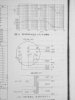
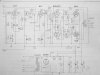
About a year and a half later and I'm finally getting a real handle on this project. Managed to dig up a photo of a schematic from a Japanese site, along with a layout of the transformers. Old, low quality photo, but everything is readable. I should be ready to try firing mine up by next week.

The one part I can't seem to figure out is the ceramic capacitor that comes off of the 6L6 plates (pin 3). It attaches to a 470ohm resistor, which goes to ground. Any thoughts on this? Here's a photo of this from another 9335:
Screen Shot 2018-12-06 at 12.17.09 PM.png
 

Attachments

  • RCA_003.jpg
    RCA_003.jpg
    46.3 KB · Views: 60
  • RCA_004.jpg
    RCA_004.jpg
    227 KB · Views: 62
That's a mica capacitor, and it's in series with a resistor. RCA put them there to stabilize the amplifier against high frequency oscillation, there should be one from each plate to ground, or maybe to the center tap of the OPT. Google mica domino capacitor, and you will find out how to decode the value.

I've found that network to be the limiting factor in high frequency response of old RCA amps, so you may want to play with it a bit. I also suggest getting an actual RCA schematic somehow, the redrawn ones can be full of errors (like omitting that network for example)
 
I find it pleasing that you didn't pull it apart in the first 5 mins. I enjoy the detective work that can be needed with some vintage amps, especially where that can help others in years to come.

It can be quite easy to modify a similar schematic to show what is actually in your amp. One option is to use a large A3 printer, 'white out' , a pen, and a scanner. Another option is to use MS Paint. A sketch is just as good as using a schematic application. Extracting the schematic from the actual parts is a good learning curve, and can require measuring part values, including transformer details.

I reckon that is all a worthwhile effort, even if you end up parting the amp, and forum posts like this allow amp details to become public and live on for others use.

And if you get it working, then a schematic makes it a lot easier for others to provide comment and advise.
 
Back
Top Bottom