• The move to the new server is done. There are some software and database maintenance updates in process. This has us passing the hat around to help out. We appreciate any donations. Seriously, even a dollar helps. The payment page may be found here - https://www.audiokarma.org/support.html

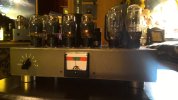
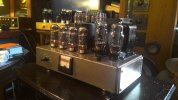
RCA MI-9377 amps are here.

The value of C1 and C2 affect the low frequency roll-off corner frequency - increasing C1 and C2 would extend the low frequency bandwidth.

However, the amp has global negative feedback, and changing the frequency response 'within the loop', may cause adverse affects, and may or may not be masked by the act of including feedback.
 
I've rarely found that changing those cap values actually does anything meaningful for the low end response unless they are just absurdly small to begin with, or the feedback level is very low. They do cause roll off, but the NFB compensates by winding up the gain. Really small caps and very low feedback levels can only compensate to a point though. You *may* get an improvement in distortion measurements at low frequencies since the NFB doesn't drop to compensate for the loss in the caps but thats not a guarantee.

0.1uF into a 100K load is a -3db point of 16hz though so I don't think there is much to be had there.
 
Posted on a different thread about these 6L6 tubes, didn't want to hijack the other thread but these are them.

Made in German they all test good on my B & K which has been calibrated, but on my maxi matcher they test exactly as the seller claimed, at the bottom of the range. Which is ok by me as I usually run my amps at the bottom of the range to make the tubes last longer, and I can't hear a difference in all my amps.

View attachment 3715420


View attachment 3715422
Just a heads up, have spent a few days with the RCA amps one loaded with these what I will call b stocks, and the other amp loaded with a quad of A stock matched from a reputable tube supplier, and in the end, I can't hear a difference. So just to give my opinion, these were a good deal if they last an equal length of time as they sold quads for less than a matched pair.
 
I dug out some brass metal for trimming this amp out with. will work with the machinist tomorrow to get what I am looking for. Then I have to spend some time buffing it out to get a shine. I took a little bit of scotch pad to the end their it started to get a shine.

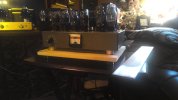
I also made the wood platforms for them as well.

WIN_20260421_18_28_32_Pro.jpg
 
I managed to get one amps brass bookends on. It is amazing how everything takes so much time. Had to cut the metal, didn't like the straight edges so had to machine a bullnose on the ends. Then it is layout the hole locations, drill the holes, countersink the heads, then I could install them. I think they look better in real life, but anyhow they plugged the big hole that was there, which was where the closed nipple was when used on a commercial rack.

They are on both ends.

I have those two small scre3w holes on the front, just going to tap them and put a screw in them. Anyhow I still have the other one to finish.


WIN_20260512_18_28_05_Pro.jpg
 
Been using these for a number of months now but now one of them has developed a problem. A sporadic static noise and it affects the gas regulators as they flicker on and off to the noise, which makes me think power supply issue. Maybe a loose connection or bad solder. I didn't see anything right odd but as I am busy I will have to get back to them next week. Really sucks as they both were working so well. I like replacing old components no problem, but trouble shooting is a bit more tough.
 
Cruddy carbon resistor maybe. May not be feeding the reg though, one between the socket and power supply will do this too.
 
Cruddy carbon resistor maybe. May not be feeding the reg though, one between the socket and power supply will do this too.
Will check into that, in fact I should go through and check all those old resistors, these are pretty old amps.
 
No guarantee but any time I've had a noisy resistor it was also off value by a fair bit. May help find it, if nothing else it will get rid of off value parts.
 
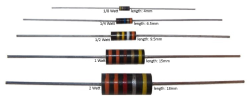
A tough part for me is determining what wattage resistors to go with. I will just have to guess at it using the size of the old ones to determine which wattage to use. I have 1/2 watt, 1 watt, 2 watt, and 5 watt resistors to pick from.
 
From the few resistors I have removed, and measuring them they don't seem much off. Unless there is an odd ball one that has failed, I am starting to think it isn't a resistor issue. Think I will start off with what I should have checked first, test the tubes.
 
i usually just test them in circuit. Noisy resistors will be ones carrying current, generally plate or cathode resistors. Noisy tubes can happen too of course, easy swap to the other amp to see if the problem moves. Don't usually have the tester tell you whats noisy though, I've always had to do that by swapping them to see if the problem goes away or moves.
 
Changed out a few and everyone had barely drifted so started looking for some other issue. I tested all the tubes everyone tested as NOS, other than the 6SL7 which was near the questionable range. I swapped that out, but I think I found the issue, as the OPT on these has a bunch of metal post that stick out where you land the wires, and the factory had run the wires in-between those post to organize them. One of them looks like the metal edge had penetrated the insolation just barely. I think it must have been jumping an arc thru that break, as I moved the wire off that post and put a wrap of tape on it, and put the amp in service, quiet as a mouse. I am thinking of holding off changing out any more resistors as I think they are within tolerance.

I did relocate the thermistor by adding a turret and mounted it so it is better located and secured.
 
Back
Top Bottom