• The move to the new server is done. There are some software and database maintenance updates in process. This has us passing the hat around to help out. We appreciate any donations. Seriously, even a dollar helps. The payment page may be found here - https://www.audiokarma.org/support.html

RCA to 5-Pin DIN Wiring Question

reverend13

Active Member
Greetings everyone,

I have what I hope is a basic tonearm DIN wiring question. I don’t have an RCA cable so I’m assembling my own. I have the diagram as to what goes where.

My question is where does the braided shielding go? I’m running a separate ground wire, so should the braid somehow get connected and soldered to the ground wire or DIN post as well? Connecting to the post might not be an option given the small real estate to work with on the DIN connector.

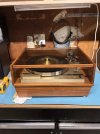
Appreciate anyone’s guidance on this. Thanks!IMG_3509.jpeg
 
Register to hide this ad
Shield usually gets connected to ground at the source end, and is left floating at the other end.
Thanks. For clarification, does this mean the twisted braid gets soldered to the DIN ground connection, and the twisted braid on the other side (RCA plug side) is left floating? I'm afraid I already connected the twisted braid on the other end to the RCA plug.
 
Yes, gotta remove at the RCA. Just cut it. If you connect both ends you'll create a ground loop. The end at the 5 pin gets connected to the same pin as the ground.
 
Yes, gotta remove at the RCA. Just cut it. If you connect both ends you'll create a ground loop. The end at the 5 pin gets connected to the same pin as the ground.
Cool. Thanks as I discovered a diagram that still had the twisted braid shielded at the RCA connector but not the DIN pin (only the separate ground cable was connected at this DIN pin). I’ll clip the braid at the RCA connector. Thanks again.
 
Cool. Thanks as I discovered a diagram that still had the twisted braid shielded at the RCA connector but not the DIN pin (only the separate ground cable was connected at this DIN pin). I’ll clip the braid at the RCA connector. Thanks again.
Interesting. No harm in trying it as you have it. Maybe the behavior is different?
 
If the cartridge has a metal chassis you definitely want to tie the shield of the cable to the center pin of the Din connector to start with with the shieled connected to the arm, head shell or to the cartridge itself. . I did with my SME arm when mounted to a wooden board on my Thorens TT's. If board had been made of metal that might not have been necessary . Yes the arm had a ground wire connected to the TT chassis and a ground wire from the pre-amp to a copper 8 ft lightning rod out doors.
 
I guess I should have said why I did all the grounding. When I lived in the lower valley near Ysleta Texas if I stood on my roof I could see the Mexican AM tower of XELO. It was 50,000 watts in the day time but over 100,000 + watts as an unlimited clear channel broadcaster at night. If you had a great receiver you could easily pick the station up in Durango Mexico to the south and in Cheyenne, WYO. to the north. Amarillo Texas and I imagine in Nebraska to. For sure in Dallas and San Antonio. So only being two and half miles from that antennae you needed everything grounded at night or it would be as loud coming thru your phono input as the signal from the cartridge it seemed. So you also kept your unused low level inputs shorted to ground to keep the signal from getting inside the chassis of your pre-amp or integrated amp. There were rumors of two Radio Station engineers being fried by the tower. I know that one was true. Some times when we had a rare case of fog at night you could see the tower glow.

A side note. One reason I stream my local Fm stations rather than use my tuners anymore is the 12+ Mexican FM stations transmitters are so dirty with improperly tuned antennae that that the spurious signals they send out can really interfere with your reception unless you use a highly direcional antennae to point at the stations you are interested in. Fortunately in my case the rear small lobe of my FM antennae is pointed directly at the local station while the main lobe is pointed KRWG tower west of Las Cruces high up on the mesa 60 miles away with all the Juarez Mexico stations being to the south perpendicular to the antennae where the rejection rate is the highest.
 
Last edited:
@loudnoises You were correct about the grounding, of course. The wiring diagram I was using had wiring connected to all 5 DIN pins, but I wasn’t getting any sound. I found another wiring diagram only connected to 2 (ground), 3 (right +), and 5 (left +). Works and no hum!

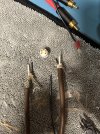
IMG_3530.jpeg

 
Excellent. That's how my old garrard is wired, 3 wire stereo. Ground gets combined at the input of most phono preamps anyways.
 
@loudnoises You were correct about the grounding, of course. The wiring diagram I was using had wiring connected to all 5 DIN pins, but I wasn’t getting any sound. I found another wiring diagram only connected to 2 (ground), 3 (right +), and 5 (left +). Works and no hum!

View attachment 3252319


I am also using a Jelco arm on an Empire, but a 398. I was concerned as I have seen the 5 pin and 3 pin diagrams.

I checked a few 5 PIN cables as well as a Jelco 950 tonearm and it uses all 5 pins not three.

The wiring is, looking at the female end of the 5 PIN connector on the cable (Hard to format this, had to add asterisk for spaces.):


******************* GND

L (-) **************************** R(-)

L(+) **************************** R(+)


Plug in the cable and check to the cart leads and it is correct as to Blue, Red, White and Green as follows:


******************* GND --> Tonearm body

L (-) --> B **************************** R(-) --> G

L(+) --> W **************************** R(+) --> R


EDIT: I just re-read above and my wiring matches the Van Del Hul wiring as they are showing the solder side of the female connector.

I have a lot of Mogami and Beldin shielded cable that I want to use. For regular RCAs or RCA to Balances, I always float one end.

I will avoid the Quad cable for the toenarm cable and ground the shield at the RCA and float at the DIN. This follows the Van De Hul diagram and there will be more room at the RCAs than the 5 PIN DIN to make the connection.
 
Last edited:
When I used 4 conductor with shield miniature cable to jump from the DIN connector to the main phono cable (RCA jacks or a regular interconnect to go to the preamp), I used the shield connected to the DIN center pin as a strain relief. Short section of braid soldered in place and longer Red, Green, Blue, White 34Ga wire connected to the other pins. This keeps from pulling the 34Ga loose from the pin as the braid is shorter and much stronger. The RCA plug end was not connected.
 
Back
Top Bottom