• The move to the new server is done. There are some software and database maintenance updates in process. This has us passing the hat around to help out. We appreciate any donations. Seriously, even a dollar helps. The payment page may be found here - https://www.audiokarma.org/support.html

RCA Victor Tapes Amazing!

ShaneR2R

My Teac A2300S, (Avatar)
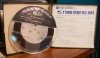
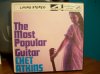
I just purchased a few RCA Victor Pre-recorded Reel to Reel tapes and I can't believe the sound quality. The one I like the best is Chet Atkins recorded at 7 1/2 ips. This tape is amazing and sounds unbelievable. I believe RCA Victor duplicated at real time prior to about 1966? The difference is hard to describe really. So my vote, so far, goes to RCA Victor and their reel to reel tapes made between 1954 and up to the mid 60's. I also just ordered Duane Eddy on RCA reel tape and await it's arrival. Can't wait to hear it.
 

Attachments

  • RCA Victor Tape 002 (640x480).jpg
    RCA Victor Tape 002 (640x480).jpg
    31.7 KB · Views: 98
  • RCA Victor Tape 004 (640x376).jpg
    RCA Victor Tape 004 (640x376).jpg
    31.1 KB · Views: 105
Register to hide this ad
I'd like to add that the tapes are in mint condition and play awesome! No drop-outs or loss of highs. The Chet Atkins reel is from 1961 and sounds like it was recorded yesterday blows LP and CD out of the water. I am also playing a pre-recorded tape produced by Concertapes entitled Let's Swing sounds just as good as the RCA Victors. I would imagine this reel dates from the early 60's as well?
 
Earlier reel to reel tapes were the way to go in the 60's--- no pops and clicks like a record.
I have several prerecorded r2r tapes and they sound GREAT!
 
The Columbia 7 1/2 isp tapes from the same era are pretty good too......just avoid any (or do not pay alot of $$ for) the Columbia Record Club 3 3/4 isps from the late 70s early 80s. I have Elvis Costello's Armed Forces and it is has very bad hiss.
 
The Columbia 7 1/2 isp tapes from the same era are pretty good too......just avoid any (or do not pay alot of $$ for) the Columbia Record Club 3 3/4 isps from the late 70s early 80s. I have Elvis Costello's Armed Forces and it is has very bad hiss.

Thanks for the tip! I only purchase tapes recorded at 7 1/2 ips and most are from the 50's and early to mid 60's. I am not a big fan of some of the music offered on these tapes, but the sound quality is just amazing. I'm 37 so I like newer stuff but I am starting to dig some of this music ha ha! So far I have collected tapes (7 1/2 ips) from the RCA, London, Capital, Reprise, and Concertape labels. All sound superb. Never heard Dean Martin sound so good. Again not the biggest fan of this stuff but it's pretty damn cool!
 
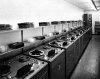
I found a photo of the Ampex 3200 duplicator Kent mentioned. Neat looking machine. The web site called this the 3200 duplicator line.
 

Attachments

  • 3200line.jpg
    3200line.jpg
    31.7 KB · Views: 98
This is a blank RCA tape from approximately the same era, if I am not mistaken.


RCAV10A-18tape.jpg


I have a pretty good collection of old pre-recorded RTR tapes. Some of them are quite nice sounding.


TheyreplayingoursongRTRbox.jpg
 
Wonder what "Stereo-orthophonic" is supposed to mean? Stereo sound in your mouth?

According to the internet, "ortho" means straight, right, or proper. Right-sounding, I guess? RCA/Victor first used Orthophonic to describe their folded-horn Victrolas in the '20s, so I guess they didn't intend the "straight" meaning...

For some reason, RCA used stereo-orthophonic on its 2-track tapes but Living Stereo on its 4 tracks, which were introduced, I think, a little later than their stereo records, which were also, of course, Living Stereo. Guess the focus groups liked that term better.

As good as the 4 tracks are, the 2 tracks are even better. Shane, do us both a favor and don't ever buy any of the RCA 2 tracks. You'll save money, and I won't have one more person bidding against me... :D
 
According to the internet, "ortho" means straight, right, or proper. Right-sounding, I guess? RCA/Victor first used Orthophonic to describe their folded-horn Victrolas in the '20s, so I guess they didn't intend the "straight" meaning...

For some reason, RCA used stereo-orthophonic on its 2-track tapes but Living Stereo on its 4 tracks, which were introduced, I think, a little later than their stereo records, which were also, of course, Living Stereo. Guess the focus groups liked that term better.

As good as the 4 tracks are, the 2 tracks are even better. Shane, do us both a favor and don't ever buy any of the RCA 2 tracks. You'll save money, and I won't have one more person bidding against me... :D

OK Matt I'll keep that in mind when bidding on tapes LOL. I do have a Wollensak 1580 stereo deck that plays both 2 and 4 track tapes. Well now that gives me an idea for future bidding Ha Ha! But I'll keep using the Teac A2300S and that means I won't be bidding on 2 track tapes. For now!
 
"The life of this tape is virtually unlimited if subject to proper care and storage."

Happily they weren't kidding. I'll take this stuff any day over the garbage compressed crap they are putting out today!
 
And this tape while superb, was not duplicated at real time, but at 4X speed on Ampex 3200 duplicators.

Any idea how and where the 2-tracks were manufactured? I've wondered if they were dubbed directly from the stereo masters that were used to make the LPs or were the result of different mixes. Seems like you wouldn't necessarily be concerned about the same things in mixing for a tape deck (needle jumping out of the groove on loud passages, etc.) and might EQ it a little differently. There seems to be plenty of information out there about how Living Stereo LPs were made, but very little on the tapes.
 
"The life of this tape is virtually unlimited if subject to proper care and storage."

Happily they weren't kidding. I'll take this stuff any day over the garbage compressed crap they are putting out today!

Indeed they weren't kidding. The only problem I've had with any of these tapes is getting one with a few seconds missing at the beginning of some and maybe a splice in the middle of a couple of others. Honestly, why would you spend the 1950s equivalent of well over a hundred dollars on a single tape and then not bother to put some leader on or splice a break at the beginning if not doing so involved losing music? Other than that, the vast majority of mine seem to be in more or less perfect condition.
 
I put leader tape on all of my pre-recorded reels. I'd rather not touch the tape, and the leader is the best protection. So far I haven't run into any problems with my tapes as far as splices, etc. I also agree that these RCA tapes sound amazing and they should last a very long time. Well **** they already have LOL.
 
Any idea how and where the 2-tracks were manufactured? I've wondered if they were dubbed directly from the stereo masters that were used to make the LPs or were the result of different mixes. Seems like you wouldn't necessarily be concerned about the same things in mixing for a tape deck (needle jumping out of the groove on loud passages, etc.) and might EQ it a little differently. There seems to be plenty of information out there about how Living Stereo LPs were made, but very little on the tapes.

The where was either at RCA facilities in Indianapolis or Camden, NJ.
 
Back
Top Bottom