

You are using an out of date browser. It may not display this or other websites correctly.
You should upgrade or use an alternative browser.
You should upgrade or use an alternative browser.
Re-doping a silk dome tweeter?
- Thread starter fiddlefye
- Start date

Old thread, but cool to know. I don't know why I kept seeing all sorts of references to silk. They are actually still a weave rather than solid, just polyester rather than silk. The tweeters and every other bit of the DM-14s are still working great. The "80hz" listed as the bottom end cut off in the spec sheet is completely wrong, of course. I guess they go down more to around 30hz or so from what I hear. Certainly not cut off at 80.
Last edited:

audiomagnate
Addicted Member
Listen to enaldo, he's the resident expert on this, and he's done the testing to prove it works. It works on any fabric tweeter. Most of the older ones used plain old cambric the black stuff they put on the bottom of upholstered chairs. You don't want a dome that's not moving any air. It did wonders for my leaky woven polyester domes used in the first gen B&W 801 Series 80's.
The only issue I found, is that no one knows, including himself, what he actually used to do the re-coating. Best anyone could say was it is some kind of pva adhesive. I tried searching for his keywords from his other thread and came back with nothing use-able. Edit: I think he used a crosslinked pva, not pva by itself.
I bought a new set of Braun tweeters and the coating is fairly thick and sticky to the touch like it doesn't fully harden. It makes sense that the softer the coating the more damping ability the dome has. The tweeter I haven't touched, all I can say is the coating is black and stopped being sticky about 15 years ago.
The spar varnish I tried, the sound improved quite a bit over the worn out coating but it was fatiguing listening for long periods and it seemed like certain frequencies amplified off the varnish coated dome rather harshly.
I did another one where I used thinned pH-neutral pva glue and did 10 coats, but I haven't hooked it up to see how it sounds.
That is about as far as I got. I know people have had success using pva, but its not what was originally applied to the domes. At least not ADS, Braun or Visonik domes. (mostly all were made by Braun)
I bought a new set of Braun tweeters and the coating is fairly thick and sticky to the touch like it doesn't fully harden. It makes sense that the softer the coating the more damping ability the dome has. The tweeter I haven't touched, all I can say is the coating is black and stopped being sticky about 15 years ago.
The spar varnish I tried, the sound improved quite a bit over the worn out coating but it was fatiguing listening for long periods and it seemed like certain frequencies amplified off the varnish coated dome rather harshly.
I did another one where I used thinned pH-neutral pva glue and did 10 coats, but I haven't hooked it up to see how it sounds.
That is about as far as I got. I know people have had success using pva, but its not what was originally applied to the domes. At least not ADS, Braun or Visonik domes. (mostly all were made by Braun)
Last edited:
audiomagnate
Addicted Member
I know Audax and several other firms used butyl impregnated cambric. I was buying them by the hundreds back in the 70's and the US rep, Serge I think, was quite knowledgeable about the product.
sum of sand
Active Member
If it has a flowery aromatic type smell
Remains sticky
Any chance it could be a coating of standard damping medium
Damar varnish
Damar remains tacky especially over non porous materials
And you can buy it already in spray form for light even coats
Remains sticky
Any chance it could be a coating of standard damping medium
Damar varnish
Damar remains tacky especially over non porous materials
And you can buy it already in spray form for light even coats
I think the rebuilt ADS tweeters I got used Damar varnish. I can pick it up a little at a local arts store in town.
Many have been saying butyl rubber. I'm not sure if that is what mine were originally coated with, but the original coating that came off was black.
I've been working on a butyl rubber coating. Best I can do in the garage, but its basically butyl rubber added to a neoprene based rubber cement. I was going to go all butyl rubber but the grade I used is from the butyl mastic tape so its very soft rubber basically like dyno-mat pads.
I'm hoping the butyl being the better sound damping material will soften out the neoprene and the cement portion will give more durability to the butyl? I really don't know if any of it will work though.
Many have been saying butyl rubber. I'm not sure if that is what mine were originally coated with, but the original coating that came off was black.
I've been working on a butyl rubber coating. Best I can do in the garage, but its basically butyl rubber added to a neoprene based rubber cement. I was going to go all butyl rubber but the grade I used is from the butyl mastic tape so its very soft rubber basically like dyno-mat pads.
I'm hoping the butyl being the better sound damping material will soften out the neoprene and the cement portion will give more durability to the butyl? I really don't know if any of it will work though.

DEANO222
Active Member
Love this thread, I have a Dayton silk dome tweeter which has lost the coating. I was thinking of using speaker surround glue because it stays tacky. I have cleaned it and removed the old surface . I've looked up vinyl plastizer and found a product. I'm in agreeance with the mass loading , but what would you use to thin it down. About to try water with the speaker surround glue . Any thoughts ?
DEANO222
Active Member
I 'll look it up and see if it's available in Australia . Cheers.If I had tweeters with a deposition failure issue, I'd try diluted Modge Podge (Puzzle Coat), an acrylic product. There might be a chance of removal if things went wrong.

westend
Audiopile
PM on the way.I 'll look it up and see if it's available in Australia . Cheers.
audiomagnate
Addicted Member
Member enaldo has already done solid work on this as referenced above. The results were nothing short of amazing, as proved by his before and after measurements. Phthalates (say it three times fast!) i.e. "substances added to plastics to increase their flexibility, transparency, durability, and longevity" are the solution. https://en.wikipedia.org/wiki/Phthalate I know silk isn't a plastic, but neither is the fabric enaldo used it on.
Here's 25 ml for $16.50 http://www.sigmaaldrich.com/catalog/product/aldrich/524980?lang=en®ion=US
Here's 25 ml for $16.50 http://www.sigmaaldrich.com/catalog/product/aldrich/524980?lang=en®ion=US
Last edited:

I used Shellac on the Snell E/II Tonegan/Foster tweeters with excellent results
https://audiokarma.org/forums/index...foster-tweeters-model-e-j-k-gens-i-ii.696046/
I also cited a few other helpful threads:
http://audiokarma.org/forums/index.php?threads/snell-type-j-ii-wheres-the-treble.305340/
http://audiokarma.org/forums/index.php?threads/re-doping-a-silk-dome-tweeter.588100/
http://audiokarma.org/forums/index.php?threads/whats-this-on-my-tweeter-snell-type-j-ii.588849/
http://www.audiokarma.org/forums/in...ng-audax-dome-tweeters-w-measurements.559836/
http://www.audiokarma.org/forums/index.php?threads/what-is-wrong-with-these-kefs.440138/
https://audiokarma.org/forums/index...foster-tweeters-model-e-j-k-gens-i-ii.696046/
I also cited a few other helpful threads:
http://audiokarma.org/forums/index.php?threads/snell-type-j-ii-wheres-the-treble.305340/
http://audiokarma.org/forums/index.php?threads/re-doping-a-silk-dome-tweeter.588100/
http://audiokarma.org/forums/index.php?threads/whats-this-on-my-tweeter-snell-type-j-ii.588849/
http://www.audiokarma.org/forums/in...ng-audax-dome-tweeters-w-measurements.559836/
http://www.audiokarma.org/forums/index.php?threads/what-is-wrong-with-these-kefs.440138/
Last edited:

Oldsansui441
Super Member
Hi, an old thread l know but just wanted to add that l had the same problem with my DM-14's. Admittedly l may have inadvertently removed some of the old doping on the woven polyester domes when l was cleaning the old crumbling foam off that was stuck to them (the foam had made a real mess).
Apparently the tweeters originally had a foam surround that adhered to the metal frame, this must have broken down over the years and was nowhere to be seen except for what had fallen onto the domes.
I tested these speakers for the first time yesterday and first off they sounded extremely dull (tweeters really lacking), then after 1-2 hours of use they somehow became a lot better. Then as l was listening one tweeter suddenly dropped in output. I swapped tweeters and confirmed one was faulty. I disassembled and inspected this tweeter, cleaned voice coil gap and voice coil but with no obvious signs of an issue. I also used an air nozzle (very lightly) to confirm the dome was holding air which it was.
Apparently it wasn't air tight enough as the only thing left that could cause the issue was this. I used tacky water based glue (same as l use on surrounds) watered down slightly, maybe 4 or 5-1 and applied one very light coating to the dome. After drying time l retested and now this tweeter works perfectly, in fact now makes the previously good sounding one slightly lacking by comparison, l will do it as well now to match them.
My reason for using the tacky glue was because l thought this will still be flexible when dry as l didn't want to alter the flexibility of the fabric dome.
Thank you to all here who brought the re-doping issue to light . BTW just in case others are curious, the DM-14's do not use ferro fluid in the tweeters.
Apparently the tweeters originally had a foam surround that adhered to the metal frame, this must have broken down over the years and was nowhere to be seen except for what had fallen onto the domes.
I tested these speakers for the first time yesterday and first off they sounded extremely dull (tweeters really lacking), then after 1-2 hours of use they somehow became a lot better. Then as l was listening one tweeter suddenly dropped in output. I swapped tweeters and confirmed one was faulty. I disassembled and inspected this tweeter, cleaned voice coil gap and voice coil but with no obvious signs of an issue. I also used an air nozzle (very lightly) to confirm the dome was holding air which it was.
Apparently it wasn't air tight enough as the only thing left that could cause the issue was this. I used tacky water based glue (same as l use on surrounds) watered down slightly, maybe 4 or 5-1 and applied one very light coating to the dome. After drying time l retested and now this tweeter works perfectly, in fact now makes the previously good sounding one slightly lacking by comparison, l will do it as well now to match them.
My reason for using the tacky glue was because l thought this will still be flexible when dry as l didn't want to alter the flexibility of the fabric dome.
Thank you to all here who brought the re-doping issue to light
. BTW just in case others are curious, the DM-14's do not use ferro fluid in the tweeters.
Last edited:

Danzilla
Active Member
Hey. When you say "tacky water based glue", what exactly are you using?? What comes to mind is something like Aleenes Turbo Tacky glue, but I think in that case they're just referring to it's adhesion and it's quicker setting time. I've read elsewhere about types of PVA that remain sticky (tacky) even after setting and was thinking that may be what you mean. I just have no idea where to find any or what to look for....
...
Apparently it wasn't air tight enough as the only thing left that could cause the issue was this. I used tacky water based glue (same as l use on surrounds) watered down slightly, maybe 4 or 5-1 and applied one very light coating to the dome. After drying time l retested and now this tweeter works perfectly, in fact now makes the previously good sounding one slightly lacking by comparison, l will do it as well now to match them.
My reason for using the tacky glue was because l thought this will still be flexible when dry as l didn't want to alter the flexibility of the fabric dome.
Thank you to all here who brought the re-doping issue to light
Last edited:
Oldsansui441
Super Member
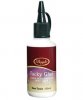

Jim Pearce
Active Member
Tolulene.Thanks! We'll have to figure out what the material content was for the stuff you used and then find something locally available with similar characteristics. I'll run some tests on the tweeters in my B&Ws and see if they're getting "leaky", but having a solution on hand if that proves to be the case is a good idea methinks.
And liquefied butyl rubber from the auction site, Vintage AR has it.
You may want to think long and hard about doing this and probably not wanting to.
My suggestion is not to, but...
Jim Pearce
Active Member
Hey. When you say "tacky water based glue", what exactly are you using?? What comes to mind is something like Aleenes Turbo Tacky glue, but I think in that case they're just referring to it's adhesion and it's quicker setting time. I've read elsewhere about types of PVA that remain sticky (tacky) even after setting and was thinking that may be what you mean. I just have no idea where to find any or what to look for.
See my responses to this idea.
Seriously.

Rehashing an old thread because it's relevant.
Measured a set of Castle Edens with cracked/missing doping compound on the tweeters. Please ignore the wobbly response graph. Before and After measurements were taken in an untreated room using the same technique. The purpose is not to show the Eden's overall response, but to illustrate the truncated top-end. Note how drastically the tweeter plateaus past the crossover point.

Re-measured after applying a water-based doping compound that dries using UV light. High frequencies are restored.
If you have cracked tweeter diaphragms, consider this repair.

Measured a set of Castle Edens with cracked/missing doping compound on the tweeters. Please ignore the wobbly response graph. Before and After measurements were taken in an untreated room using the same technique. The purpose is not to show the Eden's overall response, but to illustrate the truncated top-end. Note how drastically the tweeter plateaus past the crossover point.
Re-measured after applying a water-based doping compound that dries using UV light. High frequencies are restored.
If you have cracked tweeter diaphragms, consider this repair.