• The move to the new server is done. There are some software and database maintenance updates in process. This has us passing the hat around to help out. We appreciate any donations. Seriously, even a dollar helps. The payment page may be found here - https://www.audiokarma.org/support.html

Recapping AR-3a and AR-2x, What capacitors to use?

Spikemclbiz

New Member
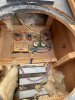
OK, very new to this, I have a pair of AR-3a speakers and a pair of AR-2x speakers. I see that both use the same big fat capacitor (see pic). Can I just replace these with regular orange Polypropylene Film Capacitors? or should I use a step up of some type?

thanks
 

Attachments

  • IMG_3248.jpeg
    IMG_3248.jpeg
    108.5 KB · Views: 88
Register to hide this ad
I use 5% Dayton (film) caps from Parts Express but that's just me. (No affiliation. Just a satisfied customer) IMHO those are a safe choice and work really well for me.

I don't bother with the 1% caps. I feel it is wasted money, but again that's just me.

Others will chime in with their favorite caps or their thoughts.
 
Also modern caps have much higher voltage ratings. Don’t worry about that. The uf spec is what you want to match.
Sometimes it takes two caps connected together to match a specific uf.

Glenn
 
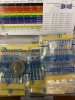
OK so wait, I read in some write up on AR3s that i cant find right now that I also need to add a resistor in serial to the new caps. I know nothing about resistors and bought this kit. see attachment but these seem small, do I have the right types?
 

Attachments

  • IMG_3380.jpeg
    IMG_3380.jpeg
    145.1 KB · Views: 54
OK so wait, I read in some write up on AR3s that i cant find right now that I also need to add a resistor in serial to the new caps. I know nothing about resistors and bought this kit. see attachment but these seem small, do I have the right types?
No, that’s only if you bypass the pots. If you’re keeping the pots, then it’s a straight forward cap swap.
 
I just finished my recap and restoration on my AR 3a's and trying to get the sound adjusted to my liking. I cleaned the pots up real well and greased them with dielectric grease so they work smoothly. I also replaced the tweeters with rebuilt original tweeters. My questions are: do caps need time to break in, and what difference in sound would the resistors suggested for the caps make? Everyone says not to add the resistors like the CSP restoration manual recommends so I didn't, but am just so curious what the resistors would make them sound like?

The tweeters are kind of quiet but when I crank them up on the potentiometer dial they get too bright and shiny sounding. Looking for advice or comments on any adjustments for these AR 3a's to boost their sound and clarity? Hopefully it's just the break in period for the caps and getting the right setting on the pots. 4BE8B98C-3E35-40CA-9679-D7A1468C8763.jpeg
 

Attachments

  • 64CFD8F9-D925-4523-92AC-83AA345A12E1.jpeg
    64CFD8F9-D925-4523-92AC-83AA345A12E1.jpeg
    114.8 KB · Views: 32
  • F4290FC6-E1F9-4791-945E-ED8F3C6DD7FC.jpeg
    F4290FC6-E1F9-4791-945E-ED8F3C6DD7FC.jpeg
    160.3 KB · Views: 35
The latest consensus about the added resistors is that although not having them makes the response a bit brighter than original, the difference is easily compensated for with the level controls.

Whether caps "break in" is a never-ending debate with no consensus in sight. Play with the level controls until you land somewhere you like.
 
Level controls sound best (I think) turned back from full just a bit on both tweets and mids. On a scale of 1-10 turn them both back to 8 or so for starters. Take a paper towel tube and hold it up to the tweeters to hear what the output sounds like. They really don't carry that much - just the real high sounds like symbols, high hat, etc. The midrange handles a much broader frequency.

I restored a set or 3s for my friend and we eneded up needing to get the tweets and mids rebuilt. At $60 each it adds up but man was it worth it.
 
Level controls sound best (I think) turned back from full just a bit on both tweets and mids. On a scale of 1-10 turn them both back to 8 or so for starters. Take a paper towel tube and hold it up to the tweeters to hear what the output sounds like. They really don't carry that much - just the real high sounds like symbols, high hat, etc. The midrange handles a much broader frequency.

I restored a set or 3s for my friend and we eneded up needing to get the tweets and mids rebuilt. At $60 each it adds up but man was it worth it.
Thanks for the input everyone! I wonder what rebuilt mids would sound like? I have to turn the mids down a lot because they are much louder than the tweeters, they definitely don't seem to be suffering from low output!

Another can of worms to open on these AR 3a's is the old potentiometers reducing sound quality. I did clean them very well, but wonder what new ones would do for sound? They are really expensive though, ebay has some new aftermarket versions but also kind of pricey and not sure of quality.
 
Tweets will never be loud. You only hear them when they're not there. Most of the music is in the midrange so its going to play louder. Whole lotta caps going on in there. Dble check your wiring against the schematic.
Caps will break in over time (open up a bit) but its subjective and subtle - not what you describe.
 
Tweets will never be loud. You only hear them when they're not there. Most of the music is in the midrange so its going to play louder. Whole lotta caps going on in there. Dble check your wiring against the schematic.
Caps will break in over time (open up a bit) but its subjective and subtle - not what you describe.
Thanks Bill for the input. I triple checked the wiring, I even verified the capacitance of my bundles after soldering them together to make sure I got the 150/50/6 cap readings within spec before installing them. I think I may have solved my issue with a little break in time and I switched over to another source input. My Marantz 2270 receiver only plays the radio in mono right now because I haven't gotten it recalibrated yet. The speakers sound much clearer and fuller in stereo with a different source input than the mono tuner. Duh. Looking forward to fine tuning them some more and seeing what they can do!
 
Tweets will never be loud. You only hear them when they're not there. Most of the music is in the midrange so its going to play louder...
Caps will break in over time (open up a bit) but its subjective and subtle...
Right about tweeters...
I do not agree with you re. "cap break in".... what do you think is happening? The new film caps are totally passive. "Subjective and subtle" means it's just not happening!
Cheers,
Roger
 
Right about tweeters...
I do not agree with you re. "cap break in".... what do you think is happening? The new film caps are totally passive. "Subjective and subtle" means it's just not happening!
Cheers,
Roger
Some people claim to hear things that are not there. Just didn't want to kick up dust.
 
Level controls tend to be a go/no go thing. Either they're working right or they lose contact altogether and the driver makes static-y noises as it cuts in and out or goes silent. If you're not having these problems, there's no reason to replace the controls. If you do remove them for cleaning, be sure you note their orientations and put them back in the same way they come out. The mid and high controls are not oriented the same.

The tweeters mostly express themselves as a sort of "airy" quality in the sound when you're standing a few feet back from the speakers. These speakers were never designed to produce the kind of pinpoint "imaging" that a lot of modern listeners look for. They put you in the middle of the Orchestra section, compared to most modern speakers that put you on the conductor's podium.

Do capacitors "burn in" and change the sound of the speaker, or does your ear/brain acclimate? Only a spectrum analyzer (a real one, not a phone app) can tell you that.

 
Level controls tend to be a go/no go thing. Either they're working right or they lose contact altogether and the driver makes static-y noises as it cuts in and out or goes silent. If you're not having these problems, there's no reason to replace the controls. If you do remove them for cleaning, be sure you note their orientations and put them back in the same way they come out. The mid and high controls are not oriented the same.

The tweeters mostly express themselves as a sort of "airy" quality in the sound when you're standing a few feet back from the speakers. These speakers were never designed to produce the kind of pinpoint "imaging" that a lot of modern listeners look for. They put you in the middle of the Orchestra section, compared to most modern speakers that put you on the conductor's podium.

Do capacitors "burn in" and change the sound of the speaker, or does your ear/brain acclimate? Only a spectrum analyzer (a real one, not a phone app) can tell you that.
By orientation when u reinstall them, you mean the little metal piece that cuts into the wood on the mounting board. That is supposed to be the keyed reinstall. But these pots can only reassemble in one way, they are "keyed" in that sense with the little clamp holding them together. So the little cut in the wood is just to line up the factory center, but otherwise however u install it the potentiometer spins the same amount and sound is same, just not lining up on back of speaker with factory setting? I struggled with this some upon reassembling them.
 
Back
Top Bottom