• The move to the new server is done. There are some software and database maintenance updates in process. This has us passing the hat around to help out. We appreciate any donations. Seriously, even a dollar helps. The payment page may be found here - https://www.audiokarma.org/support.html

Receiver / speaker power compatibility

Bizz_Bomb

New Member
Hello...newbie here! I have what I'm hoping is a pretty basic question for you all.

I want to upgrade the sound system in my mancave. I recently bought 6 used high-end (from what I was told) speakers and am wondering if my JVC receiver will have enough power to push them!?

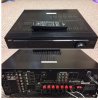
  • The receiver is a JVC Model no. - RX-7030VBK (see pic and link)
  • The in-ceiling speakers are Soundtube CM500i (50w - see pic and link)
Wondering if you sound guru's can enlighten me on whether this receiver will properly power these speakers or if they are going to require something with more wattage output. Thanks!

Receiver - http://support.jvc.com/consumer/product.jsp?modelId=MODL026947&pathId=5&page=2&archive=true

Speakers - http://www.soundtube.com/Data/Techsheets/CM500i_Tech.pdf
 

Attachments

  • JVC Specs.jpg
    JVC Specs.jpg
    68.1 KB · Views: 34
  • SoundTube Speakers.JPG
    SoundTube Speakers.JPG
    44.9 KB · Views: 43
  • JVC.jpg
    JVC.jpg
    200.3 KB · Views: 34
Register to hide this ad
Maybe, it depends on how loud you want to get. They're 8 ohm speakers so they won't damage anything.
 
Maybe, it depends on how loud you want to get. They're 8 ohm speakers so they won't damage anything.
The chances are pretty high for the volume knob to be maxed out at times depending on the crowd and beverages consumed.

Do you know anything about these Soundtubes!? I was told they were $250+ ea. new. Buddy remodeled a dentist office and they told him they could just have or throw them out...so he took them.
 
Your in-ceiling speakers are fairly inefficient, but your amp has plenty of power. I suspect the you'll be pleasantly surprised with the sound level you can achieve.

One thing I can just about guarantee that you will need is a power sub. Your speakers roll off fairly quickly in the low frequencies.

Regards,
Jerry
 
Power ratings of speakers and amps are only a very general guide so you can't really know much from looking only at that. The main thing is to know when you are overdriving your receiver, so you don't fry it or the speakers. Listen carefully for distortion if you crank it up loud. If you hear the sound breaking up or slapping sounds from the woofers, turn it down before you break something.

A powered sub will take a load off the receiver, too. Bass is the most power hungry part of the spectrum.
 
Your in-ceiling speakers are fairly inefficient, but your amp has plenty of power. I suspect the you'll be pleasantly surprised with the sound level you can achieve.

One thing I can just about guarantee that you will need is a power sub. Your speakers roll off fairly quickly in the low frequencies.

Regards,
Jerry
Thanks for the input! I do have a powered sub as well. When you say the in-ceiling speakers are "inefficient"...what exactly does that mean?
 
Thanks for the input! I do have a powered sub as well. When you say the in-ceiling speakers are "inefficient"...what exactly does that mean?

According to the specs their sensitivity rating is 86db. Efficient speakers (sound output per watt of power) are generally 92db and higher.

Thus your speakers require more than average power to reproduce sound. Fortunately, your amp is more than capable.

Regards,
Jerry
 
Thanks for the input! I do have a powered sub as well. When you say the in-ceiling speakers are "inefficient"...what exactly does that mean?

Put simply, speaker sensitivity helps indicate a speaker's efficiency at converting electrical power into acoustical power. Continuing the simple explanation, sensitivity is given as ##db/w/m, which means decibels output as measured one meter in front of the speaker with one watt of power from an amp. The higher the number, the more sensitive the speaker. This may help determine how much amplifier power a speaker needs. Other factors in play are room volume, and a speaker's impedance curve and phase angle, among many others, including an amp's behavior into a difficult load.
 
OK, slight change of plans. The JVC receiver shown above got sold on me. So, now I need to look for a different inexpensive receiver to power these Soundtube speakers.

Little background on my setup. This is all going in my garage which is basically my man cave. It is 1000sf of space / 12' ceilings. All sheetrocked and insulated. I'd like to cut (5) of the Soundtubes into my ceiling, keep my current Sony subwoofer and be able to crank up some loud tunes when we are out there. I am currently running a Sony home theater receiver with 4 small "cube" speakers and a cube center channel speaker. They are ok, but not loud enough.

I'd like to do away with the Sony receiver and cubes (not powerful enough), cut in the 5 Soundtubes and put a larger receiver on them.

So, with all of your guys' expertise...and my "stereo ignorance"...what would you all recommend for a receiver a far as brand / model / power to do what I'm looking for!? I know this is a loaded question (brands etc.)...I'm literally thinking of jumping on ebay and buying a good used powerful receiver. It's my mancave, not my home theater. I just have NO IDEA what kind of power requirements I should even be looking for to adequately push these speakers. I would like the receiver to be Bluetooth or at least Aux capable to hook a phone / ipod into etc. TIA
 
Last edited:
I assume you're looking to have an identical signal to all 5 speakers, rather than front/center/rear 5-channel surround. I am not sure if this is possible from a typical home theater receiver. Many have a '5-channel stereo' setting but I am not quite sure what that does. Perhaps someone more knowledgeable than me can chime in on that.

Aside from that, the JVC was 110 W into 8 ohms and would have been adequate (we think, although we don't know the answers to Freddymac's questions above about what you have been listening to - if anything). Anything in the 100+ wpc range should work. Note that decibels are a log scale which means it requires a LOT more watts for it to sound, for example, 'twice as loud'. Fortunately you normally aren't using anywhere near 100W at normal listening levels. It only takes a watt or two to make music. So don't get too hung up on whether the receiver is 90W or 100W or 110W. If you are comparing, look at distortion (THD), weight (a measure of the power supply), and convenience features. You'll probably want to stay over 75 wpc I would guess, to make sure you can drive all those speakers to a good level.
 
With the 6 cans you want to put on the ceiling and any AVR that lists 100 wpc you will have a very nice setup for Elevator music. AVR are chip amps that could not create 100 wpc for any length of time. The cans have 5 1/2" woofers that can't produce 50 hz. The tweeters are going to be on the harsh side. The sound field that you create, will fill the room, but it is not going to give you a realistic sound stage. You will still need a QUALITY powered SUB, not just a little Sony.with a 50 watt amp in it. I suppose that I could have sugar coated this opinion, but I don't want you to waste your time and money.
 
A powered sub will take a load off the receiver, too. Bass is the most power hungry part of the spectrum.

That depends on the crossover frequency and nature of the music. The 50/50 power distribution point is generally considered around 350Hz.

Once you get down to 100Hz and lower the average power to the bass really drops off, but of course there can be high peaks.
 
... AVR are chip amps that could not create 100 wpc for any length of time. ...


Some are, but some are also discrete. So, it is not any sort of absolute as you seem to imply.

As well, no amp playing music or movies puts out rated power for any length of time (meaning just on short peaks) simply because of the dynamic nature of music/movie. At best, a "100wpc" amp may be required to put out 10-15wpc on average, if running it at the verge of clipping.
 
Last edited:
Five is literally an odd number of speakers for non-surround playback. Fortunately, many HT receivers include a mode sometimes named "Party" to use all five for music. Refer to your manual. Unfortunately, HT receivers are usually spec'd as XXwatts FTC, while most stereo receivers are rated XXw RMS. RMS is a more rigorous test of an amp's power capability. So the numbers aren't comparable. Personally, I'd go with four of the cans, two left and two right channel, and choose a good stereo receiver.
 
You are right again, whoaru99, it will be a great sounding system that the OP is going to create with this equipment. It was a general statement on $200 AVR 5 channel units, not all.
 
Five is literally an odd number of speakers for non-surround playback. Fortunately, many HT receivers include a mode sometimes named "Party" to use all five for music. Refer to your manual. Unfortunately, HT receivers are usually spec'd as XXwatts FTC, while most stereo receivers are rated XXw RMS. RMS is a more rigorous test of an amp's power capability. So the numbers aren't comparable. Personally, I'd go with four of the cans, two left and two right channel, and choose a good stereo receiver.

FTC rating is by the continuous average power method, which is what some call the RMS power (power using a sine wave with some RMS value to arrive at average power).
 
FTC rating is by the continuous average power method, which is what some call the RMS power (power using a sine wave with some RMS value to arrive at average power).

Does this mean I had a mistaken understanding about comparability between the two specs?
 
Back
Top Bottom