• Please note that Audiokarma will be offline briefly for updates early on Monday morning, September 28th.

Replace fan QSC USA 1300

Andreas_SWE

Member
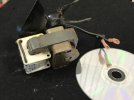
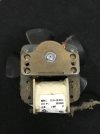
I need to replace the fan in my QSC1300 power amp.

How will it work with a computer fan from Noctua? Will the RPM be enough?
I mean this heavy duty industrial fan is like a elephant

I will offcourse need a converter from 115v to 12v. I understand that - I’m more worried over the speed so it cools of enough.
 

Attachments

  • 346C8548-2835-4411-A9EA-F2662E57B273.jpeg
    346C8548-2835-4411-A9EA-F2662E57B273.jpeg
    88.4 KB · Views: 23
  • 9CA51A5D-42B5-4E2E-B815-2BD19FDF6909.jpeg
    9CA51A5D-42B5-4E2E-B815-2BD19FDF6909.jpeg
    80.4 KB · Views: 23
Register to hide this ad
I don't know if a computer fan will be fast enough; I believe that will be difficult to determine without first knowing the specs of the original fan. However, I will note that in the service manual it says
The fan speed is controlled by R42, a 250 ohm, 15W resistor and a 55C thermostat. With the resistor in series, the fan operates at about half speed. When heat sink temperatures exceed 55C, the thermostat clicks in and bypasses the resistor, giving full voltage to the fan.
So whatever solution you choose will need to be able to handle that properly.
 
I don't know if a computer fan will be fast enough; I believe that will be difficult to determine without first knowing the specs of the original fan. However, I will note that in the service manual it says

So whatever solution you choose will need to be able to handle that properly.

Thank you very much for that information. Gold!
I never push the amplifier that hard. I haven't noticed the fan go up in speed.
I need a step down converter for the 12v computer fan so what ever the amplifier gives - it will never feed more than 12v. But I'll guess I need to take the heat in consideration.
My plan is to place computer fans in my rack so one suck in and the other pulls air out on the oppsite side to create flow between the power amps. Or place a piece of "wall" on the backside that pulls the air in from the front and pulls the hot air out of the rack. There is a bit more space on the back.

I will save the original parts for the QSC amp. I will see if I can figure out the rpm for the fan and the replacement one.
 
Is the fan dead?

You can get 115v fans in the same form factor as 100mm and 80mm PC fans. And more. Buuuut I would stick with the open fan if you could.
 
Is the fan dead?

You can get 115v fans in the same form factor as 100mm and 80mm PC fans. And more. Buuuut I would stick with the open fan if you could.
Thanks for input.
No it's not dead. But it sounds horrible! I want to reduce the dB and the rattle from a hideous industrial fan.
I have fans from Noctua, big ones, so I thought I'll grab one of those.
 
Also don't forget that computer fans run on DC, so you'll need a rectifier in addition to a step down transformer.
 
Also don't forget that computer fans run on DC, so you'll need a rectifier in addition to a step down transformer.

Thanks for input. So the amp gives AC to the oem fan?

Yeah I can see that now. I'm not so used to this but since you brought it up I can see the sign forAC on the oem fan.
 
Search 1175-10-4311 and you can find a spec sheet I'm sure.

And new fans. Maybe yours is just beat, I've never known qsc amps to be excessively loud. A good cleaning of the heatsinks and interior can also greatly improve noise and heat dissipation (meaning the fan can stay on low).
 
Search 1175-10-4311 and you can find a spec sheet I'm sure.

And new fans. Maybe yours is just beat, I've never known qsc amps to be excessively loud. A good cleaning of the heatsinks and interior can also greatly improve noise and heat dissipation (meaning the fan can stay on low).

Yes it's old. Would definitley help to clean it but still it's a ancient industrial fan so I would need to replace the bearing to something more smooth to be able to lower the noise.
I plan to put a new 12vdc computer fan and rebuild the top-plate to fit a second fan. It would be somewhat better noise-wise. I could always attach a temperature control unit somewhere so I can have full control over what's happening and if the fans works out or not.
 
You are on the right track by installing fans in the rack as well as replacing the amp fan itself. From what you describe, overheating should not be an issue. Will you use separate transformers for amp and case fans (a design consideration)?
  • Definitely go with Noctua (designed in Austria, far from China), they are the best quality. Noctua's website will tell you everything you need to know about fans, but basically a general-purpose CPU cooling type is fine. Obviously you require one that will fit in the space like the old one did, big and deep as possible.
  • Another consideration is noise, shown in specs in decibels (dB). Again, Noctua is superior for being quiet yet efficient. Use the rubber anti-vibration pads at the four corners when mounting the fans to further reduce noise.
  • IDK but a conventional step-down transformer could cause noise itself, like a 60 Hz hum, so be aware of that; it might require a filter electrolytic capacitor in addition to rectifiers. I'm not sure but placement and wiring might also affect this. Fan specs should indicate current draw which of course determines transformer size (i.e., amps).
Good luck and Keep Cool!
 
You are on the right track by installing fans in the rack as well as replacing the amp fan itself. From what you describe, overheating should not be an issue. Will you use separate transformers for amp and case fans (a design consideration)?
  • Definitely go with Noctua (designed in Austria, far from China), they are the best quality. Noctua's website will tell you everything you need to know about fans, but basically a general-purpose CPU cooling type is fine. Obviously you require one that will fit in the space like the old one did, big and deep as possible.
  • Another consideration is noise, shown in specs in decibels (dB). Again, Noctua is superior for being quiet yet efficient. Use the rubber anti-vibration pads at the four corners when mounting the fans to further reduce noise.
  • IDK but a conventional step-down transformer could cause noise itself, like a 60 Hz hum, so be aware of that; it might require a filter electrolytic capacitor in addition to rectifiers. I'm not sure but placement and wiring might also affect this. Fan specs should indicate current draw which of course determines transformer size (i.e., amps).
Good luck and Keep Cool!
Thank you for your answer!

The rack it self will have seprate fans and powersupply for that. I will not grab what ever to make it work - it needs to be CE-certified and look descent. To avoid humming from additional parts I put in to make fans work in the amp I'll just have to buy and try - if I'm lucky first pick will be OK.

I'm looking at a step down converter from Mean Well. IRM-60-12.
Should handle the 115vac and convert to 12vdc. I just need to look over so the outlet on the amp PCB gives at least 85vac.
 
Thank you for your answer!

The rack it self will have seprate fans and powersupply for that. I will not grab what ever to make it work - it needs to be CE-certified and look descent. To avoid humming from additional parts I put in to make fans work in the amp I'll just have to buy and try - if I'm lucky first pick will be OK.

I'm looking at a step down converter from Mean Well. IRM-60-12.
Should handle the 115vac and convert to 12vdc. I just need to look over so the outlet on the amp PCB gives at least 85vac.
OK, you're right on top of everything.
**The Mean Well PS is a quite compact solid-state converter module, as opposed to a conventional primary/secondary wire-wound transformer so no rectifier or filter capacitor needed--that's all built in.
**The 12 volt version of Noctua fans is most common, but interestingly you even have the option of 5 volt and 24 volt versions since the Mean Well module also comes in those output voltages as well.
**Its 60 watt capacity is more than adequate for a fan. Looks like you can simply use the original 120v fan wiring for module input.
Good detail planning, thanks for informative info and nostalgic old fan photos.
 
Thinking about this a little more, I do not believe this is the right way to go about if if you want to maintain the two speed fan. Bear with me here, as I am nowhere near an electronics expert (I don't even know enough to be dangerous). However, that Meanwell power supply is going to be an SMPS, so running it at half voltage input will not give half voltage output (also it specifies a minimum supply of 85V, so anything below that will give unpredictable results). In addition, the 250Ω resistor I pointed out earlier was chosen to match the resistive load of the motor. Any other load that doesn't match exactly will not be running at half voltage. If you had a fan that ran either on 120V, or a lower voltage using a linear power supply, you could replace that resistor as appropriate to get it to run at half speed.

None of this will matter if you decide to use a temp sensor to control the fan (IMO this is the best solution anyway), as you mentioned in an earlier post. If you're going to do that, I would use a mains power source other than that used for the original fan (maybe take it right from the power switch), to avoid any interference from the two-speed circuitry. This way you can leave the existing fan control circuitry untouched, in case in the future you decide to restore everything back to the way it was originally.

 
Thinking about this a little more, I do not believe this is the right way to go about if if you want to maintain the two speed fan. Bear with me here, as I am nowhere near an electronics expert (I don't even know enough to be dangerous). However, that Meanwell power supply is going to be an SMPS, so running it at half voltage input will not give half voltage output (also it specifies a minimum supply of 85V, so anything below that will give unpredictable results). In addition, the 250Ω resistor I pointed out earlier was chosen to match the resistive load of the motor. Any other load that doesn't match exactly will not be running at half voltage. If you had a fan that ran either on 120V, or a lower voltage using a linear power supply, you could replace that resistor as appropriate to get it to run at half speed.

None of this will matter if you decide to use a temp sensor to control the fan (IMO this is the best solution anyway), as you mentioned in an earlier post. If you're going to do that, I would use a mains power source other than that used for the original fan (maybe take it right from the power switch), to avoid any interference from the two-speed circuitry. This way you can leave the existing fan control circuitry untouched, in case in the future you decide to restore everything back to the way it was originally.

Good point there!

Will it be ok to just unplug the fan and leave the connectors on the pcb as they are (naked) or should I do something with them in that case I choose to take the powersupply for fans from the main instead?
 
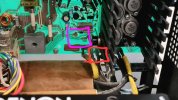
I've done some measuring with amp switched on and on the fan out, purple marking, I get 18volt AC. On red marking I got 14-15 ... it was hard to get the sticks from the meater to reach propper to the powering of the the pcb.

So I'm a little bit confused now when and how the amplifier actually will power up the 115volt oem fan.

If it's starts on 18 volts I need a solution that can work from that lower point and cope with higher voltage and strangle that eventually higher voltage down to 12v.
Interesting.
 

Attachments

  • pro-68bos02p.jpeg
    pro-68bos02p.jpeg
    104.1 KB · Views: 11
I'll guess I just use the Mean Well converter directly from power in and I can in the meantime replace the oem cable with a IEC instead.
 
You are most welcomed to give a link to those ... and HOW quiet are they compared to Noctuas most quiet ones??
Im a little late to the conversation but I just picked up qsc USA 1300 to power home theater subwoofers and was wondering if you ended up figuring out the fan mod because the stock fan are quite loud.
 
Back
Top Bottom