• The move to the new server is done. There are some software and database maintenance updates in process. This has us passing the hat around to help out. We appreciate any donations. Seriously, even a dollar helps. The payment page may be found here - https://www.audiokarma.org/support.html

Replacing capacitors - trying to get correct values

rd2035

New Member
I've seen this covered a number of places, but not specifically which is better. If I'm supposed to use a 6.5uf capacitor (which I can't find), which is the recommended solution?
1. replace with one 6.8uf
2. replace with two 3.3's in parallel to get exactly 6.6

From what I understand I if running in parallel I should make reasonable effort to ensure the signal path of each capacitor is equal.

Sorry, I'm very new to this and restoring some old DQ-10's. I've read tons of threads all over the place and I see people all using different solutions and values. I don't want to boost the treble by changing values. So it seems to me I should try to stick to the original values if possible. I'm using all Jantzen or Audyn caps for replacements.

Thanks!
 
Register to hide this ad
I wouldn't worry about it too much, use a 6.8uf, as most electrolytic caps have a 20% +/- tolerance anyways, have you measured the 6.5uf cap ?
 
Either option would work. The 6.8 uF is about 4.5% off. Close enough for a crossover, which is not a precision instrument.

Two 3.3 uF caps is even closer. If you are OCD, this would be a good choice, but, really, I would use either option.
 
I'm definitely not OCD, but I also don't want to have to take it apart after because I just boosted that "Sss" area of the treble for example.
 
If you’re wanting to be extremely precise then one would have to measure said caps under voltage load to get their actual value….with that said, as has been stated, assuming they are within +or- spec % they should be close enough.


VR
Andy
 
For those that have a need to use exactly that less common capacitance, check with Mouser/Digikey by searching value needed uF and see if some weird film cap isn't available in that size. Mouser has a few, didn't check D but they probably have some, too. It's a film cap, probably would work great in a speaker.

Not that this is necessary in this case but sometimes folks want exact. If their ocd doesn't get in the way of using a square cap it can be done. Easy enough to hot glue these caps inside a box where no one will see it. But in the case of these speakers, that cap is right there in front of everyone on the back shelf of the speaker.

Good luck with the recap.

In my DQ-10s I bought some caps from an aker that had picked up some manufacturer overstock and I installed a 6.2 for the one 6.5 in the late model caps list.
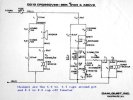
Here is that list: 80, 16, 6.5, 6.0, 6.0, 8.5, 0.1, 0.15 for caps C1-C8
 
I'm definitely not OCD, but I also don't want to have to take it apart after because I just boosted that "Sss" area of the treble for example.
It depends on the placement of the cap. If the cap is in series with the tweeter, a higher value will let the tweeter play a bit lower into the frequency response, and will be a bit louder accordingly.

However, if the cap is in parallel with the tweeter, it routes signal to ground and a bigger cap will make the tweeter play a bit higher into the frequency response, and will be a bit quieter accordingly.

While most crossovers don't put a cap in parallel with the tweeter to route signal to ground, IIRC, DQ-10s have several drivers including a few tweeters, so I imagine it's a possibility here.

Anywho, I'd use the pair of 3.3s.
 
I'm definitely not OCD, but I also don't want to have to take it apart after because I just boosted that "Sss" area of the treble for example.
That will largely depend on the brand/model of cap you use rather than the value being slightly off spec.
 
If you’re wanting to be extremely precise then one would have to measure said caps under voltage load to get their actual value….with that said, as has been stated, assuming they are within +or- spec % they should be close enough.


VR
Andy
What meter would you use for that?
 
I like getting the right value but I'm sure I wouldn't hear the difference between 6.8 and 6.5
You might if you were able to instantaneously A/B back and forth between them. If there was any down time, probably not.

I sit and listen to the difference between a 9.5 and 10 mfd in parallel to ground, and if I A/B them instantaneously from my seating position (I can do that), I can hear a very slight difference in the clarity of the JBL 10" as it interfaces with the Heil. If it's of any consequence, the 9.5 mfd uses all Audyn (6.7 and 2.8) and the 10.0 uses a combination of Audyn (6.7) and Clarity Cap (3.3). After lots of instantaneous A/Bing while listening, I decided on the 10 mfd which seems just a bit less "congested" with better annunciation,

Again, this is the cap(s) to ground, not the one that the signal that you hear passes through.
 
You might if you were able to instantaneously A/B back and forth between them. If there was any down time, probably not.

I sit and listen to the difference between a 9.5 and 10 mfd in parallel to ground, and if I A/B them instantaneously from my seating position (I can do that), I can hear a very slight difference in the clarity of the JBL 10" as it interfaces with the Heil. If it's of any consequence, the 9.5 mfd uses all Audyn (6.7 and 2.8) and the 10.0 uses a combination of Audyn (6.7) and Clarity Cap (3.3). After lots of instantaneous A/Bing while listening, I decided on the 10 mfd which seems just a bit less "congested" with better annunciation,

Again, this is the cap(s) to ground, not the one that the signal that you hear passes through.
As a musician I have trained myself to hear very slight changes in pitch and I can immediately feel the difference in tube and solid state under my fingers on a fretboard so I can imagine someone being able to hear those differences in capacitor values but I really doubt I would.
 
Unfortunately it takes a specialized piece of equipment, but In general high quality caps from reputable companies are in the +/- % range….

Andy
I never heard of testing caps with power on, that is why I am asking. I have always used a Fluke meter, their instructions require leads to be disconnected with power off and the cap discharged.
 
I never heard of testing caps with power on, that is why I am asking. I have always used a Fluke meter, their instructions require leads to be disconnected with power off and the cap discharged.

That’s to save your meter, there’s a variety of capacitor testers (not handheld ESR meters) that test individual caps in their voltage range and display the results….
 
Back
Top Bottom