

You are using an out of date browser. It may not display this or other websites correctly.
You should upgrade or use an alternative browser.
You should upgrade or use an alternative browser.
Replacing tube sockets. Best mounting?
- Thread starter avguytx
- Start date

Register to hide this ad



I think the factories used rivets for speed more than security. Lots of kit tube gear held the sockets in with screws without issue.


S.J.

ferninando
Lunatic Member
my pref is screws/nuts.
rivets is too perminent for me.
but my dremel takes them off.
rivets is too perminent for me.
but my dremel takes them off.

sKiZo
Hates received: 92644 43.20°N 85.50°W
Not a big fan of metal shavings in the chassis, so for me, it's nutz 'n bolts ...
Only complain I ever had is they do tend to stand out from the chassis more than a rivet, and some larger tubes have a tendency to rock. Easy enough to fix with some felt pads ... the little peel 'n stick variety from the local hardware are just the thing.

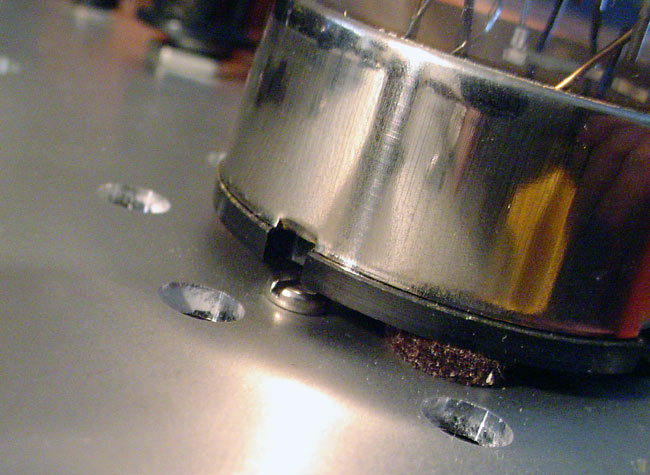
Whole lot easier than countersinking the screw heads too ...
Only complain I ever had is they do tend to stand out from the chassis more than a rivet, and some larger tubes have a tendency to rock. Easy enough to fix with some felt pads ... the little peel 'n stick variety from the local hardware are just the thing.
Whole lot easier than countersinking the screw heads too ...


Lavane
Lunatic Member
I see you used the flat pan head screws. I use them too. They look much better than the round heads. Cutting the little round felt pads is a nice idea. Thanks for posting. :thmbsp:Not a big fan of metal shavings in the chassis, so for me, it's nutz 'n bolts ...
Only complain I ever had is they do tend to stand out from the chassis more than a rivet, and some larger tubes have a tendency to rock. Easy enough to fix with some felt pads ... the little peel 'n stick variety from the local hardware are just the thing.
Whole lot easier than countersinking the screw heads too ...

whoaru99
Epic Member
If you have a cone shaped tool <|- that can mount in your drill press, you could make cone shaped holes to allow the use of flat head screws. Then the screwheads would be flush with the chassis surface.
That's a good point, no pun intended. I've done some crude countersinks using just a larger size drill bit. There are specific tools to do that but the drill worked well enough for me.
I think it depends to some degree how successfully one can countersink re. thickness of the metal though.
