• The move to the new server is done. There are some software and database maintenance updates in process. This has us passing the hat around to help out. We appreciate any donations. Seriously, even a dollar helps. The payment page may be found here - https://www.audiokarma.org/support.html

Require Equipment for repair Tube Equipment

DraKnight13

Active Member
Hello, I am interested in learning how repair tube equipment since I do have couple pieces that I want to bring them up to specs. I do have soldering equipment since my job requires it, but other than that, what else do I need to do a complete and thorough job????
What I have right now is
- Multimeter
- Soldering equipment (hot iron, hot air station)
- Variac
Thanks and Happy Holidays everyone.
 
Register to hide this ad
2 DMM, throw away speakers, not to throwaway but for testing. Something that sounds pretty good but you don't mind blowing up! Signal source. A walkman is good and cheap, but you can do more testing with a frequency generator. Test jacks are always handy. And the statue of Santa Maria, a Juju doll, and some wood to knock on, just to cover all the bases.
 
Can I ask what is the DMM, sorry not really know much about it. Thanks for the advice on the doll and the wood!!!!
Digital Multi Meter. Just a little levity with that Juju stuff. A relaxed outlook to repairs helps the thinking processes. Remember if something stumps you, take a break, play with the kids, your dog, or juju dolls, sleep on it, and then go back with an open mind. And if that fails, posting your problem on a forum is always a good way in dealing with a problem. Just writing down what issue you are facing really helps in focusing or finding a solution. And of course different view points and experience make all the difference.
BTW, one big rookie mistake is to just start removing parts and try to rebuild everything from scratch. This is not recommended for the inexperienced. If the amp is working, even if it is not at specs, try to deal with only 1 thing a time. For instance, only changing out the coupling caps or power supply caps.
 
+1 to everything Primo says (especially the mindset for troubleshooting and repair). I have found that a digital oscilloscope is invaluable if you're going to do a fair amount of work, although many get by just fine without one. A tube tester you trust is also a good thing to have around once you get yourself going with the other stuff, again depending on how much and how serious is the work you want to do. You might want to build an inexpensive and simple Dim Bulb Tester to go with your Variac as well. It's a great way to protect the gear (and your variac) if you have a short or bad power supply caps when you're fire up (hopefully not literally) an old rig that's not been run in a long time. Keep your phone handy, too, and take lots of pics of what you're doing so you'll know how things go back together after you've taken them apart! Good luck and have fun!
 
I am only a little ahead of you with tube experience.
I have found a couple of Youtube channels particularly helpful , both with theory and also with what gear these guys have on their bench- these channels are :

Uncle Doug - whilst he is guitar amp focused - the principals are the same and he has a fantastic sense of humor .

Blueglow Electrinics - Mark Walker - more audio tube amp focused. Great practical build info and theory , great build video series . Also uses lots of gear to check waveforms if you want to go down that rabbit hole .

And of course the Audiokarma crew , i have received some great help and advice here - a real community of like ( or as my partner Sue says unlike minds )
Good luck - it really is a fun and fascinating hobby !
 
always have at least 2 meters, if for no other reason than for sanity checks if one gives you some nonsense readings. I've had mine lie when the battery gets low or if the meter lead wasn't plugged all the way in.

If you're getting a scope, you'll want a signal source of some type. Something with variable output that will do sine and square wave should cover it. Most of the time you don't need to get super in depth with waveform analysis, personally I use it for signal tracing most of the time. Find the point where the signal stops or doesn't look like the input shape anymore and you have your problem area. This can be done with a meter for situations where signal isn't passing, but a scope makes it easier to visualize.
 
Read the repair and restoration threads on AK. Often people will ask basic questions which are essential for beginners to get answers to! If you don't already, learn to read a schematic and the color coding of resistors. I find a component tester, or at least a capacitance tester very helpful too. It won't tell you how the caps will perform under load, but at least you can check the capacitance.

I think a temperature controlled soldering station is essential. Get the best you can afford.
 
I own a cap tester, honestly I rarely use it. I find it easier to just sub caps in for diagnostic purposes. I keep a perhaps excessive stock of parts on hand though. For tube gear, really you want a tester that can test things at full rated voltage to make sure they are not leaky electrically. You also want to be able to test ESR, or "power factor" as they called it in the dark ages. A high ESR cap might measure on-value, but it will filter very poorly. Short of that, just checking the value isn't going to tell you quite enough.

I learned a lot of troubleshooting stuff from old books in the days before the internet so much of what I do is 1940s diagnostic methods. In the days before your average radio man had access to loads of test gear, they had a meter and a resistor and cap substitution box to insert things as needed.
 
a tube tester would also be helpful if you are planning to do more than a few units, otherwise extra tubes to swap for checking, by substitution.
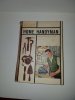
My first "electronics book" was a Popular Mechanics home handyman 4 volume set, with a radio repair subsection.I was about 15 at the time.
s-l1600.jpg

Edit: The most basic of rules is to only use one hand when working with charged circuits, keep the other in your pocket, as it will keep you from sending lethal voltages through your heart. Discharge caps before working on an amplifier that has been in use.
 
Last edited:
A soldering station (pencil) is good for the little stuff, but on those big lugs you need a 100/140 watt gun. It makes it easier to work on multisection capacitors.

A dim bulb tester is good when first evaluating an unknown piece.

I like having a capacitor tester to match caps where necessary. I match resistors too. A modern DMM will do both.

>>Whenever you get something old, verify the fuse is the correct value before you start. It shouldn't come as a surprise that some people will use whatever's on hand when a fuse blows.

You'll acquire more tools as you dig deeper.
 
I like having a variac handy, and for soldering, one of them Weller soldering stations, or better. They're pretty cheap, and once you're spoiled on the 15 second warm up, you'll _never_ go back to a radio-shack style cheapie.

Tube stuff isn't that hard - the voltages are higher, so you gotta watch that, and also some old tube gear isn't line isolated. The stuff that's actually worth it, almost always is, though. Don't be surprised to see solid state diodes hanging out under the chassis - many tube pieces used 'em for bias and power supply purposes.

A lot of the voltages aren't stupidly critical. If the print says it's 250, and you've got 245, you're close enough.

Capacitors are the big trouble spots, and also resistors. Modern replacement components are superior in every regard.
 
A set of new tubes, used for testing ( and sale when needed) . Also an assortment of resistors and capacitors.
In addition seek out a good supplier of components ( mouser ??) that can deliver whet you don't have
in stock.
 
@primosounds touched upon this in post #4, but it bears repeating and further explanation. For any piece of gear that is non-functional, or not operating properly (SS or tube), FIX IT FIRST--then you can proceed with whatever sort of restoration/upgrade/modification you have planned. If you don't identify and address the original "issue", and just start "shotgunning" new parts at a unit, it makes it very difficult (if not damned near impossible) to track down later.

Do ONE thing at a time. Replace parts in one circuit and power it up to verify proper function. THEN move on to the next circuit. If you do everything at once and then power it up and it doesn't work, you have to go through ALL of your work, component-by-component to troubleshoot--big PITA. Confirm your work on each section as completed, and then move on. If you make a mistake, you'll know immediately where to look.

Good luck on your adventure!!!
 
try one of the ebay Chinese mega 328 devices. nowadays they're as cheap as the drugstore
9v battery that powers them. (hint - wire 6v wallwart and skip the midnite run to find a
9V replacement and save the real 9v batterie for your smoke alarms)

these will measure caps, resistors, transistors, diodes, etc. all the passive devices.

you may wish to think about a tube tester. sometimes it's not the unit, it's the tubes.
don't go for the gold. you don't need a $1000 calibrated, brand-name tester -
all you need is one that tests for shorts and "good" emissions since none of them
test to design center recommendations (from tube datasheets) and all you want
to know is if they're OK to use.

and a DBT or a variac. useful if testing and to reform caps.
 
Hello, I am interested in learning how repair tube equipment since I do have couple pieces that I want to bring them up to specs. I do have soldering equipment since my job requires it, but other than that, what else do I need to do a complete and thorough job????
What I have right now is
- Multimeter
- Soldering equipment (hot iron, hot air station)
- Variac
Thanks and Happy Holidays everyone.

Dummy loads from 2 to 16 ohms rated for 100W
Oscilloscope with high voltage (CAT IV) probes
RLC meter
Low distortion signal generator (should also provide test signals for IMD measurements)
Real time spectrum and distortion analyzer.
 
Back
Top Bottom